Imagine closing up your business for the evening, locking the cash register, and then leaving the front door wide open. Sounds reckless, right? Yet, many business owners do the same online. Operating without an SSL certificate and robust protection is like leaving your front door unlocked in a busy city at 2 AM.
Every day, sensitive customer data is exposed due to the lack of essential protections. This oversight not only jeopardizes your assets but also risks your customers’ personal information. At IBP (The Internet Business Provider), we believe that securing your digital presence is not a luxury but a fundamental necessity.
An SSL certificate serves as proof of your website’s identity, ensuring that visitors can trust you. Without it, you leave your site vulnerable to impersonation by malicious actors. Protecting your online presence today is the smartest investment you can make for your brand’s future.
Key Takeaways
- Leaving your digital front door open exposes sensitive customer data.
- Website protection is essential for all businesses, not just large enterprises.
- An SSL certificate assures visitors of your site’s legitimacy.
- Without proper protection, your site is vulnerable to impersonation and data theft.
- Investing in online security builds trust and safeguards your brand reputation.
The Risks of Neglecting Website Security
Leaving your digital assets unprotected is akin to abandoning your car with the keys in the ignition. This negligence invites trouble, especially in the form of cybercriminals who are always on the lookout for vulnerabilities.
When a site lacks an SSL certificate, it cannot utilize the encryption provided by TLS. This means that sensitive data, such as login credentials and credit card details, are left exposed. Hackers can easily intercept this unencrypted information, especially when users connect via public networks.
The consequences of neglecting protections are severe. Here are some key risks:
- Open Invitation to Cybercriminals: Unprotected sites allow attackers to eavesdrop on data transmitted between the site and its visitors.
- Data Breaches: Without SSL certificates, businesses risk devastating breaches that can lead to permanent loss of customer trust.
- Visible Warnings: Browsers display security warnings for sites lacking SSL, discouraging visitors and impacting traffic.
- Reputational Damage: News of a data breach spreads quickly, tarnishing a brand’s identity and deterring future customers.
- Increased Targeting: Hackers specifically look for sites without SSL certificates, making them easy targets for attacks.
- Domain Spoofing Risks: The absence of SSL increases the likelihood of phishing attacks, where attackers create convincing fake sites.
- Identity Theft: Unencrypted connections expose personal information, leading to potential fraud and identity theft.
- Financial Implications: Neglecting security can result in regulatory fines and substantial costs related to breaches.
| Risk | Description |
|---|---|
| Open Invitation to Cybercriminals | Unprotected data flows create opportunities for attackers to intercept sensitive information. |
| Data Breaches | Businesses without SSL face serious breaches, resulting in loss of customer trust. |
| Visible Warnings | Modern browsers warn users of unsecured connections, impacting site traffic. |
| Reputational Damage | Data breaches can irreparably harm a brand’s reputation. |
| Increased Targeting | Hackers often target sites lacking encryption, making them vulnerable. |
| Domain Spoofing Risks | Phishing sites can easily mimic legitimate sites without SSL. |
| Identity Theft | Exposed personal information can lead to fraud. |
| Financial Implications | Neglecting security may result in fines and high breach response costs. |
In summary, neglecting online protections is a risk that no business can afford. Protecting your site is essential for maintaining trust and safeguarding sensitive information.
Understanding Website Security & SSL Certificates
Think of your digital presence as a physical store; without the right protection, it’s like leaving the lights on and the door ajar. An SSL certificate is a crucial component in establishing trust and security online. It serves as a digital file hosted on the origin server of a site, containing essential data that browsers access during interactions.
This certificate may be self-signed or issued by a third-party authority. An SSL certificate includes the website’s public key and information specific to the site’s identity. For the encryption process to work, devices connecting to the site need the public key, which identifies the server hosting the site.
When your browser connects to a site secured with TLS, a handshake occurs. This handshake is vital for establishing a secure connection. TLS, or Transport Layer Security, is a more advanced version of SSL, ensuring that data remains confidential during transmission.
What is an SSL Certificate?
An SSL certificate is fundamentally a digital file that contains the site’s public key along with specific identifying information. This certificate acts as both a cryptographic tool and a digital identity document that browsers can verify during every visitor interaction.
- The certificate includes critical information such as the domain name it protects, the name of the organization or individual to whom it was issued, and the issuing certificate authority’s name and digital signature.
- It also specifies associated subdomains, the date of issue, and the expiration date that indicates when renewal is necessary.
How SSL & TLS Work Together to Secure Connections
The public key embedded within an SSL certificate is a complex string of alphanumeric characters. This key enables the encryption of data sent from a user’s browser to the website’s server. Only the corresponding private key, securely held on the server, can decrypt this information.
During the SSL/TLS handshake, an exchange occurs between the public key, the private key, and a session key. This session key encrypts all subsequent data transmitted during that browsing session. Without the public key contained within a valid SSL certificate, a TLS-secured connection cannot be established.
SSL certificates can be either self-signed or issued by a trusted certificate authority that verifies the applicant’s identity and domain ownership. Understanding how these certificates work is essential for any business owner. This knowledge informs decisions about which type of certificate to purchase and how to implement it effectively.
| Key Components | Description |
|---|---|
| Public Key | Used for encrypting data sent from the browser to the server. |
| Private Key | Used for decrypting data that was encrypted with the public key. |
| Session Key | Generated during the handshake to encrypt the data transmitted in the session. |
| Certificate Authority | Trusted entity that issues SSL certificates after verifying the identity of the applicant. |

Types of SSL Certificates and Their Validation Levels
Picture your online business as a retail space; without safeguards, it’s like having an open door in a high-traffic area. Different types of SSL certificates cater to various needs, ensuring that your organization is adequately protected. Understanding these options can help you choose the right level of security for your digital presence.
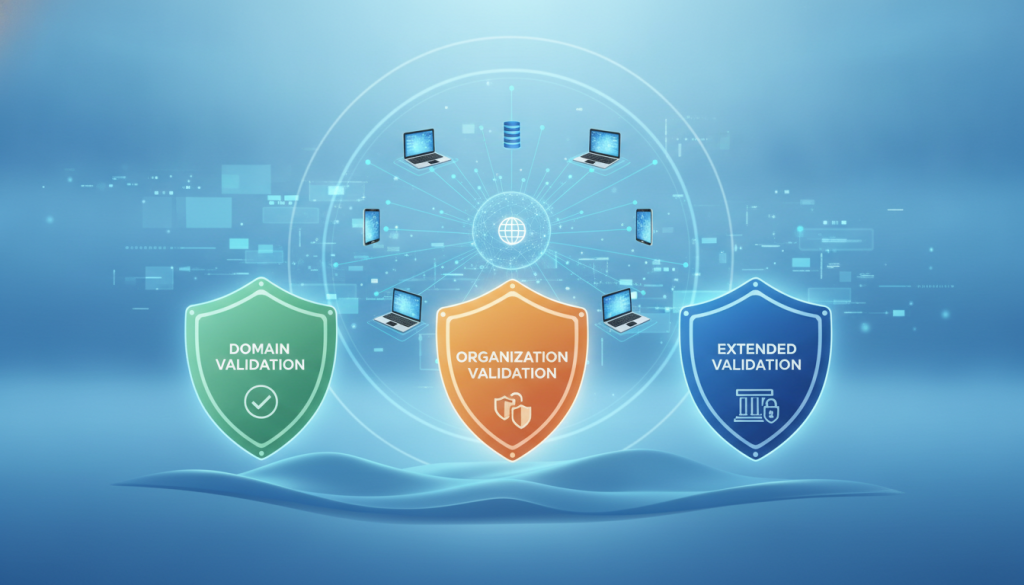
Domain Validated (DV) Certificates
Domain Validated certificates represent the most basic level of protection. To obtain one, the certificate authority (CA) sends an email to the registered address of the domain. This confirms ownership but does not verify any business details. As a result, DV certificates offer the lowest level of organizational identity assurance.
Organization Validated (OV) Certificates
For an Organization Validated certificate, the CA requires additional information about the organization. This includes the physical location and legal name of the business. This process may take a few days but provides a moderate level of trust for sites that do not handle highly sensitive information.
Extended Validation (EV) Certificates
Extended Validation certificates undergo the most rigorous verification process. The CA conducts a thorough review of the applicant’s legal identity and corporate documents. This includes checking information against independent third-party sources. The issuance process typically takes two to three days and offers the highest level of assurance to visitors. Browsers often display the organization’s name prominently in the address bar, enhancing trust.
Other SSL Certificate Types
There are several other specialized SSL certificates to consider:
- Wildcard SSL Certificates: These secure a primary domain and unlimited subdomains with a single certificate, simplifying management.
- Multi-domain SSL Certificates: Also known as Subject Alternative Name (SAN) certificates, these cover multiple distinct domains on a single IP address.
- Unified Communications Certificates: Designed for Microsoft Exchange and Office Communications, these secure multiple domains and their subdomains.
Choosing the right type of certificate depends on your organization’s specific needs. For instance, e-commerce sites handling credit card transactions typically require EV certificates. On the other hand, informational blogs may find DV certificates sufficient for basic encryption needs.
Each validation level communicates a different degree of trust to visitors. Organizations investing in higher validation levels demonstrate a commitment to transparency and security, which can positively influence customer confidence and conversion rates.
| Type of Certificate | Description |
|---|---|
| Domain Validated (DV) | Quick to obtain, requiring only domain ownership verification via email. |
| Organization Validated (OV) | Requires verification of domain ownership and specific business details. |
| Extended Validation (EV) | Involves rigorous verification, providing the highest level of trust to visitors. |
| Wildcard SSL | Secures a domain and unlimited subdomains with one certificate. |
| Multi-domain SSL | Covers multiple distinct domains on a single IP address. |
| Unified Communications | Secures multiple domains and subdomains for communication environments. |
How to Obtain and Implement an SSL Certificate
Consider the process of locking up your shop; it’s essential to ensure everything is secure before you leave. Obtaining an SSL certificate is a crucial step for any business aiming to protect its online presence. The first step involves assessing your organization’s specific needs. This includes evaluating the number of domains and subdomains requiring protection, the sensitivity of the data being transmitted, and any regulatory compliance requirements.
Choosing the Right Certificate for Your Business Needs
For many companies, a standard SSL certificate may suffice. However, businesses in regulated industries, such as finance or healthcare, should consult with their IT teams. They need to ensure the chosen certificate meets all applicable standards, including PCI/DSS for payment processing and HIPAA for medical data.
The Validation and Issuance Process
The process begins with a Certificate Signing Request (CSR) submitted to a certificate authority (CA). This request contains the organization’s public key and identifying information. The CA will verify this information before issuing the certificate. Depending on the type of certificate, the validation process may vary. For instance, Domain Validated (DV) certificates require simple email confirmation, while Extended Validation (EV) certificates involve a thorough review of organizational documents.
Once the certificate is issued, it must be properly installed on the website’s origin server. This involves configuring the server software to present the certificate to browsers, enabling HTTPS across all pages of the site.
Recognizing SSL-Enabled Websites
Identifying an SSL-enabled site is straightforward. Look for URLs that begin with HTTPS rather than HTTP. Additionally, a closed padlock icon will appear in the browser’s address bar, confirming that the connection is encrypted and secure. Modern browsers display warnings for sites lacking SSL certificates, such as open padlocks or red warning triangles. These warnings actively discourage visitors from proceeding to the site.
Keep in mind that the expiration date of an SSL certificate is critical. Certificates typically remain valid for one to two years from the date of issue. Allowing a certificate to expire results in immediate browser warnings that can damage visitor trust and site traffic. Proactive management of certificate renewal is essential. Organizations should implement monitoring tools and automated reminders to ensure timely replacements.
Finally, ensure that your website redirects all HTTP traffic to HTTPS. Update internal links and resources to use secure URLs. Verifying that no mixed content warnings appear is also crucial, as insecure elements can undermine the overall security of your site.
Key Enterprise Benefits of Website Security & SSL Certificates
Envision your online platform as a bustling marketplace; without protective measures, it becomes a target for thieves. Implementing an SSL certificate offers numerous advantages for organizations. These benefits not only enhance data protection but also foster trust and credibility among users.
The most fundamental enterprise benefit of implementing an SSL certificate is the comprehensive encryption of all data transmitted between the site and its visitors. This renders sensitive information, such as credit card numbers and login credentials, completely unreadable to any third party attempting to intercept the communication.
Moreover, Google and other major search engines have confirmed that HTTPS is a ranking signal. This means that websites secured with SSL certificates receive preferential treatment in search results. As a result, this contributes to improved visibility, increased organic traffic, and stronger competitive positioning in the digital marketplace.
The verification process conducted by a certificate authority provides third-party validation of an organization’s identity. This gives customers, partners, and stakeholders confidence that they are interacting with a legitimate business entity rather than an imposter or phishing site designed to steal their information.
Furthermore, PCI/DSS compliance is mandatory for any organization that processes, stores, or transmits credit card data. This compliance explicitly requires the implementation of SSL certificates, making them a non-negotiable requirement for e-commerce operations and any business handling payment card information.
Customer trust is directly influenced by visible security indicators. The presence of the closed padlock icon and HTTPS in the address bar provides immediate reassurance. This encourages visitors to complete purchases, fill out contact forms, and share their personal information without hesitation.
SSL certificates protect a wide range of sensitive data types beyond just financial information. This includes medical records subject to HIPAA regulations, legal documents and contracts exchanged through web portals, and proprietary company information shared through secure client access areas.
The authentication provided by SSL certificates helps prevent domain spoofing and phishing attacks. It makes it significantly more difficult for attackers to convincingly impersonate a legitimate website. They cannot obtain a valid certificate for a domain they do not control without going through the CA verification process.
Organizations that implement SSL certificates across all their web properties demonstrate a commitment to security best practices. This can differentiate them from competitors, enhance brand reputation, and serve as a powerful marketing message about the company’s dedication to protecting customer interests.
The encryption of data in transit also protects internal communications, email server interactions, and server-to-server data exchanges. This extends the security benefits beyond just the public-facing website to encompass the organization’s broader digital infrastructure.
Modern consumers have become increasingly security-conscious. Studies consistently show that a significant percentage of visitors will abandon a site immediately upon seeing browser warnings about insecure connections. Thus, SSL certificates are essential for maintaining conversion rates and revenue streams.
| Benefit | Description |
|---|---|
| Data Encryption | Encrypts all data transmitted, making sensitive information unreadable to interceptors. |
| Search Engine Ranking | Improves visibility in search results due to HTTPS being a ranking signal. |
| Identity Verification | Provides third-party validation of the organization’s identity, enhancing trust. |
| PCI/DSS Compliance | Mandatory for businesses handling credit card transactions, ensuring data protection. |
| Customer Trust | Visible security indicators encourage user engagement and data sharing. |
| Protection of Sensitive Data | Secures various types of sensitive information, including medical and legal documents. |
| Prevention of Phishing | Helps prevent attackers from impersonating legitimate websites. |
| Commitment to Security | Demonstrates dedication to best practices, enhancing brand reputation. |
| Broader Security Benefits | Extends security to internal communications and server interactions. |
| Maintaining Conversion Rates | Reduces abandonment rates by reassuring users about site security. |
Common Limitations and Considerations When Using SSL Certificates
Neglecting to secure your online presence is like ignoring a leaky roof; eventually, the damage will become apparent. While implementing an SSL certificate is crucial for safeguarding data, there are several limitations and considerations that organizations must keep in mind.
First, obtaining an SSL certificate involves ongoing costs. These costs extend beyond the initial purchase price. Certificate authorities maintain the infrastructure necessary for identity validation. Organizations must also budget for regular renewals every one to two years to maintain uninterrupted coverage.
Additionally, the encryption and decryption processes required for SSL/TLS connections consume server resources. While modern hardware has largely mitigated this concern, high-traffic websites may experience a slight performance impact. Techniques such as session caching and hardware acceleration can help optimize performance.
The terminology surrounding SSL and TLS can create confusion. The industry often continues to use “SSL certificate” as the common term, even though TLS has largely replaced the older SSL protocol. TLS uses more secure cipher suites and stronger encryption algorithms.
Moreover, the Fortezza algorithm used in older SSL implementations is considered less secure than the cipher suites available in modern TLS. Organizations should ensure their server configurations prioritize TLS 1.2 and TLS 1.3 protocols for enhanced security.
As organizations scale, certificate management becomes increasingly complex. Larger enterprises often manage hundreds or thousands of certificates across different domains and servers. This complexity requires dedicated tools and personnel to track expiration dates and prevent unexpected lapses.
The validation process for higher-assurance certificates, particularly EV certificates, can be time-consuming. Organizations must provide extensive documentation, which may pose challenges for businesses needing to secure their sites quickly.
It’s also important to note that SSL certificates only protect data in transit between the browser and the server. They do not address other critical security concerns such as server-side vulnerabilities, database security, or application-level attacks.
The effectiveness of an SSL certificate depends entirely on proper implementation. Misconfigurations such as mixed content issues or expired certificates can create security gaps. These gaps undermine the protection the certificate is intended to provide.
Organizations must also consider the trustworthiness of their chosen certificate authority. Browsers maintain lists of trusted CAs, and certificates issued by authorities that fail to maintain rigorous validation standards may be distrusted or revoked. This can cause immediate security warnings for visitors.
Despite these limitations, the benefits of SSL certificates overwhelmingly outweigh the drawbacks. The considerations outlined here should be viewed not as reasons to avoid implementation but as factors to address through proper planning and ongoing certificate lifecycle management.
Conclusion
Imagine leaving your home unlocked in a busy neighborhood; it’s an open invitation to trouble. At IBP (The Internet Business Provider), we believe that protecting your site is not just an option, but a fundamental necessity for successful online operations.
Investing in an SSL certificate is crucial for securing your digital presence. It not only safeguards sensitive data but also builds trust with your visitors. Every site that implements an SSL certificate sends a clear message: this organization values security and respects user privacy.
Delaying this investment only accumulates risk. Each day without an SSL certificate exposes your organization to potential breaches and reputational damage. As online security warnings become more prevalent, the distinction between secure and unsecured sites will impact user trust and engagement.
In conclusion, the question is not whether you can afford to implement an SSL certificate, but rather whether you can afford not to. Secure your site today to ensure a trustworthy and sustainable online presence.