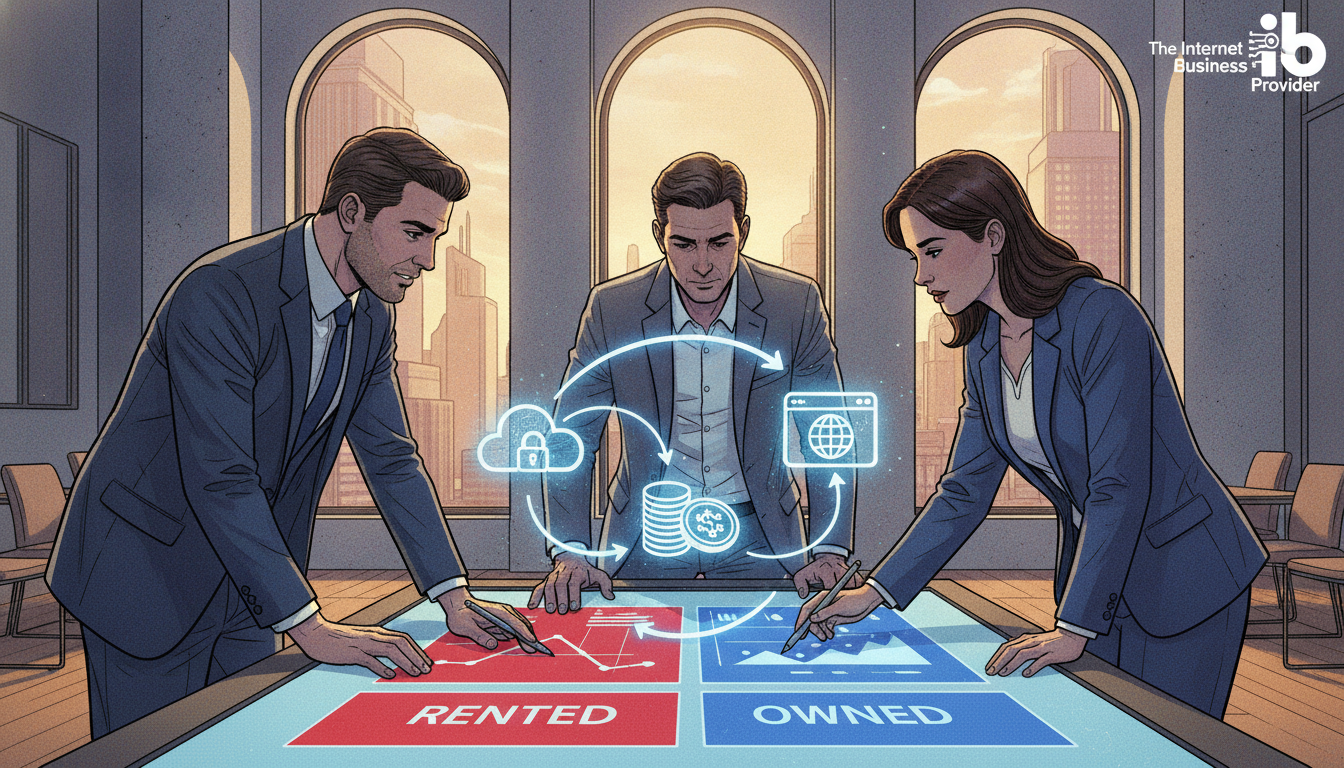
If an algorithm change, account suspension, or policy update removed your main customer channel tomorrow, could your business survive the weekend? Companies that rely only on social networks, third-party marketplaces, and closed SaaS tools may be building on rented land. These platforms can help you reach buyers, but they decide how data, code, audience access, and revenue are managed.
Digital asset ownership starts with control. Your website, customer list, software, and communication channels should support business continuity. Blockchain technology offers one example of verifiable control. Bitcoin launched in 2009, and the wider market later expanded to more than 10,000 active digital assets worldwide by December 2024. Market capitalization reached $3.5 trillion on January 15, 2025.
This guide shows how to reduce platform risk without abandoning useful services. The goal is a stronger investment in security, customer relationships, and long-term value. External platforms can attract attention, while independent infrastructure protects your future.
Key Takeaways
- Third-party platforms provide reach, not lasting control.
- Direct customer access supports business continuity.
- Independent systems reduce platform dependence.
- Blockchain can help verify control and records.
- A balanced strategy keeps useful channels while protecting core operations.
Why Digital Asset Ownership Matters for Online Businesses
Fast growth can hide a serious weakness: your audience may not fully belong to your business. Social networks, third-party marketplaces, and closed SaaS ecosystems offer quick distribution and simple launches. Yet each service sets the rules for customer access, payments, and communication.
Building a Business on Rented Digital Land
A seller may build a large following on Instagram or generate strong sales through Amazon. However, the platform may limit contact with buyers or change its fees without notice. If the company cannot export essential data, it faces a structural dependency rather than a helpful service relationship.
Owned domains, customer records, content libraries, and software code give a company more control. These assets can support direct marketing, repeat sales, and smoother recovery when an outside provider changes its rules.
Control, Continuity, and Long-Term Enterprise Value
Digital assets include items of value that people securely own, collect, trade, or invest in online. Since Bitcoin launched in 2009, questions about control and ownership have become central to modern commerce. Businesses that protect core systems can preserve revenue operations and strengthen long-term enterprise value.
Use outside platforms for reach, but keep vital relationships and records in systems your company can manage.
The Danger of Rented Platforms and Closed Ecosystems
Platform dependence can turn a steady business into a fragile operation. Third-party services control visibility, account rules, and export options. Closed software ecosystems may also limit how teams connect tools and protect customer records.
Zero Algorithmic Control
An algorithm can reduce reach without warning. A company may have no clear appeal process or meaningful control over who sees its offers. This change can weaken sales, even when products and services remain strong.
Arbitrary Account Suspensions
A suspension can stop messages, orders, and revenue at once. The business may lose access to its audience while staff wait for a review. Keep backup channels and independent systems ready before a dispute occurs.
Restricted Customer Data Access
Some platforms limit the export of purchase history, consent records, and contact information. Wells Fargo Investment Institute identifies security and accessibility as key concerns for digital assets. Intermediaries with weaker security can also expose investors to losses.
| Dependency | Business Impact | Protective Step |
|---|---|---|
| Algorithm changes | Lower visibility | Build direct traffic |
| Account suspension | Interrupted sales | Keep alternate channels |
| Limited exports | Lost customer records | Store compliant backups |
The Hidden Costs of Platform Convenience
Low entry costs can conceal a steady drain on margin. A platform may collect commissions, payment deductions, ad charges, and subscription upgrades. These expenses grow as sales grow, making convenience less attractive over time.
Track the full cost before choosing a channel. Include transaction fees, paid reach, support tools, migration work, and lost access to buyers. This review gives an independent business a clear advantage when comparing services.
Escalating Platform Fees
Operators can raise rates or place key features behind higher plans. Small deductions may seem harmless, yet they can reduce cash flow across thousands of orders. Relying on one provider also creates customer-acquisition uncertainty.
Unpredictable Policy and Revenue Changes
New seller rules may affect search placement, advertising access, or revenue sharing. That change creates a risk similar to an unexpected investment cost. Tokenized assets can trade continuously on secondary markets, but platform access still depends on centralized permission. Wells Fargo Investment Institute also cites valuation and volatility as risks in investment decisions.
“Convenience has a price when another company controls the terms.”
| Hidden cost | Business effect | Planning response |
|---|---|---|
| Commissions | Lower margin | Compare net profit |
| Policy changes | Reduced reach | Build direct channels |
| Migration work | Unexpected expense | Keep export-ready records |
What Counts as a Digital Asset for Your Business
Your company’s most important resources may not sit on a balance sheet. They include records, creative work, online accounts, and systems that help you serve customers. A broad view makes these items easier to protect and manage.
Customer Data and Audience Relationships
Email lists, consent histories, purchase records, and audience connections hold real value. They support repeat sales and direct communication. Store this information with strong security and clear access rules.
Websites, Domains, and Platform Code
Your domain, website files, analytics setup, integrations, and custom code support daily operations. Keep administrator credentials, renewal details, and backup copies in a controlled system.
Content, Intellectual Property, and Brand Accounts
Articles, videos, photos, trademarks, copyrights, and brand profiles also need clear records. Blockchain technology can record claims tied to homes, oil paintings, patents, copyrights, loans, or securities. A wallet protects keys; it does not hold the item on the ledger.
Track each resource, its value, its custodian, and its recovery process.
| Business resource | Why it matters | Protection step |
|---|---|---|
| Customer records | Support repeat revenue | Use compliant backups |
| Web properties | Preserve operating continuity | Control registrar access |
| Creative works | Protect brand value | Document rights and storage |
Digital Asset Ownership vs. Platform Access
A login can feel like control, but permission is not the same as ownership. A business should ask who controls account credentials, customer records, revenue settlement, domain registration, and the right to move operations elsewhere.
This distinction also applies to financial services. A spot bitcoin ETF tracks bitcoin’s price, yet investors do not directly hold the coins. The provider keeps them with an outside custodian. Direct control belongs to the party holding the private keys.
Who Controls the Account, Data, and Revenue?
A private key can authorize a transaction and help prove ownership of a digital asset. A wallet may store the credentials needed for transactions, but a platform account often grants access only under a vendor’s terms.
- Record every administrator and recovery contact.
- Confirm data-export rights and contractual licenses.
- Review payment, settlement, and migration permissions.
- Separate company-controlled services from vendor-controlled assets.
Practical control means managing access, records, revenue, and recovery. Blockchain can verify certain claims, but clear contracts and strong security still matter. Before calling an asset owned, document who can change it, transfer it, or restore it after an exchange or service failure.
How Ownership Protects Customer Data and Audience Relationships
Trust grows when customers can reach your company without passing through a single gatekeeper. Permission-based email, member accounts, and private communities create direct contact. These channels also give people clear choices about messages, preferences, and account use.

Creating Direct, Permission-Based Customer Access
Store consent status, purchase history, service preferences, and communication records in systems your team can administer. This information supports useful service while limiting needless collection. Clear permissions and strong security protect both the customer and the business.
- Offer email opt-ins with simple withdrawal options.
- Let members manage profiles and communication settings.
- Keep secure backups of important customer data.
Reducing Dependence on Intermediary Systems
A blockchain network shows how records can spread across many computers instead of relying on one operator. Participants can review transactions and keep copies of the record. Digital assets may also move online without a bank mediating every step.
“Direct relationships turn audience attention into lasting business resilience.”
| Owned channel | Customer benefit | Business safeguard |
|---|---|---|
| Email list | Reliable updates | Consent records |
| Member account | Personalized service | Managed access |
| Private community | Direct conversation | Moderation controls |
Blockchain, Wallets, and Verifiable Digital Ownership
Control becomes easier to verify when records do not rely on one company. Blockchain technology uses a peer-to-peer network and a shared database copied across many computers. This model helps users review activity without asking a bank or platform for permission.
How Distributed Ledgers Record Transactions
Each transaction enters a block with encoded information from the prior block. This linked structure supports a clear ledger and helps protect the order of records. New information can also create or mint a digital asset, including tokens used in crypto systems. Bitcoin, launched in 2009, helped bring this technology to a worldwide market.
Private Keys and the Ability to Prove Ownership
A wallet does not hold the asset itself. It stores public and private keys that let a user view records and approve transactions. A private key often contains 50 to 60 digits, so losing it can remove access permanently. Wallets work on smartphones, tablets, and computers, but security controls remain essential.
An exchange account may show a balance without giving investors direct control. Holding the private key offers stronger evidence to prove ownership than a centralized account record.
| Record Type | Who Controls Access | Proof Method |
|---|---|---|
| Blockchain ledger | Network participants | Linked public records |
| Wallet | Key holder | Private key signature |
| Exchange account | Service provider | Login credentials |
Tokenized Ownership and the Expanding Value of Digital Assets
Tokenization gives a real-world holding a verifiable digital form on a blockchain. This approach can widen access to property, artwork, gold, machinery, patents, copyrights, and securities. It may lower entry costs while creating new paths for investment.
Fractional Access to Real-World and Intangible Assets
A commercial property or painting can split into millions of tokens. Each token may represent a defined claim, subject to local law and contract terms. Investors can then buy smaller portions instead of funding the full holding. Tokenized markets may also support trading around the clock through approved exchanges.
Smart Contracts, Programmable Payments, and Transparency
Smart contracts set supply, transfer rules, and holder rights. For example, a rental property can send monthly rent in stablecoins based on token balances. Atomic settlement moves the holding and payment in one onchain transaction, which can reduce delay and counterparty risk.
Chainlink Proof of Reserve can check backing for offchain holdings. Chainlink CCIP can connect private bank networks with public DeFi applications. These services improve visibility, but investors still need legal review, custody controls, and security checks.
| Feature | Business Advantage | Key Consideration |
|---|---|---|
| Fractional tokens | Lower minimum investment | Confirm investor rights |
| Smart contracts | Automated payments | Audit the code |
| Proof of Reserve | Visible backing checks | Review the data source |
Security Risks That Can Undermine Digital Asset Control
Strong control can still fail when recovery plans, devices, or outside providers remain weak. Security must cover both the blockchain record and the people who manage access to assets.
Lost Keys, Compromised Wallets, and Unauthorized Access
A private key often contains 50 to 60 digits and may be known only to its owner. Wells Fargo Investment Institute compares guessing one with winning the lottery nine times in a row. Losing it can block access because the key authorizes transactions.
Phishing, malware, and an unauthorized administrator can also drain a wallet. Use hardware wallets, offline backups, multi-person approval, and tested recovery procedures. Never treat a key or recovery phrase as ordinary account data.
Exchange, Custodian, and Third-Party Service Exposure
Exchanges and custodians add another layer of risk. Spot bitcoin ETF providers hold bitcoin through outside custodians, so investors do not hold the keys directly. Intermediary security may be weaker than blockchain security.
“Security is strongest when recovery does not depend on one person or one service.”
Regulation, volatility, valuation, access, and security affect crypto investments. Cryptocurrency assets also lack FDIC and SIPC insurance.
| Threat | Likely Effect | Practical Control |
|---|---|---|
| Lost keys | Permanent access loss | Secure, tested backups |
| Compromised wallets | Unauthorized transfers | Hardware storage and approvals |
| Custodian failure | Delayed or blocked recovery | Review providers and contracts |
A Practical Roadmap to Digital Asset Ownership
A reliable roadmap turns scattered online resources into a managed business plan. Start with a clear record of what supports revenue today and what the company may need in the future.
Audit Every Platform, Account, and Data Dependency
List domains, social accounts, customer databases, content, payment links, integrations, and services. For each item, record the legal owner, administrator, export option, renewal date, recovery contact, and impact of lost access. This information reveals hidden risks.
Move Critical Assets to Systems Your Business Controls
Shift vital customer records, code, content, and domains away from one provider. Use independent hosting, secure backups, and clear contracts. Blockchain copies may spread across a global computer network, while wallets can run on phones, tablets, or computers.
Document Recovery, Backup, and Access Procedures
Protect keys with encryption, dual approval, and tested recovery drills. A private key authorizes a transaction as a new blockchain entry. Assign separate duties, and prepare an incident plan for outages, suspensions, or stolen credentials.
Review this plan each quarter to keep control practical and security ready.
| Roadmap step | Required record | Control measure |
|---|---|---|
| Audit | Owner and renewal date | Risk ranking |
| Move | Exported business data | Independent systems |
| Recover | Backup and contact plan | Tested incident response |
Building a Resilient Digital Asset Strategy for Future Growth
A strong growth plan protects core operations while using outside channels with care. Keep customer records, domains, content, code, and payment relationships under company control. Use platforms for discovery and distribution, not as the sole path to revenue.
Balancing Owned Infrastructure With Selective Platform Use
Review each service by its value, cost, export rules, and recovery options. Maintain independent backups and administrator access. This approach supports practical ownership while preserving useful reach.
- Keep direct contact with customers.
- Test backups and recovery plans.
- Spread critical services across providers.
Preparing for New Markets, Payments, and Digital Asset Technology
Future planning should assess blockchain markets, tokens, digital currencies, and programmable payments. Chainlink CCIP shows how transfers may connect private bank chains with public DeFi applications. Data Feeds can support pricing, while SmartData can place NAV and AUM details into tokens.
Wells Fargo Investment Institute expects these tools to serve everyday needs and perhaps a global payments system. Still, regulation, volatility, liquidity, security, and crypto investment risk require review. Financial institutions, investors, and businesses should confirm legal duties before adopting new services.
| Planning area | Practical action | Main concern |
|---|---|---|
| Infrastructure | Control records and keys | Service failure |
| Payments | Test token and currency options | Regulatory change |
| Markets | Review valuation and liquidity | Investment risk |
Conclusion
Lasting online growth depends on what your company can protect, move, and restore. Keep customer data, audience links, platform code, brand records, and revenue tools in systems you manage. Store essential digital assets in a practical ownership plan. Outside services can extend reach, but they should support—not replace—your core foundation.
Blockchain shows how a digital asset, transactions, and keys can create a verifiable record. Still, security needs clear roles, backups, and tested recovery steps. Businesses should weigh crypto and cryptocurrency opportunities with care. Volatility, regulation, custody, and fraud can affect investors and their investment choices, including cryptocurrencies.
Build a measured plan today. Protect customer relationships, review contracts, and test recovery procedures. This approach preserves value, strengthens resilience, and gives your company room to grow as payments, investments, and financial markets change.