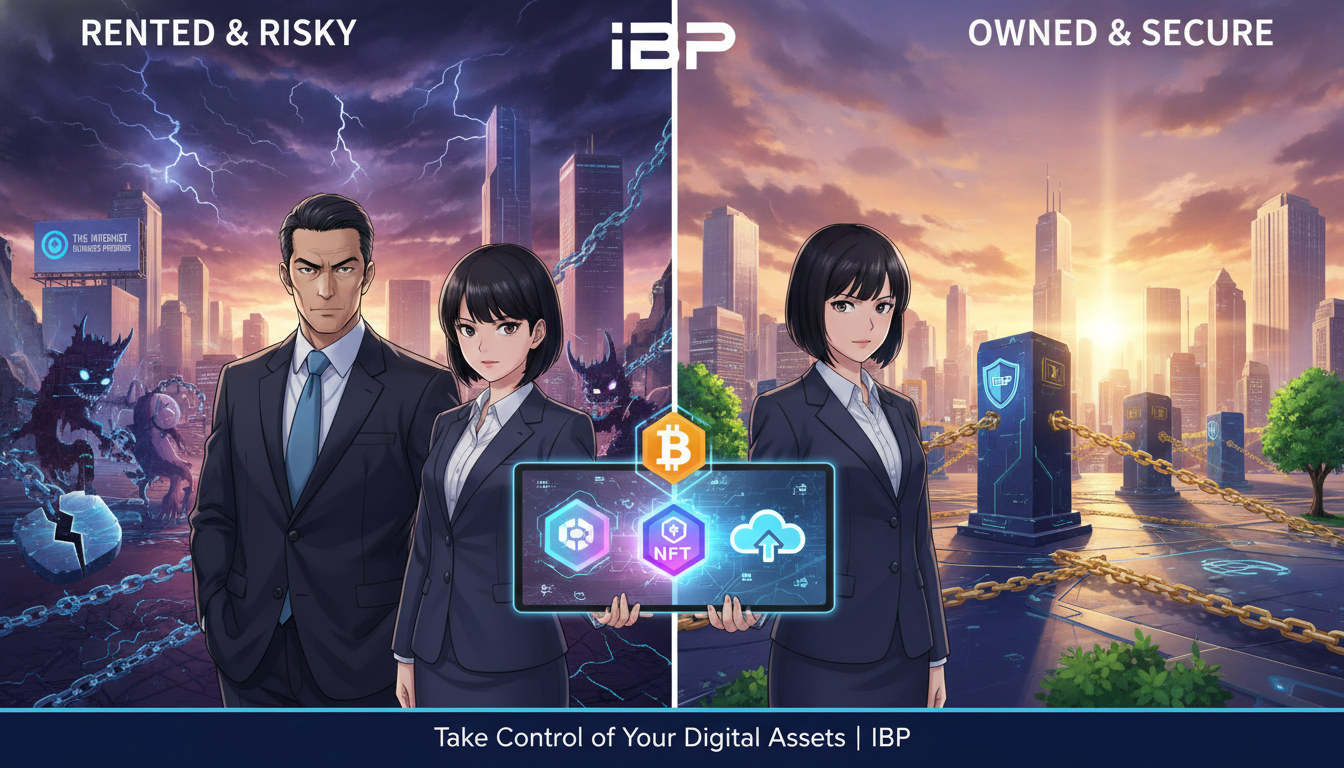
In today’s fast-paced world, building a digital presence on third-party platforms can seem like the easiest option. However, this convenience often comes with significant risks. When your business relies on rented space, you’re vulnerable to sudden changes. Algorithm shifts, account suspensions, and monetization rule alterations can disrupt your revenue overnight.
At IBP, we believe in empowering businesses to achieve true independence. Relying solely on external platforms limits your control and exposes you to unnecessary risks. Genuine growth stems from owning and securing your core digital assets.
Understanding what constitutes these essential assets is crucial. They form the backbone of sustainable business growth and resilience. In this guide, we will explore the hidden traps of rented spaces, the benefits of ownership, and a roadmap to achieving digital independence.
Key Takeaways
- Rented platforms may offer quick growth but come with high risks.
- True digital independence is essential for long-term success.
- Understanding core digital assets is vital for business resilience.
- Ownership of digital assets provides stability and control.
- Explore a practical roadmap to achieve independence.
Understanding the Risks of Rented Digital Assets
Establishing a presence on social media platforms can initially appear straightforward and cost-effective. However, this convenience comes with hidden dangers. Businesses often build their audiences and revenue streams on digital property they do not own. This creates a fundamental vulnerability, leaving them at the mercy of platform operators’ decisions.
Real-world cases illustrate this risk. Companies have lost access to their entire customer base overnight due to unexplained account suspensions. Such events demonstrate that rented digital assets can vanish without warning or recourse. This unpredictability poses a significant threat to any business relying on these platforms.
Moreover, algorithm changes can drastically affect organic reach and visibility. A platform’s shifting business priorities can devalue years of content investment and audience-building efforts. This means that what once worked for a business may suddenly become ineffective.
Policy changes regarding monetization rules can further disrupt cash flow. Adjustments to revenue sharing or advertising eligibility can force businesses to pivot their strategies completely. Such instability can lead to unforeseen challenges in maintaining profitability.
It is crucial to recognize that digital goods and accounts on centralized servers remain under the control of large technology companies. Users possess only conditional access rights rather than true ownership of their digital presence. This limited control highlights the cumulative risk of relying on rented space.
In summary, building an entire revenue pipeline on rented platforms exposes businesses to multiple points of failure. From content moderation to updates in terms of service, these factors can cascade into business-threatening events. Ultimately, the illusion of control that platforms provide masks the reality that businesses are merely tenants on someone else’s digital real estate.
Why Digital Asset Ownership Is Crucial for Long-Term Business Growth
The landscape of online business is rapidly evolving, making the need for secure digital foundations more pressing than ever. At IBP, we believe every business deserves true digital independence. Long-term growth does not stem from relying on rented digital spaces; it comes from owning, controlling, and securing your core digital assets.
True digital independence means that a business holds irrevocable ownership and control over its essential digital assets. These include customer data, content libraries, brand identities, and revenue-generating properties. This ownership is vital for creating a sustainable foundation for growth.
When a business builds on rented platforms, it risks losing value. These platforms can strip away worth through sudden policy changes or account suspensions. In contrast, owned assets appreciate over time, providing a stable base for long-term success.
In the physical world, property rights are well-established legal concepts. However, in the digital realm, users often possess only licenses rather than true ownership stakes in their online presence. This lack of rights creates limitations that can hinder growth.
Building on rented digital real estate comes with specific challenges. For instance, businesses cannot easily transfer audiences between platforms. They also lack control over monetization terms, exposing them to the risk of deplatforming. These factors make it clear that relying on rented spaces is fraught with uncertainty.
Fortunately, blockchain technology and decentralized systems offer a path toward enforceable digital property rights. These innovations mirror the protections that businesses expect in the physical world. By owning core digital assets, companies can make independent strategic decisions on how to leverage, monetize, and grow their digital value.
Ultimately, owning digital assets transforms a business’s relationship with its online presence. It shifts from being a tenant to becoming a sovereign entity, enabling compounding growth that rented platforms cannot provide.
Defining “Owned & Secure” Digital Assets
Navigating the complexities of online business requires a solid understanding of what it means to own and secure your digital presence. At IBP, we define owned and secure digital assets as those where a business holds direct, verifiable, and transferable ownership through cryptographic keys and blockchain records, not through platform-dependent accounts.
Core Characteristics of Owned Digital Assets
Owned digital assets possess distinct characteristics that set them apart from rented properties. First, they provide verifiable ownership through cryptographic keys. This means businesses can independently prove their ownership without relying on a third party.
Additionally, these assets are independent of any single platform or intermediary. This independence allows businesses to transfer or leverage their assets without needing permission from a service provider.
Furthermore, blockchain technology enables these assets to be minted as unique, immutable records. This ensures that they cannot be altered or deleted by any centralized authority, providing a permanent proof of ownership.
How Ownership Affects Control and Security
True ownership fundamentally differs from platform-based accounts. In the latter, the service provider retains ultimate control over access, data, and the continued existence of the account and its contents. This creates a precarious situation for businesses relying on rented spaces.
When assets are distributed across a blockchain network, they become resistant to hacking, censorship, and corporate policy changes. This decentralization eliminates single points of failure, enhancing overall security.
Moreover, owned digital assets provide businesses with portable value. They can be moved between wallets, platforms, and ecosystems without losing the underlying asset or its associated rights and history. This flexibility is crucial in today’s fast-paced market.
Ultimately, owned and secure digital assets represent a paradigm shift from the rental model of Web 2.0 to the sovereign ownership model of Web 3.0. In this new landscape, businesses control their digital property as fundamentally as they control physical assets.
Blockchain Technology as the Foundation of Digital Asset Ownership
A solid grasp of technological foundations is crucial for ensuring secure digital operations. Blockchain technology serves as the backbone for the ownership and management of digital items. It provides a reliable method for recording information across a peer-to-peer network, enhancing security and transparency.
How Blockchain Records and Secures Data
At its core, blockchain is a distributed ledger system. This means that information is recorded across a network of computers, rather than being stored on a single centralized server. Each entry, known as a block, is linked to the previous one, creating a chain that is both secure and tamper-proof.
The unique structure of each block includes encoded information about the prior block. This design reinforces the order and integrity of all recorded data, ensuring that any attempt to alter past transactions is easily detectable.
Understanding Blocks, Ledgers, and Immutable Records
Immutability is a key feature of blockchain systems. Once a transaction is confirmed and added to the ledger, it cannot be changed or deleted. This provides a permanent record of ownership for digital items, which is essential for establishing trust in any business transaction.
Different blockchains utilize specific protocols for generating blocks and validating transactions. This creates diverse ecosystems optimized for various use cases, from cryptocurrency transfers to complex smart contract execution.
The shared public database model of blockchain eliminates the need for reconciliation between parties. Every participant on the network sees the same ownership record in real-time, drastically reducing disputes and errors.
In summary, blockchain technology transforms digital items from easily copied files into unique assets with clear provenance. This foundational infrastructure makes verifiable ownership possible, offering a level of trust and transparency that traditional databases cannot match.
| Feature | Description |
|---|---|
| Distributed Ledger | Records information across a peer-to-peer network. |
| Immutability | Once recorded, data cannot be altered or deleted. |
| Transparency | All participants see the same ownership records in real-time. |
| Security | Tamper-proof structure ensures data integrity. |
| Protocol Diversity | Different blockchains use various protocols for transactions. |
Exploring Tokenized Ownership: The New Frontier
The rise of blockchain technology is reshaping how we perceive ownership in both physical and digital realms. One of the most exciting developments in this space is tokenized ownership. This innovative method allows individuals to represent their ownership interests in real-world and digital assets as tokens on a blockchain.
At the heart of tokenized ownership is the concept of fractionalization. High-value assets, such as commercial real estate or rare artwork, are often challenging to sell due to their cost. Tokenization enables these assets to be divided into millions of digital shares. This allows investors to purchase a fraction of the underlying asset at a fraction of the cost, making investments more accessible.
Tokenization and Fractionalization Concepts
Tokenization applies to both tangible and intangible assets. For example, physical goods like real estate and gold can be tokenized, as can intellectual property, copyrights, and financial securities. This democratization of access to previously exclusive asset classes is a game-changer for investors.
Smart Contracts and Programmable Asset Management
Smart contracts play a crucial role in managing tokenized assets. These self-executing programs run on the blockchain and define the rules of ownership. They specify how many tokens exist, who can hold them, and how they can be transferred. This automation eliminates the need for manual administrative intervention, streamlining the process.
Programmable asset management through smart contracts also enables automated functions. For instance, rental income can be distributed to token holders, dividend payments can be made, and voting on corporate actions can occur without hassle. This makes fractionalized ownership economically viable at scale.
Moreover, tokenized ownership transforms illiquid assets into liquid instruments. These can be traded 24/7 on global secondary markets, unlocking capital that was previously tied up in traditional investment structures. This shift extends the benefits of blockchain-based ownership from purely digital items to a broader spectrum of real-world value.
| Feature | Description |
|---|---|
| Tokenization | Representing ownership interests as tokens on a blockchain. |
| Fractionalization | Dividing high-value assets into millions of digital shares. |
| Smart Contracts | Self-executing programs that govern tokenized assets. |
| Automated Management | Streamlining functions like income distribution and voting. |
| Liquidity | Transforming illiquid assets into tradable instruments. |
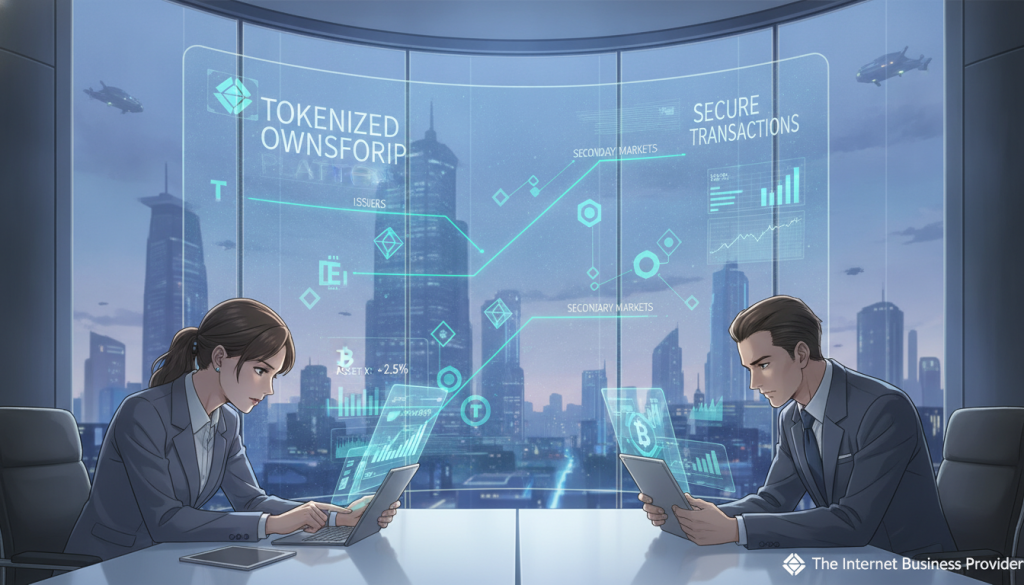
How Tokenized Ownership Works: From Issuance to Secondary Markets
Tokenized ownership represents a new frontier in how we interact with assets and investments. Understanding the lifecycle of a tokenized asset is crucial for both businesses and investors. This process begins with origination and structuring, which sets the foundation for effective management and trading.
Origination and Structuring of Tokenized Assets
The first phase involves selecting the asset and determining its legal structure. This may include using a Special Purpose Vehicle (SPV) to ensure compliance and security. Additionally, establishing custody arrangements is vital for safeguarding the underlying asset.
During this phase, the focus is on creating a robust framework that supports the asset’s value and regulatory adherence. This groundwork is essential for a successful tokenization process.
Ongoing Management and Trading of Tokens
After the asset is structured, the next step is issuance. Developers write smart contracts that encode the rules governing the token. These rules include total supply, holder eligibility, and transfer restrictions, ensuring compliance with regulations such as KYC/AML verification.
Once the tokens are minted on a chosen blockchain, they can be traded on digital asset exchanges or over-the-counter. This phase provides liquidity and price discovery for previously illiquid assets, creating a vibrant market.
Smart contracts play a crucial role in automating ongoing management tasks. They handle dividend distributions, voting processes, and valuation updates by interacting with offchain data. This automation reduces the need for manual intervention, ensuring the token remains accurate and up-to-date.
The entire lifecycle from origination through ongoing management creates a self-sustaining system. Ownership records remain transparent, transactions settle atomically, and investors maintain verifiable claims on the underlying assets.
| Phase | Description |
|---|---|
| Origination | Selecting the asset and establishing legal structures. |
| Issuance | Minting tokens with smart contracts that define rules. |
| Trading | Listing tokens on exchanges for liquidity and price discovery. |
| Management | Automating tasks through smart contracts for efficiency. |
| Transparency | Maintaining clear ownership records for investors. |
Main Benefits of Digital Asset Ownership
The shift towards owning digital items is transforming how businesses operate and thrive. Understanding the benefits of ownership can lead to improved financial outcomes and operational advantages.
Enhanced Liquidity and Market Accessibility
One of the primary benefits of owning digital items is enhanced liquidity. Traditional assets, like private equity or real estate, often suffer from a liquidity discount. Selling these assets can take weeks of paperwork and incur significant fees.
Tokenized ownership changes this dynamic. It allows for atomic settlement, where asset transfer and payment occur simultaneously on-chain. This eliminates counterparty risk and removes the common T+2 settlement delays found in traditional markets.
Moreover, fractionalization lowers minimum investment thresholds. This means a broader range of investors can build diversified portfolios across asset classes that were previously reserved for institutional players.
Operational Efficiency through Automation
Automation is another key advantage of owning digital items. Smart contracts can handle tasks such as dividend distribution and compliance verification without the need for multiple intermediaries. This streamlines processes that traditionally involve brokers, custodians, and transfer agents.
By reducing the number of intermediaries, businesses save both time and money. This operational efficiency can lead to better resource allocation and improved overall performance.
Improved Transparency and Trust
Blockchain technology enhances transparency, which is vital for building trust. Ownership records, transaction histories, and asset data are fully auditable by regulators and investors alike. This level of transparency helps mitigate fraud and fosters confidence in market integrity.
As these benefits accumulate, they create a flywheel effect. Increased liquidity attracts more investors, which drives further efficiency. Enhanced transparency reinforces trust across the entire ecosystem of digital items.
In conclusion, businesses that embrace ownership of digital items gain significant competitive advantages. They benefit from improved capital access, reduced operational costs, and heightened stakeholder confidence.
Digital Asset Ownership: Storage, Wallets, and Security Essentials
Understanding how to secure your digital items is essential for anyone looking to thrive in the online space. The world of digital items relies heavily on secure storage and access mechanisms. Your digital valuables are stored on the blockchain ledger where they were issued. However, access to these items requires the use of cryptographic keys.
Understanding Public and Private Keys
Each ledger entry has a public and private key associated with it. Think of the public key as a computer-generated email address. This key can be shared with others to receive assets. On the other hand, the private key acts like a password. It must be kept secure, as it serves as proof of ownership for your digital items.
Whenever you want to send cryptocurrency to another person, you need to sign the transaction with your private key. This step is crucial for the transaction to be recognized as valid on the blockchain.
Role and Security of Digital Wallets
Wallets play a vital role in storing your keys securely. They allow you to access and control your digital items. There are different types of wallets, including hardware wallets, software wallets, and custodial versus non-custodial options. Each type has its own security profile and use cases.
Best practices for wallet security include:
- Protecting your seed phrases, which are essential for recovering your wallet.
- Using multi-signature arrangements for business accounts to enhance security.
- Never sharing your private keys with any third party or another person under any circumstances.
It’s important to note that losing your private key means losing access to your associated digital items permanently. In decentralized systems, there is no centralized authority to reset keys or recover lost credentials.
True ownership of your digital items requires maintaining exclusive control over the private keys that govern them. This connection between wallet security and ownership is fundamental in the digital landscape.
Integrating Digital Asset Ownership into Your Business Strategy
In the ever-evolving digital landscape, integrating ownership into your business strategy is essential for sustainable growth. At IBP, we believe every business deserves true digital independence. Long-term success doesn’t come from building on rented platforms; it stems from owning, controlling, and securing your core digital assets.
To begin, businesses should conduct a systematic assessment of their existing digital asset risks. This involves cataloging all current digital properties—websites, social media accounts, content libraries, customer databases, and revenue streams. Identifying which of these are rented versus owned is crucial for understanding vulnerabilities.
Next, evaluating platform dependency risk is vital. Analyze what percentage of revenue, customer access, and brand visibility flows through third-party services. These services can be disrupted by algorithm changes, policy updates, or account actions, leading to potential losses.
Prioritizing which assets to bring under direct ownership is another critical step. Focus on those most essential for business continuity and revenue generation. Examples include customer email lists, core website domains, and proprietary content.
Building a core set of owned digital assets involves several strategies. Start by establishing self-hosted websites on owned domains. Then, migrate customer relationships to direct communication channels. Additionally, creating blockchain-verified digital property can enhance security and ownership verification.
Integrating blockchain-based assets into your existing business infrastructure is essential. Considerations for wallet management, key custody for company assets, and compliance with relevant regulations must be addressed. This integration is not an all-or-nothing proposition but a strategic evolution.
As businesses gradually reduce platform dependency, they can build sovereign digital asset portfolios that compound in value over time. This approach aligns with IBP’s philosophy that true digital independence is achievable for every business through methodical planning and execution. Preparing companies not only for today’s challenges but for the future of digital commerce is vital.
A 4-Step Roadmap to Secure Your Digital Independence
Creating a clear path to secure your online presence is vital in today’s digital economy. This roadmap will guide you through four essential steps to help your company gain control over its digital landscape. Each step is designed to empower your business and prepare it for future challenges.
Step 1: Evaluate Your Current Digital Presence
The first step involves a comprehensive audit of your existing digital footprint. Begin by inventorying all digital accounts your company uses. Assess the ownership status of each asset to determine which are rented versus owned.
Next, map out revenue dependencies. Identify how much of your income relies on third-party platforms. Lastly, pinpoint single points of failure where platform risks could disrupt operations. This evaluation will provide a solid foundation for your digital strategy.
Step 2: Acquire and Control Core Assets
Once you understand your current situation, focus on acquiring and controlling core assets. Start by registering owned domain names. This gives you a permanent online address.
Next, migrate your website hosting to self-controlled servers. This move enhances security and ensures you maintain control over your content. Establish direct communication channels with your customers to foster relationships.
Finally, consider minting blockchain-based property. This process provides verifiable records of ownership, reinforcing your control over your digital assets.
Step 3: Implement Robust Security Measures
Security is paramount in the digital world. Implement hardware wallet solutions for storing cryptographic keys securely. This step is crucial for protecting your assets.
Establish multi-signature approval processes for company transactions involving digital assets. This measure adds an extra layer of security.
Create backup and recovery procedures for your private keys. Train your team on security best practices to ensure everyone understands their role in protecting your digital presence.
Step 4: Leverage Digital Assets for Sustainable Growth
With your assets secured, leverage them for sustainable growth. Use tokenized assets to access new capital markets. This strategy can open up additional funding opportunities.
Build direct monetization models that do not rely on platform revenue sharing. This independence allows you to maximize your earnings.
Consider creating programmable digital property that generates automated returns through smart contracts. This innovation can provide ongoing revenue streams while reducing reliance on external services.
This roadmap is designed to be executed incrementally. By progressively reducing platform dependency, your business can build a portfolio of sovereign digital assets. These assets will appreciate in value and provide strategic advantages over time.
Address common obstacles you may face at each step. For instance, manage the transition from social media audiences to owned email lists. Navigate the learning curve of blockchain technology and wallet management with training and resources.
Ultimately, this roadmap aligns with IBP’s mission of enabling true digital independence. Methodical execution of these steps transforms businesses from tenants on rented digital real estate into sovereign owners of their digital future.
Regulatory and Industry Perspectives on Digital Asset Ownership
The landscape of regulatory frameworks is evolving, significantly impacting how individuals and businesses engage with their digital properties. Understanding these changes is crucial for anyone looking to secure their rights and leverage their assets effectively.
Recent policy developments are reshaping the way digital goods are classified and governed. Regulatory efforts aim to clarify the status of cryptocurrencies, tokens, and NFTs under existing securities laws. This ongoing debate is vital for establishing appropriate frameworks for this new asset class.
Policy Developments Affecting Digital Ownership
Organizations like The Digital Chamber are actively advocating for updates to policy frameworks. Their efforts include pushing for exemptions for certain NFTs from federal securities laws. This move aims to define NFTs as consumer products rather than securities, providing much-needed regulatory clarity for artists and platforms.
There exists a fundamental gap between physical world property rights and the digital realm. Consumers often find themselves with little control over their data and access rights when their digital goods are stored on centralized servers. This situation underscores the need for updated regulations that recognize and protect digital ownership.
The Role of Decentralized Technologies in Privacy and Control
Decentralized technologies, particularly those enabled by blockchain, can restore privacy and control to individuals and businesses. By allowing users to manage their own information and digital property, these technologies eliminate reliance on intermediaries that may exploit or restrict access to assets.
Industry roundtables and public-private collaborations play a crucial role in addressing concerns such as illicit finance risks. Meetings between the U.S. Treasury and NFT industry leaders aim to build a safer and more credible ecosystem for digital assets.
However, outdated regulations continue to create barriers to innovation and adoption. Updated policy frameworks with appropriate consumer protections are essential for the digital age to reach its full potential. Understanding these regulatory developments is key for businesses looking to own, trade, and leverage their digital assets within compliant frameworks.
| Policy Area | Description |
|---|---|
| Cryptocurrency Classification | Efforts to classify cryptocurrencies under existing securities laws. |
| NFT Regulations | Advocacy for NFTs to be defined as consumer products. |
| Decentralization | Using blockchain to restore privacy and control over digital property. |
| Public-Private Collaboration | Engagements between regulators and industry leaders to enhance safety. |
| Regulatory Updates | Need for new frameworks to foster innovation and protect consumers. |
Emerging Trends in Digital Asset Ownership and Tokenization
The landscape of asset management is undergoing a transformative shift, driven by innovative technologies. As we look toward the future, several trends are shaping the way we think about ownership and the flow of value across various markets.
Cross-Chain Interoperability and Global Liquidity
Cross-chain interoperability is becoming a critical emerging trend. Protocols like Chainlink’s Cross-Chain Interoperability Protocol (CCIP) enable tokens to move seamlessly between private bank chains and public DeFi applications. This unification of liquidity across fragmented blockchain ecosystems is essential for unlocking the full potential of tokenized assets.
As tokenized assets gain the ability to flow freely across different blockchains, global liquidity is being unlocked. Investors can now access diverse markets and trading opportunities, regardless of the network that originally issued the asset. This flexibility is a game-changer for asset management.
Future Market Structures Enabled by Tokenization
The future of market structures is being reshaped by tokenization. Traditional financial instruments like bonds, private equity, and real estate are moving on-chain, allowing for instant cross-border settlement and programmable equity. This transformation enhances efficiency and reduces transaction costs.
Moreover, the convergence of traditional finance and decentralized finance is evident as major financial institutions adopt blockchain standards alongside startups. This blurring of lines creates a single interconnected Internet of Contracts, which streamlines operations and fosters innovation.
Emerging use cases are also gaining traction. Tokenized real estate allows for fractional property investment, making it easier for individuals to participate in markets that were previously out of reach. Additionally, luxury goods and collectibles are being tokenized, democratizing access to appreciating asset classes.
In conclusion, these trends are likely to make tokenized ownership the default standard for how value is held and exchanged globally. This shift has the potential to transform trillions of dollars of currently stagnant value into liquid, programmable, and accessible digital assets.

Conclusion
As businesses evolve, the decision to rely on rented platforms or secure owned properties becomes increasingly critical. The risks associated with third-party services can threaten revenue streams overnight. Understanding these risks is the first step toward achieving true independence.
Owned properties provide verifiable ownership through cryptographic keys and independence from centralized platforms. This allows for seamless transfer and leveraging of assets without needing permission from intermediaries.
Moreover, the benefits of ownership include enhanced liquidity through tokenization and operational efficiency via smart contracts. Transparency and trust are improved through immutable blockchain records, ensuring that all transactions are secure.
Following a structured roadmap will guide businesses from evaluating their current digital presence to acquiring core assets and implementing robust security measures. Blockchain technology and tokenization represent a fundamental shift in how value is held and exchanged.
We encourage business leaders to begin their journey toward digital independence today. Assess your platform risk exposure and take the first steps toward building a portfolio of truly owned and secure digital assets that will compound in value for years to come.