
Count to 3. One… Two… Three. That’s all the time to grab a customer’s attention. In today’s fast-paced digital world, a slow site can really turn people off.
Studies reveal that 53% of mobile users leave a site if it takes more than 3 seconds to load. This highlights how vital website loading time is for a good user experience (UX).
A quick site boosts user satisfaction and is key for website speed optimization. With more people using digital platforms, making sure your site is fast is critical. It helps keep visitors and boosts engagement.
Key Takeaways
- Fast loading times are crucial for retaining users.
- A slow site can lead to high abandonment rates.
- Optimizing for Core Web Vitals improves user experience.
- Website loading time directly impacts user engagement.
- Prioritizing website speed optimization is essential for digital success.
The 3-Second Rule: Why Website Speed Is Your First Impression
You have just 3 seconds to grab a visitor’s attention before they leave. In today’s fast world, how fast your website loads is key. A slow site can cause high bounce rates, hurting your conversion rates and SEO rankings.
The Alarming Statistics: 53% of Mobile Users Abandon Slow Sites
53% of mobile users will leave if your site takes over 3 seconds to load. This alarming trend shows how critical mobile speed is. With most web traffic from mobiles, fast loading is essential. A slow site loses visitors and potential customers, hurting your profits.
| Loading Time | Bounce Rate | Conversion Rate |
|---|---|---|
| 0-3 seconds | 20% | 2.8% |
| 4-6 seconds | 40% | 1.9% |
| 7+ seconds | 60% | 1.1% |
Digital First Impressions: Speed as Your Virtual Handshake
When a user visits your site, its speed is like a virtual handshake. It’s an immediate welcome that shapes their whole visit. A quick site shows you respect their time and professionalism. But a slow site looks like you don’t care or are incompetent. In today’s digital world, speed is not just technical; it’s a key part of your brand’s first impression.
The Hidden Cost of Slow Websites: Conversion Killers Revealed
A slow website can quietly kill conversions. In today’s world, where we expect things fast, website speed is key. It’s not just a technical detail; it’s crucial for success.
The financial loss of a slow website is often overlooked. But the numbers show a clear story.
Bounce Rates and Abandoned Carts: The Numbers Don’t Lie
When a website loads slowly, visitors often leave. This leads to higher bounce rates and abandoned carts. Research shows a one-second delay can greatly reduce conversions.
Industry Benchmarks: How Does Your Site Compare?
Knowing industry benchmarks helps check your website’s performance. For example, e-commerce sites usually load in 2-3 seconds. If your site takes longer, you’re losing customers.
The Direct Correlation Between Speed and Conversions
Website speed and conversion rates are linked: faster sites convert more. Optimizing for speed is key for conversion optimization.
Revenue Impact: Calculating What Slow Speed Costs You
The revenue impact of a slow website is big. For instance, a site with $100,000 daily sales could see millions more in revenue by just one second faster. To understand this, you need to know your site’s current speed and potential improvements.
By tackling slow websites, businesses can boost their profits. It’s not just about making users happy; it’s about making more money.
Speed = Trust: How Loading Time Shapes Brand Perception
Your website’s speed is key to your brand’s image. In today’s digital world, users judge your brand in seconds. A fast site makes a good first impression, building trust and encouraging exploration.
The Psychology Behind Speed and Quality Perception
Website speed and brand perception are linked by psychology. A quick site shows reliability and professionalism. Speed means efficiency and detail, qualities we value.
A slow site, however, can frustrate users and harm your brand’s image. They might think a slow site shows poor management or neglect of user experience.
Your Digital Storefront: Why Users Judge Service Quality by Site Speed
Your website is often the first thing users see. It’s like a digital storefront, where they judge your service quality. A fast site makes a good first impression, while a slow one can lose users.
| Aspect | Fast Website | Slow Website |
|---|---|---|
| User Perception | Professional, Reliable | Unprofessional, Unreliable |
| Brand Image | Positive, Trustworthy | Negative, Frustrating |
| Customer Retention | High | Low |
Optimizing your website’s speed improves more than just a technical aspect. It boosts your brand’s image and gains user trust.
Mobile Users Won’t Wait: The Mobile Speed Imperative
In today’s world, having a fast website is essential. Most people use their mobile devices to access websites. So, mobile speed is more important than ever.
Mobile users have different needs than desktop users. It’s important to understand why they are less patient.
Why Mobile Users Are Even Less Patient Than Desktop Users
Mobile users are always on the move. They don’t have much time to wait. Google says 53% of mobile users will leave if a site takes more than 3 seconds to load. This shows how crucial fast mobile sites are.
As
“The key is not to prioritize what’s on your schedule, but to schedule your priorities.” – Stephen Covey
, knowing what mobile users value is key. For them, speed is the top priority.
Mobile-First Indexing: How Google Prioritizes Fast Mobile Sites
Google now focuses on the mobile version of websites first. This change makes having a fast, mobile-friendly site even more important. Slow or non-optimized sites might not rank well.
Here’s why:
- Google favors mobile-friendly sites in search results
- Fast mobile sites tend to rank higher
- Slow sites might get lower rankings
By focusing on mobile speed and making your site mobile-friendly, you can boost your rankings. This also improves the user experience.
Core Web Vitals Explained: Google’s Speed Metrics That Matter
Google’s Core Web Vitals are changing how we see website speed and user experience. These metrics measure how well web pages perform and how users interact with them. They give a full picture of how your site works for users.
Core Web Vitals are key metrics for a good user experience, according to Google. They focus on three main areas: how fast pages load, how interactive they are, and how stable the visuals are.
Understanding LCP (Largest Contentful Paint)
Largest Contentful Paint (LCP) checks how long it takes for the biggest content element to show up. This could be an image, video, or text. A good LCP score means your page loads quickly and well. To better LCP, work on server response times, optimize images, and use WebP.
“LCP is key because it affects how fast users can start using your content,” Google’s Web Dev says. A fast LCP helps lower bounce rates and makes users happier.
Mastering FID (First Input Delay)
First Input Delay (FID) looks at how fast a page responds to the first user action, like clicking. A low FID score means your site is quick and interactive. To boost FID, reduce JavaScript’s impact by splitting code and deferring non-essential scripts.
FID is important because it shows how responsive your site feels to users. A fast FID means users can interact smoothly without delays.
Conquering CLS (Cumulative Layout Shift)
Cumulative Layout Shift (CLS) checks how stable your web pages are. It measures content shifts during loading. A low CLS score means your page layout is steady and doesn’t surprise users. To improve CLS, use size attributes for media and avoid adding new content above existing.
As Google points out, a good CLS score is key for keeping user trust and a smooth browsing experience. By focusing on these three Core Web Vitals, you can greatly improve your site’s performance and user experience.
Website Speed Optimization and Core Web Vitals: The Complete Approach
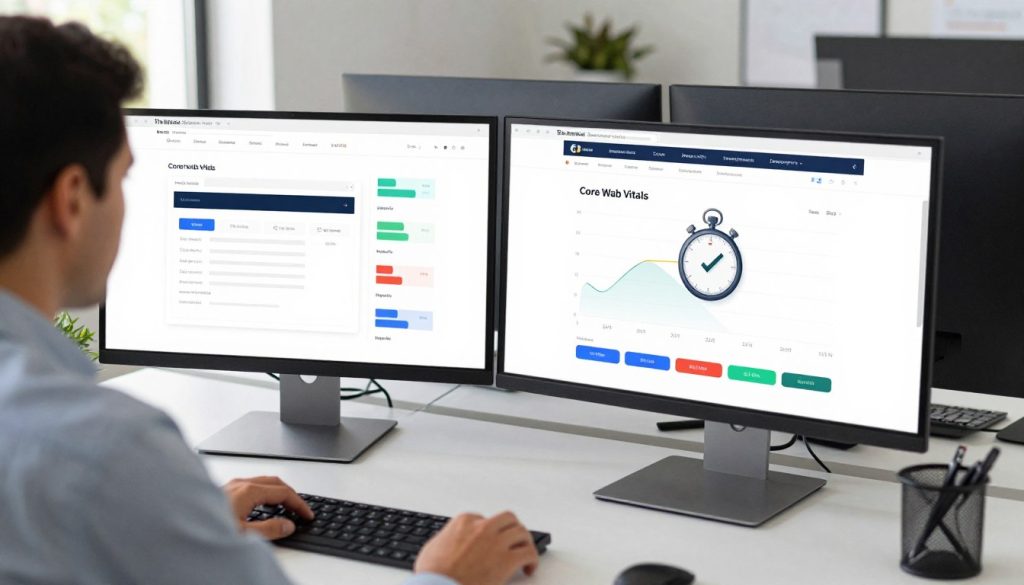
Website speed optimization is about making your site fast and efficient. It involves technical, visual, and performance improvements. A good strategy covers server response times and visual content optimization.
Technical Foundations: Server Response and Code Optimization
A fast website starts with its technical setup. This means making server response times better and cleaning up code.
Server-Side Optimizations That Make a Difference
Server response time is key for website speed. Improving server performance means using efficient caching, cutting down database queries, and CDNs to lower latency.
Frontend Performance: JavaScript, CSS, and HTML Best Practices
Frontend optimization is also vital. It’s about minifying files, reducing render-blocking resources, and using modern browser features for better performance.
Visual Content Optimization Without Sacrificing Quality
Visual content like images and videos slow down pages. It’s important to optimize them without losing quality.
Using image compression, lazy loading, and right file formats helps a lot. They make visual content load faster without losing quality.
Real Results: How Faster Sites Transformed These Businesses
Faster websites are key for businesses today. A quick and smooth online experience is vital for keeping customers. Companies that focus on website speed see big changes in how they work and their profits.
Case Study: The E-commerce Store That Boosted Sales by 20%
An e-commerce store made a big leap by speeding up its website. They cut down loading times and made their site better. This led to a 20% increase in sales.
This success came from a better user experience, fewer people leaving the site, and more trust from customers.
- Improved loading speed
- Enhanced user experience
- Increased customer trust
- Reduced bounce rates
This e-commerce store’s story shows how website speed can grow a business. By making technical improvements, they saw big gains in sales.
Industry-Specific Speed Improvements and Their ROI
Website speed boosts vary by industry. For example, e-commerce sites see more sales, and publishers get more readers. The money saved from these improvements often pays for the initial cost of making the site faster.
| Industry | Speed Improvement | ROI |
|---|---|---|
| E-commerce | 20% faster loading | 15% increase in conversions |
| Publishing | 30% faster loading | 20% increase in engagement |
Knowing their industry’s needs helps businesses make the best speed improvements. This way, they get the most return on their investment.
IBP’s “Turbo-Charge” Optimization: More Than Just a Plugin

The Internet Business Provider’s ‘Turbo-Charge’ Optimization is more than a plugin. It’s a full solution to make your website faster. We know a fast site is key for a good user experience and better search rankings.
Our ‘Turbo-Charge’ Optimization service goes deep into what makes a website fast. It’s not just adding a plugin. We analyze your site’s performance and create a custom plan to speed it up.
Our Comprehensive Three-Phase Speed Optimization Process
We have a three-phase speed optimization plan for a complete site performance boost.
- Phase 1: Audit and Analysis – We check your website to find what slows it down.
- Phase 2: Optimization – We use the audit results to make your site faster. This includes code tweaks, image compression, and caching.
- Phase 3: Testing and Verification – We test your site to make sure it’s fast and works right.
| Phase | Description | Key Activities |
|---|---|---|
| 1 | Audit and Analysis | Website audit, performance metrics analysis |
| 2 | Optimization | Code minification, image compression, browser caching |
| 3 | Testing and Verification | Performance testing, functionality testing |
Ongoing Monitoring and Maintenance: Keeping Your Site in the Green Zone
Keeping your website fast is ongoing. Our team does regular checks to keep your site running smoothly.
Choosing IBP’s ‘Turbo-Charge’ Optimization means you’re investing in your online success. It’s not just about speed; it’s about long-term success.
Take Action Now: How to Test Your Site Speed
Improving your site’s performance starts with a speed test. This step helps you see where your site stands and what needs work. By checking your site’s speed, you can make it better for users and maybe even increase sales.
Free Speed Test Tools and How to Interpret Results
There are many free tools online to test your site’s speed. Google PageSpeed Insights, GTmetrix, and Pingdom give detailed reports. They show how fast your site loads and where it can get better.
When you look at the results, pay attention to Largest Contentful Paint (LCP), First Input Delay (FID), and Cumulative Layout Shift (CLS). These numbers tell you how well your site works for users.
A good LCP score means your site’s biggest part loads fast, usually in 2.5 seconds. A low FID score shows your site is quick to react. By checking these numbers, you can find what needs fixing.
| Tool | Key Metrics | Insights |
|---|---|---|
| Google PageSpeed Insights | LCP, FID, CLS | Performance optimization suggestions |
| GTmetrix | Page Load Time, Total Blocking Time | Detailed performance report |
| Pingdom | Load Time, Page Size | Performance grade and recommendations |
IBP’s Complimentary Speed Audit: What We Look For
IBP offers a free speed audit to check your site’s performance. We look at server times, image sizes, and code quality. Our team uses special tools to find problems and suggest fixes.
Our audit gives you a detailed report on how to improve. We aim to help you make your site faster and better for users.
Conclusion: Don’t Let Another Customer Leave in Those 3 Seconds
Speeding up your website is now essential, not just nice to have. A slow site can cause people to leave quickly, leading to lost sales and a bad reputation. The need for website speed optimization is clear, especially with more people using mobiles and Google focusing on Core Web Vitals.
Improving your website’s Core Web Vitals can make a big difference. It can make users happier, increase sales, and help your site rank better in search results. It’s important to work on all aspects of website speed optimization, like technical tweaks and making your site look good.
Now you know why and how to make your website faster. Use free tools to check how fast your site is. For a detailed check, get help from experts who can give you specific tips to speed up your site.
In today’s online world, a quick and easy-to-use website is key to keeping customers. Don’t let another customer go because of slow loading times. Make your website faster today and enjoy better user satisfaction and business success.