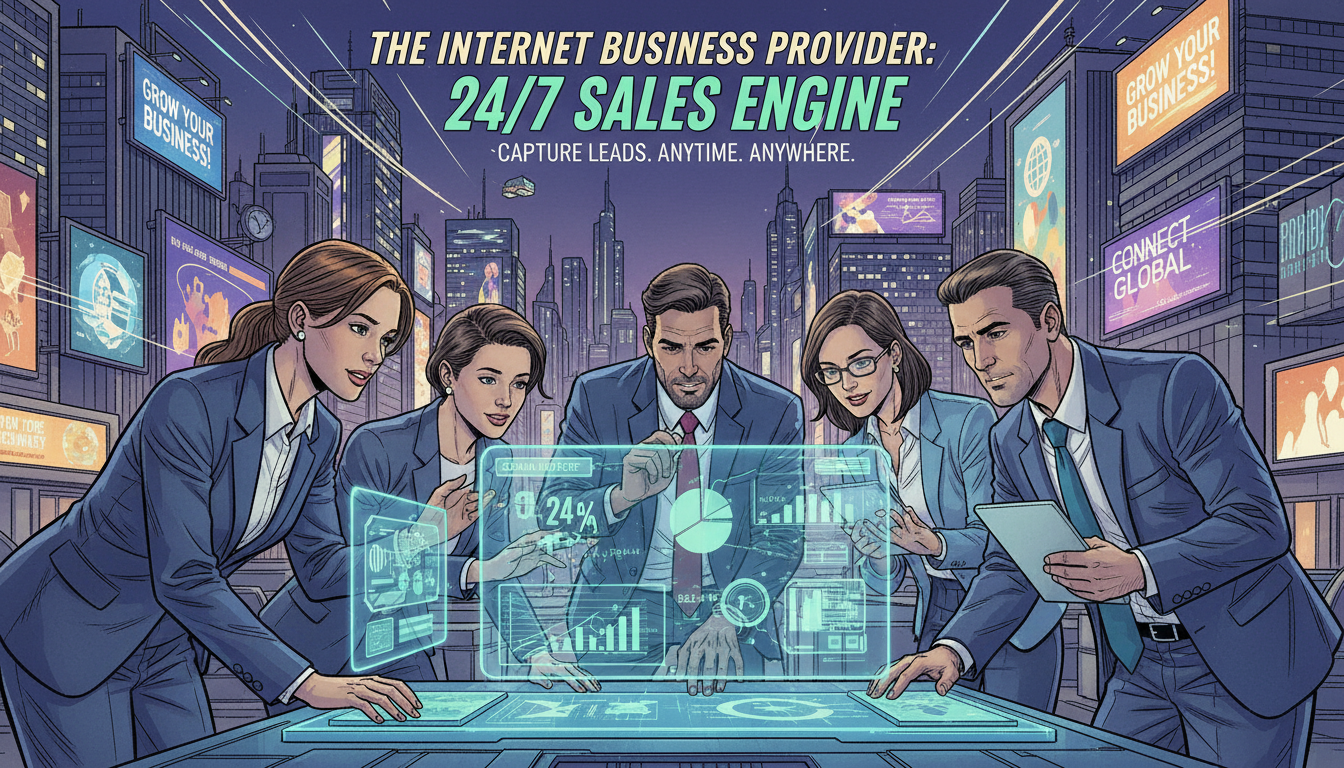
While you are recharging for the next business day, your most motivated prospects are often just beginning their search. If your website is merely a digital brochure that closes when you do, you are leaving revenue on the table.
Imagine a perfect-fit customer lands on your page at 10 PM, ready to talk. If your team is offline, that interest goes cold, and they soon find a competitor. Traditional business hours are becoming obsolete today as people expect instant results.
Research shows that 70% of the market researches solutions late at night. It is time to move beyond manual outreach and build a 24/7 sales engine. At The Internet Business Provider (IBP), we believe your conversion process shouldn’t have an off-switch.
This intelligent system is designed to engage and capture high-quality leads at any hour. It works with the same efficiency as your best staff while you and your team are sleeping or occupied with other tasks.
Every hour your website remains inactive represents lost opportunities. This guide will walk you through building a revenue-generating system that responds instantly to every inquiry and keeps you ahead of the competition.
Key Takeaways
- Engage active customers during late-night search hours.
- Capture qualified opportunities while your team sleeps.
- Eliminate the need for expensive global night shifts.
- Meet modern buyer expectations for instant gratification.
- Maintain a constant presence against your competitors.
- Build an automated system to generate revenue every night.
Why Your Business Loses Money Every Night
Your bottom line suffers a silent hit every single time a late-night visitor leaves your site without an answer. The traditional 9-to-5 business structure creates an artificial wall between your products and your most motivated buyers. Modern commerce operates on a global scale, yet many companies still treat their digital presence like a small brick-and-mortar shop with limited access.
Data reveals that 70% of the modern market actively researches solutions during late-night hours when your staff is unavailable. These prospects are often at their highest stage of intent, seeking immediate relief for pressing problems. When they encounter a static “contact us” form that stays unread for twelve hours, they simply move on to a faster competitor.
The cost of this friction is staggering for any growing business. Every night your site remains “dark” represents a massive leak in your potential sales pipeline. High-quality traffic arrives with a specific problem to solve, but the lack of engagement causes their urgency to evaporate instantly.
The speed of your response is often more important than the price of your product in the eyes of a frustrated buyer.
This systematic loss compounds over time, leading to thousands in missed revenue every single month. By forcing high-intent leads to wait for a human to wake up, you essentially hand over your sales to more responsive rivals. This isn’t just a minor inconvenience; it is a fundamental flaw in your growth strategy.
Consider these critical impacts of staying offline when your customers are most active:
- Artificial Barriers: You disconnect from people who work non-traditional schedules or live in different time zones across the globe.
- Dissipated Urgency: Buying momentum is a fragile asset that disappears the moment a lead feels ignored or forced to wait.
- Opportunity Cost: You lose 12 to 16 hours of active lead generation every single day of the year, totaling thousands of hours annually.
Closing the engagement gap is essential for maintaining consistent sales growth. If you do not capture interest at the peak of psychological intent, you likely leave millions on the table over the long run. The night owl economy is thriving, and your absence is a gift to everyone else in your industry.
The “Leaky Bucket” Problem: Revenue Slipping Through the Cracks
Many businesses spend thousands on ads only to let potential customers slip away during the night. They pour resources into generating traffic, but the leads vanish through cracks in their engagement system. This happens because they are not “awake” when global or late-night prospects are searching for solutions.
The leaky bucket metaphor perfectly illustrates this waste of marketing budget. You work hard to fill the bucket with potential buyers, but silence acts like a hole at the bottom. Without a way to catch these people instantly, your hard-earned resulting leads are lost to the void of the internet.
What Happens When Prospects Search After Hours
Life does not pause when typical office hours end for the day. Many people juggle family and work, often doing their product research very late at night. When they visit your website, they usually have a high level of interest and want answers immediately.
If they encounter a generic “we will contact you soon” message, their momentum stops. Most visitors will not wait for a callback that might come sixteen hours later. They want to solve their problem now, while the idea is fresh in their minds.
The Real Cost of Delayed Responses
Research consistently shows that speed is the most critical factor in a successful conversion. If you contact a person within five minutes, you are 21 times more likely to qualify them. Waiting just thirty minutes causes the likelihood of a sale to drop off a cliff.
Every time a person waits for a response, their excitement for your product fades. Late-night visitors are often the highest-quality buyers because they invest their personal time to find a solution. Missing these opportunities can lead to a 50-70% loss in potential revenue for your company.
| Response Time | Conversion Likelihood | Prospect Emotion |
|---|---|---|
| Under 5 Minutes | Extremely High | Excited / Valued |
| 30 Minutes | 21x Lower | Distracted / Searching Elsewhere |
| Next Business Day | Near Zero | Cold / Forgotten |
Why Competitors Who Respond First Win the Deal
In most industries, the first company to provide value usually wins the contract. It does not matter if you have a superior product if your competitor answers the inquiry first. By responding instantly, they capture the trust of the buyer while the need is still urgent.
“In the world of modern sales, the fast eat the slow. Speed is the ultimate currency of trust for any digital brand.”
When your website lacks an instant engagement system, you effectively hand your traffic to rivals. These competitors have set up automated systems to catch every inquiry at any time of day. They turn your missed opportunities into their loyal, high-paying customers.
What is a 24/7 Sales Engine?
A 24/7 sales engine is a set of tools that work together to find and help customers. It uses AI and smart workflows to change your website into a machine that makes money. This happens without a human needing to click a button for every new visitor.
Your business stops being a quiet brochure that only works during the day. Instead, this sales engine acts as a digital worker that never gets tired or takes a break. It ensures that you are always ready to talk to potential buyers, no matter the time.
Defining the Autonomous Lead Capture System
An autonomous growth system is a collection of digital tools that work in harmony. It combines AI chatbots, smart forms, and automated email sequences to guide people. These parts talk to each other to help move a visitor through your sales funnel.
This is much more than a simple chat box on a page. It is a sophisticated ecosystem that understands what a visitor really needs. It can qualify their intent and provide personalized information instantly to build immediate trust.
How It Differs From Traditional Sales Methods
Traditional methods rely on human staff to handle every single phone call and email. This creates major bottlenecks when many people reach out at once. It also leaves massive gaps during the night when your team is finally asleep.
An automated approach captures leads without manual oversight or human effort. This changes the economics of growing your company. You can grow your reach without always needing to hire more people to answer basic questions.
| Feature | Traditional Methods | 24/7 Sales Engine |
|---|---|---|
| Availability | Business hours only | Always-on availability |
| Response Speed | Slow and manual | Instantaneous engagement |
| Scalability | Limited by headcount | Scales with website traffic |
By using this system, you eliminate the wait time that often kills a deal. It creates a seamless experience for the user and a predictable revenue stream for the owner. Your sales capacity finally becomes unlimited and truly global.
Building Your Automation Infrastructure: The Core Components
Think of your automation infrastructure as the invisible machinery that keeps your business running long after the office lights go out. To turn your site into a true revenue generator, you must implement a stack of integrated tools that handle the heavy lifting. This framework is not just a collection of apps; it is a unified system designed to treat every lead like a priority.
“The best way to predict the future is to create it, and in sales, that means building systems that work while you sleep.”
A high-performing sales engine relies on three foundational pillars. These pillars ensure that no prospect falls through the cracks and every interaction feels personal. By combining these elements, you create a frictionless journey from the first click to the final meeting.
AI Chatbots: Your Virtual Front Desk
Modern AI chatbots act as your virtual front desk, providing the first point of contact for everyone. These solutions offer immediate engagement by greeting visitors the second they arrive on your page. They ask qualifying questions and provide relevant info from your knowledge base instantly.

Advanced platforms like eesel AI can be trained on your specific website content, internal documents, and product catalogs. This allows the bot to provide accurate, contextually relevant answers rather than generic scripted responses. It guides prospects toward the next steps based on their unique behavior and needs.
Automated Email Sequences: The Follow-Up Machine
Once you capture a lead, the email follow-up machine takes over to nurture that relationship. Effective automation goes far beyond simple drip campaigns by using behavioral triggers and conditional logic. This ensures that your messages adapt to how each individual prospect interacts with your content.
ActiveCampaign combines CRM, multi-channel messaging, and workflow automation into a single system. Similarly, HubSpot offers comprehensive nurturing workflows that keep your brand top-of-mind without manual effort. These sequences ensure consistent communication throughout the entire buyer journey.
| Component | Primary Function | Key Benefit |
|---|---|---|
| AI Chatbots | Immediate Interaction | Captures intent instantly |
| Email Workflows | Lead Nurturing | Maintains consistent contact |
| Booking Tools | Direct Conversion | Eliminates scheduling friction |
Self-Service Booking Calendars: Eliminating Schedule Tennis
Self-service booking calendars solve the frustrating “schedule tennis” that often kills a deal’s momentum. Systems like Calendly allow prospects to view your real-time availability and book appointments instantly. This empowers the lead to take action exactly when they are most interested in your services.
These calendars sync with your CRM to keep data up-to-date and organized for your sales team. This infrastructure does not replace human salespeople; instead, it augments their capabilities. By automating repetitive tasks, your staff can focus on high-value conversations with properly warmed and qualified prospects from your website.
Step 1: Setting Up AI Chatbots That Actually Convert
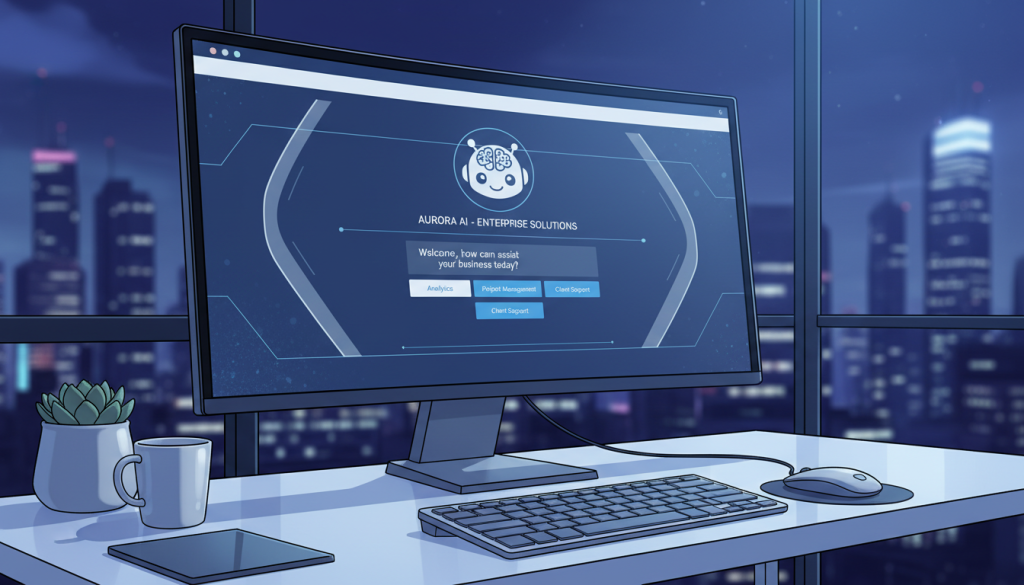
Turning your static website into a dynamic sales force starts with implementing the right AI chatbot technology. These digital assistants do more than just greet visitors; they act as the first point of contact to drive conversion when your human team is offline.
Building this system requires a focus on both intelligence and user experience. By selecting the right software, you ensure every visitor feels heard and valued immediately. This proactive engagement turns casual browsers into serious buyers without any manual effort.
Choosing the Right Chatbot Platform
The first step is evaluating which tools best fit your specific business model. You should look for platforms that offer easy integration with your current tech stack and provide clear analytics to track performance.
B2B companies often benefit from Drift, which is hyper-focused on turning visitors into scheduled meetings. It qualifies visitors on the spot and books time directly on a sales rep’s calendar. For e-commerce brands, Gorgias offers deep integration with product catalogs and order management to handle customer service efficiently.
Training Your Bot on Your Business Knowledge
Modern AI needs a “brain” to function effectively rather than just following a rigid script. You must train your bot on your specific content, including help docs, pricing sheets, and product specifications. This ensures the AI answers questions with the same accuracy as your top salesperson.
Solutions like eesel AI allow you to connect your knowledge sources with just a few clicks. You can sync your Shopify catalog or internal documents to the system almost instantly. This setup is entirely self-serve, allowing you to get a custom bot live on your site in under an hour.
Creating Conversation Flows That Guide Prospects
Effective bots guide prospects through a natural dialogue that feels helpful rather than robotic. Start with a friendly greeting and use strategic questions to identify what the visitor needs. This logical flow helps the bot provide the right information at the perfect moment in the buyer’s journey.
Always include a clear escape hatch so users can reach a human for complex issues. Strong calls-to-action should conclude every interaction, whether it is booking a demo or downloading a guide. Use conversational language and contractions to make the automated experience feel warm and authentic.
Step 2: Designing Logic-Based Forms for Lead Qualification
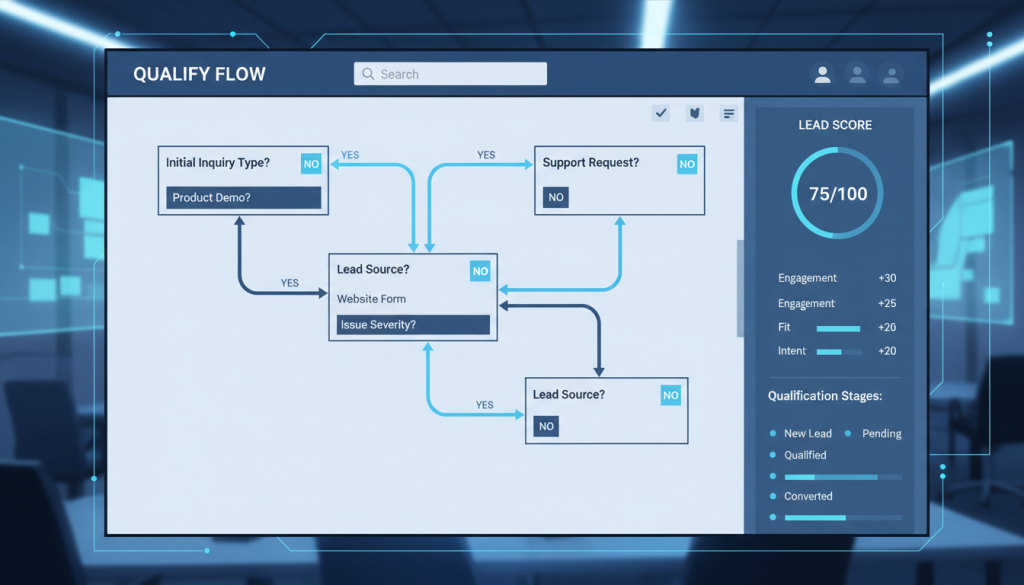
Strategic form design acts as a digital gatekeeper, ensuring your sales team only spends time on the most promising opportunities. Instead of just collecting a basic email, these tools use intelligent sequencing to separate casual browsers from serious buyers. By using lead qualification software, you can ensure your team focuses on prospects with high intent.
A high-quality system should do more than just sit on a landing page. It should track how a prospect interacts with your content to gauge their interest levels. For instance, tools like ActiveCampaign allow you to monitor when a potential buyer views multiple listings or books a showing.
This behavioral data helps you prioritize each lead before a human ever steps in. This automated approach filters out the noise. It lets you focus on the people most likely to sign a contract today.
Creating Smart Questions That Filter High-Intent Leads
Effective forms feel like a natural conversation rather than a cold interview. You should ask strategic questions that reveal budget capacity, authority, and the timeline for a purchase. For example, asking about a prospect’s current pain points provides immediate value by helping them clarify their own needs.
To maintain a high conversion rate, you must find a balance between data and friction. Usually, a short form with three to five targeted fields performs better than an exhaustive questionnaire. This approach ensures you gather enough information without overwhelming the visitor.
Focus on questions that reveal intent. Ask about their budget range or how soon they need a solution. High-intent leads will appreciate the directness and the ability to state their needs clearly.
Setting Up Conditional Logic and Branching
Conditional logic allows your forms to adapt dynamically based on previous answers. If a user selects a specific budget range, the next step might ask about their launch goals. This creates a personalized experience that keeps the user engaged throughout the page.
You can also use progressive profiling to build a complete profile over time. The software remembers returning visitors and only asks for new details during later visits. This method builds a detailed lead profile without being repetitive or intrusive.
Branching paths ensure users only see what is relevant to them. If a prospect isn’t a good fit, the form can politely redirect them to helpful resources. This saves your sales team from chasing dead ends.
Assigning Lead Scores Based on Responses
Lead scoring allows you to rank leads based on their readiness to act. You can assign point values to specific answers, such as a high budget or an immediate timeline. When a score hits a certain threshold, the automation triggers routing to the correct agent.
This ensures that your top sales reps spend their energy on the most valuable opportunities. You can even use dynamic content to tailor follow-up messages based on the journey. Smart automation makes every message feel relevant to the prospect’s unique situation.
Routing can happen automatically based on region, value, or product type. This ensures that every interaction with leads is handled by the person best equipped to close the deal. You move from guessing who to call to knowing exactly who is ready to buy.
Step 3: Building Automated Email Sequences That Nurture Leads
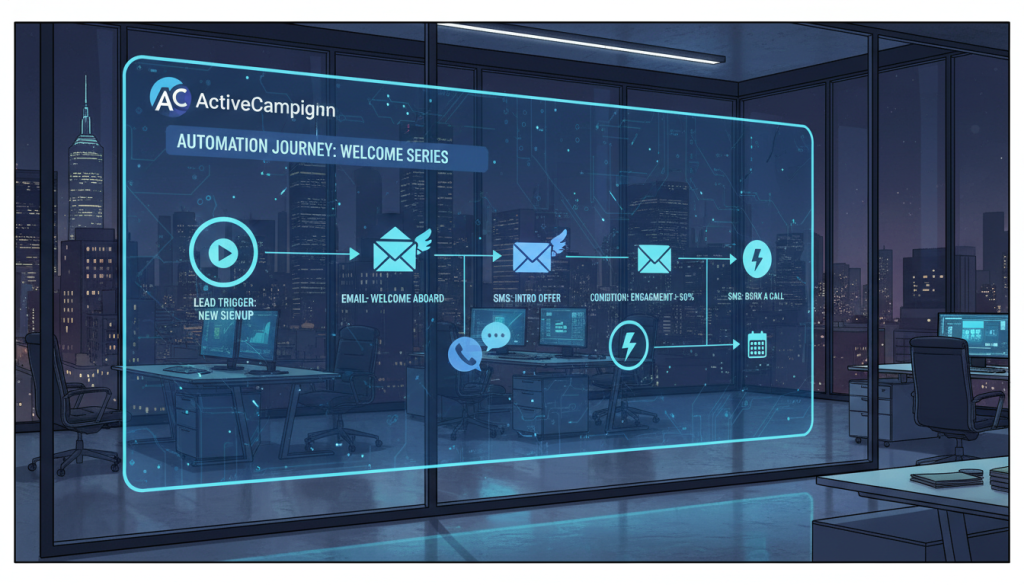
Smart automation doesn’t stop at the form submission; it continues through strategic email sequences that guide your prospects toward a sale. Using platforms like ActiveCampaign, you can build these paths using an AI Automation Builder. This tool helps you reach prospects where they are most comfortable.
Modern tools offer native functionality for more than just email. You can include SMS and WhatsApp messages to ensure your brand stays top-of-mind. This multi-channel approach helps you connect with leads who might ignore a crowded inbox but respond to a quick text.
Mapping Out Your Email Journey
Your strategy should mirror your typical sales cycle. Start by identifying the key stages your prospects move through, such as awareness and decision. Create specific content for each phase that addresses common objections or questions.
A typical nurture path begins with an immediate acknowledgment of the prospect’s action. Follow this with educational tips that build trust and show your expertise. Finally, introduce social proof and clear opportunities for them to convert.
Writing Emails That Feel Personal, Not Robotic
People buy from people, not machines. Use a conversational tone that sounds like a helpful human friend. Address the reader directly and share relevant stories to build a genuine connection.
Avoid heavy marketing jargon that often triggers skepticism. You want to focus on high-quality messaging that feels like a one-on-one conversation. This approach keeps your brand authentic even while the system runs on autopilot.
Setting Triggers Based on User Behavior
Behavioral triggers ensure your messages arrive at the right time. You can launch specific sequences based on what a prospect does on your site. These actions might include form submissions or specific page visits.
For example, set up after-hours logic for late-night inquiries. The system can send an instant confirmation and then follow up the next morning with more details. This logic-based approach ensures you capture leads when their interest is at its peak.
Effective sequences typically space messages 2-4 days apart. This frequency maintains your presence without overwhelming the recipient. Use time-of-day optimization to boost engagement by sending messages when each individual is most likely to click.
Step 4: Implementing Self-Service Booking Systems
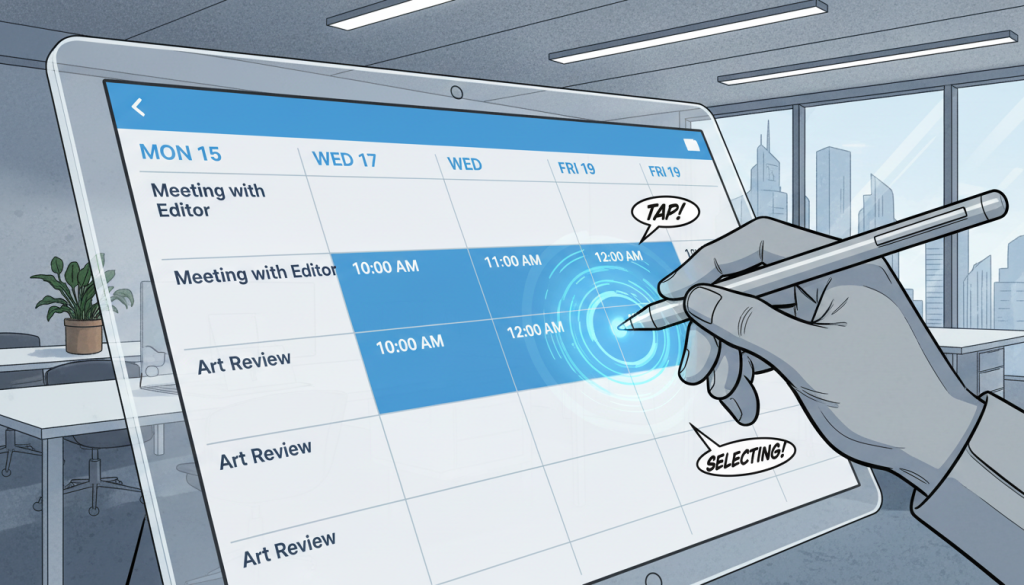
The final piece of your automated engine is a self-service scheduling system that works while you sleep. This technology eliminates the productivity drain of “calendar tennis,” where multiple emails fly back and forth to find a meeting time. Instead, prospects see your real-time availability and claim a spot the moment they are ready to engage.
By removing this friction, you capture the lead’s peak interest before it cools off. This immediate action transforms a passive visitor into a scheduled appointment without any manual effort from your staff. Providing this level of autonomy is essential for modern B2B buyers who value efficiency.
Choosing Calendar Software That Integrates With Your Stack
Your chosen tool must offer a deep integration with your existing tech stack to be effective. For example, you can sync ActiveCampaign CRM to your calendar to keep all contact records perfectly up-to-date. When a lead books a slot, the system should automatically update their stage in your sales pipeline.
Using a Calendly integration is another excellent way to trigger automated follow-up sequences. This ensures that every part of your 24/7 engine knows exactly where the prospect stands. Seamless data flow between your chatbot, email tool, and scheduler is what makes the automation feel professional rather than disjointed.
Setting Availability Rules and Buffer Times
To protect your team from exhaustion, you must configure smart availability rules within the software. Set specific working hours and mandatory buffer time between meetings to prevent back-to-back stress. These gaps allow your reps to take notes and prepare for the next high-value conversation.
You should also implement advance notice requirements to avoid surprise meetings appearing on your dashboard five minutes before they start. Setting blackout dates for holidays or personal time off ensures the system never overpromises your availability. These rules keep your schedule organized while still offering maximum convenience to the prospect.
Creating Different Booking Types for Different Lead Stages
Not every lead requires the same amount of attention, so create multiple booking types to service their specific needs. You might offer a brief 15-minute qualification call for early-stage prospects who are just starting their research. For those further down the funnel, provide 45-minute product demos or in-depth consultation sessions.
Implement intelligent routing rules to direct these prospects to the right team member based on company size or industry. This ensures that the lead always connects with the person best equipped to answer their technical questions. Finally, use automated reminders via SMS or email to reduce no-show rates and keep your sales velocity high.
Lead Qualification on Autopilot: Filtering for High-Intent Prospects
Identifying high-intent prospects becomes a seamless operation once you implement automated tracking. This system transforms how you manage your sales resources by using real-time data signals. It helps you find serious buyers among the crowd of casual browsers.
Automatic qualification ensures your team invests their time where it generates the greatest return. By using logic-based filters, you can move away from manual guessing. This approach builds a more efficient and predictable revenue stream for your business.
How Behavioral Tracking Identifies Serious Buyers
Tracking monitors specific actions across your digital properties to reveal a buyer’s intent. You can see which pages they visit and how much time they spend on key content. Every click provides an insight into their current position in the buying journey.
A serious potential buyer is likely to view multiple listings or request a property valuation on your site. Other signals include viewing customer testimonials or using ROI calculator tools. These behaviors show that the person is actively weighing their options and preparing to act.
Setting Up Lead Scoring Models
You can create rules that assign point values to different actions and attributes. For instance, visiting a pricing page might be worth 10 points. Requesting a direct demo could be worth 25 points to signify high readiness.
This creates a numerical representation of how likely a lead is to convert. It is also vital to use decay scoring so that older actions lose value over time. This ensures your scores reflect current interest rather than what someone did months ago.
By filtering your traffic this way, you prioritize people who show signs they are ready to buy. This data-driven method takes the pressure off your marketing team. It allows them to focus on nurturing those who need more time.
Automatic Routing to the Right Sales Rep
Once a person reaches a target score, the software automatically assigns them to an agent. This routing can be based on the deal value, the specific region, or the industry type. It ensures the most qualified person handles the conversation from the start.
Automatic qualification does not eliminate human judgment but rather accelerates it. It provides your sales team with pre-screened leads and full behavioral context. This makes every initial conversation much more informed and productive.
Your agents will know exactly who to call or text first based on these triggers. This speed can be the difference between winning a deal and losing it to a faster competitor. Using this automation keeps your pipeline moving even when you are not at your desk.
| Prospect Action | Point Value | Intent Level |
|---|---|---|
| Viewing Pricing Page | +10 Points | Medium |
| Requesting a Showing | +25 Points | High |
| Downloading a Guide | +5 Points | Low |
| Inactivity (30 Days) | -15 Points | Declining |
The Psychological Edge: Why 2 AM Responses Build More Trust
The silent hours of the night offer a unique opportunity to build deep credibility through automation. When a person visits your website at midnight, they are often at a peak state of curiosity. Meeting them in that moment changes their entire view of your brand and sets the stage for long-term sales success.
Trust is the hidden engine of every successful deal. It is not just about the quality of your product. It is about how reliable you appear when a potential buyer is looking for help.
The Instant Gratification Factor in Modern Buying
Modern consumers live in an on-demand world. They have been conditioned by services like Netflix and Amazon to expect immediate results. When they reach out to a company, they want an answer right now.
If a business stays silent for too long, the buyer feels ignored. This silence is often interpreted as a sign of poor service or organizational inefficiency. People do not see business hours as a valid excuse for a lack of digital presence anymore.
Immediate engagement satisfies a deep psychological need for validation. It tells the user that their time matters and their problem is a priority. This instant acknowledgment creates a strong foundation for future sales interactions.
How Immediate Engagement Increases Conversion Rates
Speed is the most critical factor in lead management today. Research consistently shows that contacting prospects within five minutes makes them 21 times more likely to move forward. This window of opportunity is incredibly small but very powerful.
If you wait just 30 minutes, your chance of a successful conversion drops significantly. In fact, the probability of qualifying a lead falls by 400% after the first ten minutes of silence. Speed translates directly into revenue.
| Response Window | Impact on Conversion | Prospect Perception |
|---|---|---|
| Under 5 Minutes | 21x Increase | Highly Professional |
| 10 to 30 Minutes | 400% Decrease | Neutral/Waning |
| Over 24 Hours | Near Zero | Disinterested |
Why Automation Beats Delayed Human Responses
An automated response at 2:05 AM builds more trust than a human calling back two days later. By the time forty-eight hours pass, the buyer has likely forgotten their initial excitement. They may have already contacted a competitor who responded faster.
“The best time to influence a buyer is the exact moment they show interest in your solution.”
Automation ensures you capture interest exactly when the lead is ready to engage. It removes the uncertainty that leads to anxiety for customers. They receive a path forward immediately, which signals that your company is always prepared to serve.
This psychological edge compounds over time. A positive initial experience makes the buyer more receptive to your next steps. By providing instant value, you secure a better conversion rate and outshine slower competitors.
Integrating Your Sales Engine With CRM Systems
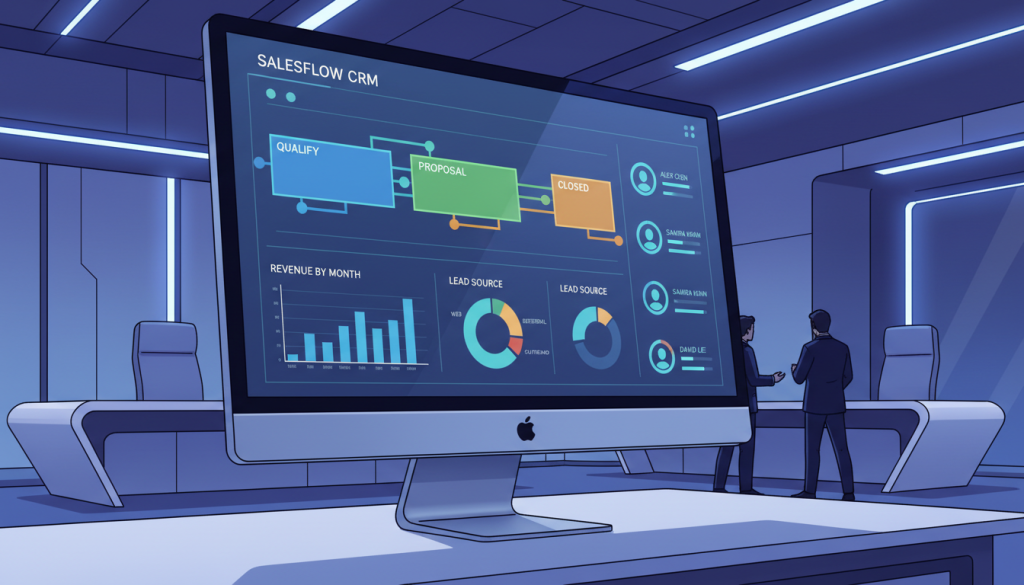
A robust CRM acts as the nervous system for your entire 24/7 automated sales operation. It connects every component of your engine, from chatbots to calendars, into one central database. This ensures your team has access to the full history of every prospect.
Seamless integration allows you to take informed action on every interaction. Without this connection, your data remains trapped in separate tools. You need a unified view to turn cold traffic into loyal customers.
Syncing Lead Data Automatically
Automatic data syncing is crucial for maintaining a high-performance system. Every interaction, like a chatbot conversation or a meeting booking, records immediately without manual entry. This eliminates human error and keeps your records accurate.
When a prospect fills out a form on your landing page, their record updates instantly. Using platforms like ActiveCampaign allows you to manage all marketing channels in one place. You can effortlessly sync email opens, link clicks, and content downloads to a single profile.
ActiveCampaign combines CRM and multi-channel messaging in one powerful ecosystem. It ensures consistent follow-up at every stage of the buyer journey. This connectivity allows your automated workflows to trigger based on real-time user behavior.
Creating Visual Pipelines for Lead Management
Visual pipelines represent your process through distinct stages like “qualified” or “demo scheduled.” This layout helps you track leads as they move toward a final purchase. Managers can instantly see where a lead might be stalling in the process.
Automation handles the heavy lifting by creating deal records and assigning tasks. The software routes prospects to the right representative based on your specific rules. This ensures no high-value opportunities slip through the cracks of your organization.
Detailed visibility helps you forecast revenue based on the current value of your funnel. You can identify bottlenecks and make data-driven decisions to improve your results. This clarity turns your sales process into a predictable engine for growth.
Scalability: The Math Behind 24/7 Automation vs. Hiring
True growth happens when your sales process operates with the same efficiency at midnight as it does at noon. By adopting a 24/7 sales engine, you gain a competitive edge that is difficult to replicate.
This passive lead capture strategy turns your online presence into your most valuable asset. Moving to an automated model requires a major change in your perspective. You must stop viewing yourself as a lone hunter and start acting as an architect.
Automation applied to an efficient operation will always magnify that efficiency. It allows your business to handle more volume without the friction of manual labor.
The True Cost of a Global Sales Team
Achieving true around clock availability through human staffing is an expensive undertaking. To cover every time zone, you need at least three full shifts of employees. Each team member requires a base salary, healthcare benefits, and consistent management.
Beyond the basic payroll, you must consider the overhead of office space and technology. Recruiting expenses and onboarding time add significant hidden costs to your budget. Geographic limitations also make it hard to find qualified talent in every necessary region.
Human performance also naturally varies based on energy levels or personal issues. Maintaining 100% quality across a massive global staff is a constant struggle for most managers.
ROI Comparison: Automation vs. Human Resources
The economic reality of human-led coverage is often prohibitive for a growing business. A team of nine representatives might cost over $700,000 annually. In contrast, high-end automation platforms typically cost between $10,000 and $50,000.
| Expense Category | Human Global Team | Automated Sales Engine |
|---|---|---|
| Annual Cost | ~$700,000 | ~$10,000 – $50,000 |
| Scalability | Linear (More staff needed) | Infinite (No extra cost) |
| Response Speed | Minutes to Hours | Instant (Seconds) |
“Automation is not about replacing people, but about giving your staff the freedom to focus on high-value closing activities.”
How Digital Systems Scale Without Linear Cost Increases
Digital systems achieve unprecedented growth because they do not follow linear cost structures. Your infrastructure can engage 10 prospects or 10,000 prospects simultaneously. This happens without requiring a single additional “headcount” or increasing your monthly overhead.
A smaller sales group supported by robust automation can outperform a much larger manual crew. Automated systems handle routine qualification and nurturing for unlimited prospects. This allows your human sales experts to focus exclusively on complex negotiations.
The consistency advantage is also vital for your long-term success. An automated system delivers the same high quality in the 10,000th interaction as the first. This creates a predictable and reliable 24/7 sales funnel that never gets tired.
Maintaining the Human Touch in Automated Systems
The most successful sales engines blend digital speed with genuine human warmth. Many business owners fear that automation will alienate their audience or make their brand feel cold. However, a well-designed system actually allows you to treat customers with more care by providing instant value at any hour.
The biggest mistake in an automated funnel is treating prospects like mere numbers in a spreadsheet. When communication feels robotic, potential clients will quickly lose interest and leave your site. You must ensure every touchpoint feels relevant to the specific needs of your audience to maintain trust.
For example, buying or selling real estate is a deeply personal decision that requires a gentle hand. Prospects in this industry expect communication that feels human and empathetic. With the right tools, you can scale this connection without increasing your daily manual work.
The goal of automation is not to replace human connection, but to pave the way for it by removing the friction of waiting.
When to Trigger Human Intervention
Automation should handle the initial heavy lifting, but it must know when to step aside. Set up your system to alert your sales team when a prospect asks a complex question. This ensures that expert help arrives exactly when the lead needs it most.
Strategic intervention is also vital for high-value opportunities identified through lead scoring. If a prospect expresses frustration or reaches a critical decision point, a personal touch can seal the deal. Use your automation to flag these moments so you never miss a high-stakes conversation.
Personalizing Automated Messages
Advanced personalization goes far beyond simply inserting a first name into an email template. Use dynamic content blocks that change based on the lead’s geographic location or specific pain points. Tailored messaging makes the recipient feel seen and understood rather than just another lead in a database.
Write your automated responses using conversational language and a bit of brand personality. Avoid stiff corporate jargon and try to reflect the way you actually speak in person. Including relevant stories or acknowledging common industry frustrations can make a digital interaction feel surprisingly personal.
Balancing Efficiency With Authenticity
Transparency is a powerful tool for maintaining engagement in the modern digital landscape. Most people are not offended by AI assistants if those assistants provide immediate, helpful answers. Consider clearly labeling your digital assistants while highlighting their 24/7 availability as a benefit to the user.
The ultimate goal is to use digital systems for repetitive tasks so humans can focus on relationship building. This allows your staff to invest their time in complex problem-solving and emotional intelligence. By balancing these elements, you create a sales engine that is both highly efficient and deeply authentic.
| Task Category | Best Approach | Human Role |
|---|---|---|
| Initial Lead Capture | Fully Automated | Monitor System Health |
| Standard FAQ Support | AI Chatbot | Update Knowledge Base |
| Complex Objections | Human Intervention | Active Negotiation |
| Final Contract Review | Direct Human Touch | Relationship Management |
Common Mistakes to Avoid When Building Your Sales Engine
While automation offers freedom, a poorly designed sales system can actually drive potential customers away. Many business owners rush the process and forget that technology should enhance the buyer’s journey, not replace it entirely.
Applying automation to a broken process only magnifies the problems. You must ensure your underlying strategy is solid before you try to scale it with software. Consider these critical points to ensure your funnel stays healthy:
- Generic Follow-Ups: Avoid sending emails that ignore a lead’s previous actions or specific needs.
- Message Overload: Do not bombard prospects with too many notifications in a short timeframe.
- Platform Complexity: Steer clear of enterprise software that requires months of consulting.
Over-Automating and Losing Personal Connection
The most critical error is treating prospects like rows in a database. When every interaction feels mechanical, you lose the trust that moves people toward a purchase.
Always provide a clear pathway for a lead to reach a human. Real people are needed for complex questions or personal reassurance during major decisions.
“Automation applied to an inefficient operation will magnify the inefficiency.”
Neglecting to Test Your Workflows
Avoid the “set and forget” mentality at all costs. Technical failures or broken links can ruin the experience on your mobile website while you remain completely unaware.
Regularly audit your work to find inappropriate message sequencing. If a lead gets an “intro” email after they already bought a product, it makes your brand look disorganized.
| Error Type | Impact on Business | Best Practice |
|---|---|---|
| Form Friction | Lower lead volume | Request only vital data |
| Complex Logic | Broken user paths | Keep flows simple |
| Outdated Info | Loss of credibility | Weekly data audits |
Failing to Update Your Knowledge Base
Your automated content and chatbots are only as smart as the data you provide. As your pricing updates or new features launch, your AI must reflect those changes immediately.
Inaccurate information kills the conversion rate and leads to frustrated customers. Keep your training data fresh to ensure every automated response stays relevant and helpful.
Choose tools that allow you to make updates in minutes rather than hours. This speed ensures your sales engine always reflects the current state of your business.
Measuring Success: KPIs for Your 24/7 Sales Engine
You cannot improve what you do not measure, especially when your sales engine runs while you sleep. Tracking performance ensures your automation remains a profitable asset rather than a silent expense.
Modern businesses use Active Intelligence AI reporting to uncover trends and identify where prospects drop off. These insights allow you to quickly identify specific opportunities to improve your automated campaigns.
Lead Response Time Metrics
Speed is the foundational metric for any automated lead capture system. Best-in-class systems respond within seconds of a conversion action on your landing page.
Even a five-minute delay can drastically impact your ability to close a deal. You must monitor how quickly your system initiates contact to maintain a competitive advantage.

Conversion Rates by Traffic Source
Analyzing performance by traffic source helps you see where high-intent buyers originate. Different channels like organic search or paid ads require unique engagement strategies to remain effective.
You should track which traffic sources generate the most appointments to calculate your true ROI. Identifying the conversion rate at each funnel stage reveals exactly where your workflow needs optimization.
| Metric | Definition | Business Value |
|---|---|---|
| Speed-to-Lead | Time taken to engage a prospect. | Boosts trust and closing rates. |
| Appointment Rate | Percentage of leads booking calls. | Measures the quality of intent. |
| Pipeline Velocity | Speed of movement through stages. | Shows overall system efficiency. |
Lead Quality Scores and Sales Velocity
Successful sales teams look beyond the raw number of inquiries to assess total revenue potential. Lead quality scoring ensures your system attracts ideal customers rather than unqualified prospects who consume resources.
Sales velocity measures how quickly a lead moves from the initial landing page to a closed contract. This top-level view combines conversion rates and cycle time to reveal the effectiveness of your end-to-end system.
To refine your messaging, you should also monitor engagement metrics for your automated content:
- Email open and click-through rates to gauge interest.
- Chatbot conversation completion rates to find logic gaps.
- Video view duration on landing pages to measure attention.
- SMS response rates for immediate engagement verification.
Monitoring these KPIs transforms your 24/7 sales engine from a simple tool into a precision instrument for growth.
Optimizing and Improving Your System Over Time
True sales funnel optimization acts as a cycle rather than a one-time setup task. As you gather more information, you should test different versions of your high-converting landing page to see which headlines resonate most. When you treat your sales process as a living entity, you ensure your business remains competitive.
Small, incremental changes often lead to significant improvements in your overall bottom line. Success requires you to constantly monitor how prospects interact with your automated messages. You must be willing to pivot when the data suggests a better path forward.
A/B Testing Your Automation Workflows
A/B testing involves creating two versions of a specific element to see which performs better. You can split your traffic between different email subject lines or chatbot greeting messages. This method allows you to identify the top performing assets on your website with mathematical certainty.
Focus on testing one variable at a time to reach statistical significance. For example, test a short subject line against a longer one before changing the email body content. This disciplined approach ensures you know exactly what caused the improvement in engagement.
| Element to Test | Variation A | Variation B |
|---|---|---|
| Chatbot Greeting | “How can I help you?” | “Looking for our pricing?” |
| CTA Button | “Book a Call” | “Get My Free Strategy” |
| Email Timing | Immediate Delivery | 10-Minute Delay |
Analyzing Drop-Off Points in Your Funnel
Analyzing drop-off points in your funnel helps identify exactly where potential customers are leaving. You should calculate conversion rates between each stage to find the biggest bottlenecks. Prioritizing these weak points produces the greatest overall impact on your revenue.
Go beyond the numbers by conducting qualitative research on your data. Review chatbot conversation logs and read form abandonment reports to find common friction points. Sometimes, simply asking a prospect why they stopped can reveal insights numbers alone cannot provide.
Continuously Refining Lead Qualification Criteria
You should refine each lead score based on a detailed analysis of your closed deals. Examine the specific behaviors and characteristics that your actual customers displayed before buying. Adjust your qualification questions on your page to better filter for these high-probability prospects.
Incremental improvements are better than constant wholesale changes to your strategy. Implement the winners from your tests and move to the next opportunity in a systematic way. This process ensures your website stays optimized for the current market needs.
Over months and years, these small refinements compound into a massive competitive advantage. A steady conversion rate increase keeps your sales engine running at peak efficiency around the clock.
Conclusion
Success in today’s economy requires a system that captures leads while you sleep. This approach turns your website into a tireless employee. Keeping your website active is vital for catching every opportunity.
Businesses that stick to traditional hours lose market share. They fall behind competitors who provide 24/7 sales engagement. A robust 24/7 sales engine combines AI chatbots and logic-based forms.
It also uses automated email sequences to nurture interest. These tools ensure every prospect receives a personal touch without manual effort. By integrating self-service booking, you allow buyers to schedule meetings on your site.
This automation offers a massive competitive edge. It provides consistent messaging and better service than a human team. It costs less while maintaining the top quality your market needs.
While the setup requires strategic outreach, the long-term rewards for your business are undeniable. The growth of your business depends on modern solutions. Do not wait to build the entire system at once.
Start with one component, like a chatbot. Then, expand your automation over time to meet the points of your strategy. This iterative approach fuels sustainable growth for any firm.
Every day you delay is a missed chance. You risk losing sales revenue to those who capture interest around the clock. Waking up to a CRM full of booked appointments is a reality for 24/7 sales operations.
Begin your implementation today to stay ahead of the clock. Capturing interest around the clock ensures you never miss a chance. Your 24/7 path to success starts with smart sales tools that work when you don’t. Use these sales tactics to win.
| Automation Component | Primary Business Benefit | Implementation Speed |
|---|---|---|
| AI Chatbots | Instant engagement and qualification | Fast |
| Email Sequences | Systematic nurturing and trust | Medium |
| Booking Systems | Frictionless meeting scheduling | Fast |
| CRM Integration | Seamless data and lead management | Medium |