If a customer searches for your service and you aren’t in the “Local Pack,” do you even exist? In today’s fast-paced market, proximity is power. Your potential clients carry high-intent search tools in their pockets, constantly hunting for immediate solutions nearby.
If your company remains hidden on page three, you are essentially handing your hard-earned foot traffic to the competitor across the street. It is time to stop being the best-kept secret in town and start becoming the first choice on the map.
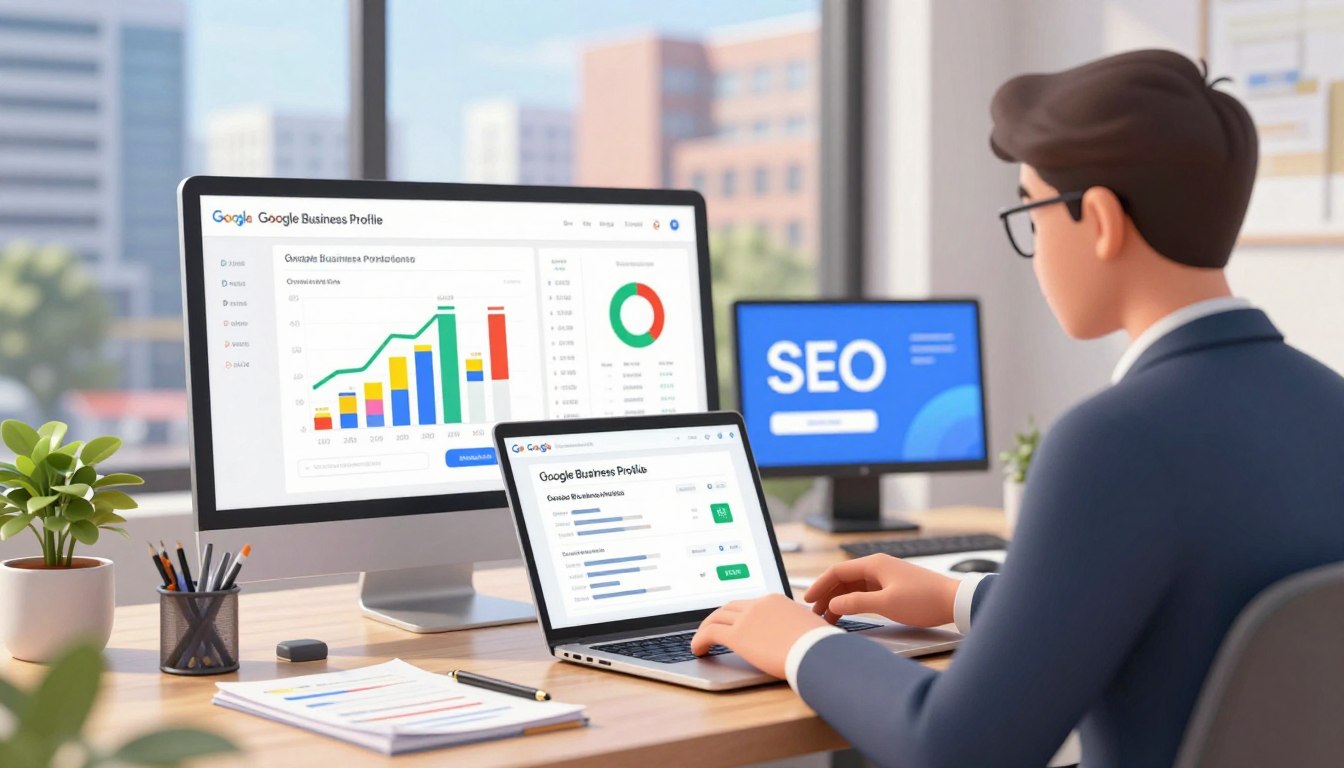
A robust local seo strategy acts as your digital storefront. By focusing on google maps ranking, you ensure that your brand appears exactly when and where it matters most. Mastering google business profile optimization 2026 techniques will transform how your community finds you, turning casual searchers into loyal, paying customers.
Key Takeaways
- Visibility in the Local Pack is essential for capturing high-intent nearby traffic.
- A strong local strategy prevents competitors from stealing your potential customers.
- Google Maps placement serves as a primary driver for physical store visits.
- Consistent profile updates build trust and authority with your local audience.
- Effective search tactics turn digital discovery into real-world revenue.
The Reality of the Local 3-Pack
In the realm of local search, being seen is everything. The Local 3-Pack, the trio of businesses that dominate the Google Maps results, holds the key to local search visibility and ultimately, to driving foot traffic to your store.
Statistics show that the top three results on Google Maps garner a significant majority of user clicks, with a staggering 70% of clicks going to these top spots. This phenomenon underscores the importance of securing a position within the Local 3-Pack to increase store visits.
Why the Top Three Spots Rule Search
The dominance of the top three results can be attributed to user behavior and Google’s algorithms. Users tend to trust the top results, perceiving them as the most relevant and reliable options. Google’s algorithms are designed to surface the most accurate and useful results, making the top spots highly coveted.
Being among the top three results on Google Maps not only boosts your Google Maps ranking but also significantly enhances your business’s credibility and visibility. It’s a critical factor in local SEO success.
The Cost of Being Invisible to Local Customers
Failing to appear in the Local 3-Pack can have severe consequences for local businesses. By being invisible to potential customers, businesses miss out on a substantial volume of foot traffic and potential sales. The cost of this invisibility can be measured in lost revenue and a diminished market presence.
To avoid this fate, businesses must prioritize their local SEO efforts, focusing on optimizing their Google Business Profiles and ensuring they are competitive in the local search landscape.
Mastering Google Business Profile Optimization 2026
As we navigate the ever-changing landscape of local SEO, mastering Google Business Profile optimization is crucial for businesses aiming to stay ahead in 2026. A well-optimized Google Business Profile is the foundation upon which local search success is built. It not only enhances your online presence but also ensures that your business is visible to potential customers at the exact moment they are searching for the products or services you offer.
Setting the Foundation for Local Search Success
To set the foundation for local search success, it’s essential to ensure that your Google Business Profile is accurately set up and maintained. This includes providing accurate and up-to-date information about your business, such as your business name, address, phone number, and hours of operation.
A crucial aspect of this process is verifying your business location. Google uses this verification to ensure that your business is legitimate and that you’re not attempting to manipulate search results. Verification can be done through a postcard, phone call, or email, depending on the options available for your business.
| Optimization Factor | Description | Importance Level |
|---|---|---|
| Business Information Accuracy | Ensuring that your business name, address, and phone number are accurate and consistent across the web. | High |
| Business Hours | Keeping your business hours up-to-date to inform customers when you’re open. | Medium |
| Categories and Attributes | Selecting the most relevant categories and attributes for your business to help Google understand what you offer. | High |
Aligning Your Profile with Current Search Algorithms
Aligning your Google Business Profile with current search algorithms involves understanding what Google considers when ranking local businesses. This includes factors such as relevance, distance, and prominence. By optimizing your profile with these factors in mind, you can improve your visibility in local search results.
To achieve this alignment, focus on building a robust profile that includes high-quality photos, accurate and detailed business information, and positive customer reviews. Regularly updating your profile with fresh content and engaging with your customers through reviews and Google Posts can also enhance your local search visibility.
Crafting Keyword-Rich Descriptions That Convert
Crafting a compelling Google Business Profile description is crucial for converting searchers into customers. Your description is one of the first things potential customers see when they search for your business, making it a critical component of your local SEO strategy.
A well-crafted description not only highlights your business’s unique selling points but also incorporates relevant keywords that customers might use when searching for your services. This is where the art of natural keyword integration comes into play.
The Art of Natural Keyword Integration
Integrating keywords naturally into your description means using them in a way that feels organic and doesn’t disrupt the flow of your content. For instance, instead of listing services in a dry, keyword-stuffed manner, weave them into a narrative that tells customers what your business is about and what you offer.
For example, if you’re a coffee shop, your description might read: “At [Your Coffee Shop], we’re passionate about serving the best coffee in town. From rich espresso to velvety lattes, our expert baristas craft each drink with love. Whether you’re grabbing a quick coffee on the go or meeting friends for a relaxed catch-up, we’ve got you covered.” Here, keywords like “best coffee in town,” “espresso,” and “lattes” are integrated naturally.
Avoiding the Pitfalls of Keyword Stuffing
While keywords are important, it’s equally crucial to avoid keyword stuffing. This is the practice of loading your description with keywords in an attempt to manipulate search rankings. Not only does this make your content hard to read, but it can also lead to penalties from search engines.
To avoid this, focus on creating a description that reads naturally and provides value to your customers. Use synonyms and related terms to add variety and depth to your content. For small business SEO tips, consider the following:
- Use long-tail keywords that are more specific and less competitive.
- Write for your audience first; search engines second.
- Use keywords in context, ensuring they fit naturally within your sentences.
By mastering the art of crafting keyword-rich descriptions that convert, you can significantly enhance your business’s visibility in local search results and attract more customers.
Leveraging High-Resolution Visuals for AI Recognition
Google’s AI technology is revolutionizing how businesses showcase their identity through imagery. As businesses compete for visibility in local search results, the role of high-resolution visuals in Google My Business SEO cannot be overstated. High-quality images not only enhance a business’s online presence but also play a critical role in how Google’s AI analyzes and understands the business’s identity.
How Google AI Analyzes Your Business Imagery
Google’s AI algorithms are designed to interpret and understand the visual elements of a business listing. When you upload high-resolution images to your Google My Business profile, the AI analyzes these visuals to gather information about your business, including its appearance, products, and services. This analysis helps Google provide more accurate and relevant search results to users. As noted by Google, “High-quality photos can help customers understand your business and make informed decisions.”
“High-quality photos can help customers understand your business and make informed decisions.”
The AI looks for clear and recognizable features in the images, such as storefronts, logos, and product displays. Therefore, it’s essential to upload images that are not only visually appealing but also informative and relevant to your business.
Best Practices for Tagging and Uploading Storefront Photos
To maximize the effectiveness of your business imagery, follow these best practices for tagging and uploading storefront photos:
- Use high-resolution images that are clear and well-lit.
- Ensure that your storefront photos accurately represent your business’s current appearance.
- Tag your images with relevant keywords, such as your business name and location.
- Upload a variety of images, including exterior and interior shots, products, and services.
By following these guidelines and leveraging high-resolution visuals, businesses can improve their online visibility and attract more customers. As part of a comprehensive business listing optimization strategy, high-quality imagery can make a significant difference in how a business is perceived and discovered online.
Building Your Review Velocity Engine
A review velocity engine is essential for local businesses aiming to boost their online reputation. This concept revolves around generating a steady stream of fresh, high-quality reviews that signal to search engines and potential customers that your business is active, trustworthy, and worthy of consideration.
Managing your online reputation effectively is crucial in today’s digital landscape. One of the key strategies for achieving this is by ensuring that your business has a consistent flow of customer reviews. This not only enhances your visibility in search results but also builds trust with potential customers who are more likely to engage with businesses that have a strong, positive reputation online.
Why Recency is the Key to Trust
The recency of reviews plays a significant role in establishing trust with potential customers. Recent reviews indicate that your business is currently active and that customers are having positive experiences. This is crucial for local business owners who need to demonstrate their relevance and reliability in the market.
When potential customers see that a business has recent, positive reviews, they are more likely to trust that business. This trust factor is a significant component of converting potential customers into actual customers. Therefore, it’s not just about having a large number of reviews, but also about having recent ones.
Strategies for Encouraging Consistent Customer Feedback
Encouraging customers to leave feedback is a delicate process that requires a strategic approach. Here are some effective strategies for managing your online reputation through consistent customer reviews:
- Implement a review collection system that makes it easy for customers to leave feedback.
- Train your staff to request reviews from satisfied customers.
- Use follow-up emails or SMS to thank customers and invite them to review their experience.
- Make sure your business is listed on relevant review platforms to increase visibility.
By implementing these strategies, local businesses can build a robust review velocity engine that not only enhances their online reputation but also drives more customers to their doorstep.
The Power of Active Review Engagement
Customer reviews are a goldmine of insights, but only if you engage with them actively. Responding to customer feedback demonstrates that you value their opinions and care about their experiences. This engagement is crucial for building trust and loyalty with your customers.
By actively responding to reviews, you signal to Google that your business is active and reliable, which can positively impact your online visibility. Moreover, potential customers often read reviews and responses to gauge the quality of service providers.
Responding to Positive Feedback to Build Loyalty
When customers take the time to leave a positive review, it’s essential to respond graciously. A simple “thank you” can go a long way in building customer loyalty. For example, a business might say, “Thank you so much for your kind words! We’re thrilled you had a great experience.”
Responding to positive reviews also gives you the opportunity to reinforce your brand’s values and personality. Use this chance to highlight your commitment to customer satisfaction and show appreciation for the customer’s business.

Handling Negative Reviews with Professionalism
Negative reviews can be challenging, but they also present an opportunity to showcase your business’s professionalism and commitment to customer service. When responding to negative feedback, remain calm and empathetic. Acknowledge the customer’s concerns and offer a solution or explanation.
For instance, you might say, “Sorry to hear that your experience wasn’t up to par. We’re committed to making it right and would like to discuss this further with you.” This approach shows that you value the customer’s feedback and are willing to make things right.
By handling negative reviews with professionalism, you can turn a potentially negative situation into a positive one, demonstrating to potential customers that you’re dedicated to providing excellent service.
Treating Your Profile Like a Social Feed
By utilizing Google Posts, businesses can turn their Google Business Profile into a vibrant social feed that attracts local customers. This approach not only enhances local visibility but also keeps your audience engaged with the latest updates, promotions, and news.
The Role of Google Posts in Local Visibility
Google Posts play a crucial role in local visibility. They allow businesses to publish updates directly on their Google Business Profile, making it easier for customers to find relevant and timely information. By posting regularly, businesses can signal to Google that their profile is active and worthy of higher visibility in search results.
Announcing Flash Sales and New Arrivals
Businesses can use Google Posts to announce flash sales, new arrivals, or special events, thereby driving more foot traffic and online engagement. For instance, a retail store can post about a limited-time discount, while a restaurant can announce a new menu item or a special promotion.
To maximize the impact, it’s essential to include eye-catching visuals and clear calls-to-action in your Google Posts. This not only grabs the attention of potential customers but also encourages them to take action, whether it’s visiting your store or making a purchase online.
By integrating Google Posts into your digital marketing services strategy, you can create a dynamic and engaging Google Business Profile that attracts and retains local customers.
Mastering the Q&A Section for Customer Clarity
The Q&A section on your Google Business Profile is more than just a list of questions and answers; it’s a powerful tool for enhancing customer clarity and driving business success. By proactively managing this section, you can address common customer inquiries, reduce confusion, and ultimately drive more sales.
Proactively Answering Common Customer Questions
One of the most effective ways to utilize the Q&A section is by anticipating and answering the questions your customers are most likely to ask. This not only helps in providing clarity but also showcases your business’s commitment to customer service.
For instance, if you own a restaurant, common questions might include “What are your operating hours?” or “Do you offer vegetarian options?” By answering these questions directly on your Google Business Profile, you can improve the customer experience and reduce the likelihood of potential customers seeking answers elsewhere.
- Monitor the questions being asked and respond promptly to new inquiries.
- Use the Q&A section to provide detailed answers to complex questions that might not be fully addressed by your business description or other profile sections.
- Keep your answers concise, clear, and up-to-date to reflect any changes in your business operations or offerings.
Using Q&A to Highlight Unique Service Offerings
Beyond just answering questions, the Q&A section can also be a valuable platform for highlighting what sets your business apart from the competition. By proactively addressing questions related to your unique services or products, you can draw attention to the aspects of your business that make it unique.
For example, if your business offers a unique delivery service or a special promotion, using the Q&A section to explain these can attract more customers.
By effectively managing your Q&A section, you not only enhance customer clarity but also contribute to a more positive and engaging customer experience. This, in turn, can lead to increased customer loyalty and a stronger reputation for your business.
Advanced Local SEO Strategies for Multi-Location Managers
Effective local SEO for multi-location businesses requires a nuanced approach that balances brand consistency with localized content. As a multi-location franchise manager, you face the challenge of maintaining a uniform brand image while catering to the unique needs and preferences of different service areas.
Managing multiple locations means you have to optimize each Google Business Profile to reflect both your brand’s overall identity and the specific characteristics of each location. This involves a combination of standardized practices and localized strategies.
Maintaining Brand Consistency Across Multiple Profiles
To ensure brand consistency, it’s essential to have a centralized management system for your Google Business Profiles. This allows you to:
- Standardize profile categories and descriptions
- Use consistent branding elements such as logos and business hours
- Implement a uniform review management strategy
By maintaining consistency across all profiles, you reinforce your brand’s identity and make it easier for customers to recognize and trust your business, regardless of their location.
Managing Localized Content for Different Service Areas
While brand consistency is crucial, it’s equally important to tailor your content to the specific needs of each service area. This includes:
- Using location-specific keywords in your profile descriptions and posts
- Highlighting local services, products, or events
- Engaging with local customers through reviews and Q&A
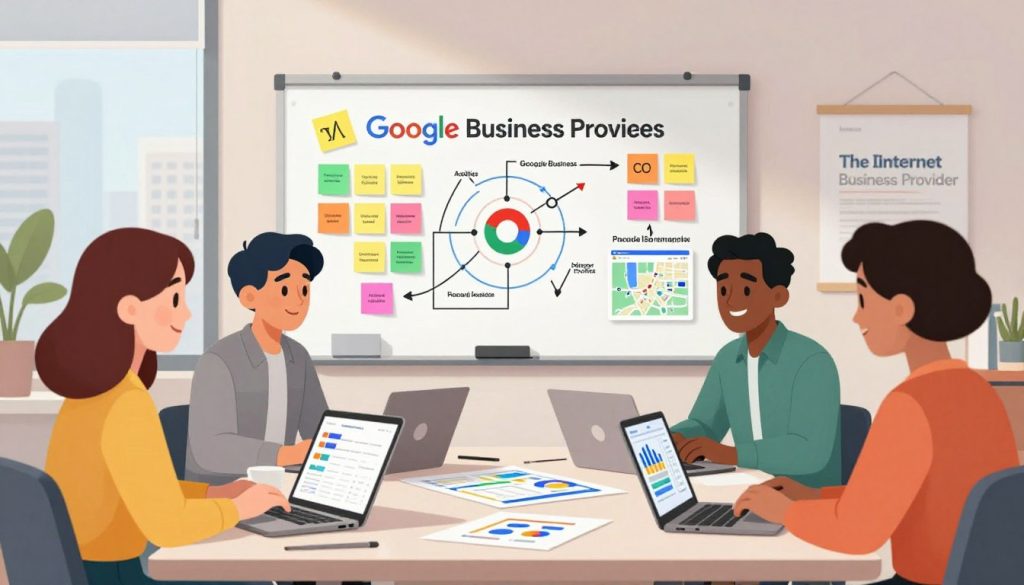
By adopting these advanced local SEO strategies, multi-location businesses can enhance their visibility, improve customer engagement, and drive more conversions across different regions.
Tracking Performance and Adjusting Your Strategy
The insights from your Google Business Profile are invaluable for adjusting your marketing strategy to better reach local customers. By closely monitoring your profile’s performance, you can identify areas of improvement and make data-driven decisions to enhance your local search visibility.
To effectively track your performance, you need to understand the insights provided by Google Business Profile. These insights offer a wealth of information about how customers interact with your business listing.
Interpreting Google Business Profile Insights
Google Business Profile insights provide detailed information on how customers find and interact with your business listing. Key metrics to focus on include:
- Search queries that lead customers to your profile
- Customer actions such as website visits, phone calls, and direction requests
- Profile views and the sources of these views
By analyzing these metrics, you can gain a deeper understanding of your customers’ behavior and preferences. For instance, if you notice a high number of direction requests, it may indicate that your business is popular among locals and visitors alike.
Turning Data into Actionable Marketing Decisions
Once you have interpreted your Google Business Profile insights, it’s time to turn that data into actionable marketing decisions. This involves:
- Identifying and capitalizing on successful trends
- Adjusting your marketing strategies based on customer behavior
- Optimizing your profile and local SEO efforts for better visibility
For example, if your insights show that a significant number of customers are visiting your website after viewing your profile, you may want to optimize your website content to better match the search queries that are driving traffic to your site.
By continuously monitoring your Google Business Profile insights and adjusting your strategy accordingly, you can improve your local search visibility and attract more customers to your business.
Common Mistakes That Keep You Hidden
Despite their best efforts, many businesses remain hidden from potential customers due to common oversights. Local business owners often struggle with maintaining a consistent online presence, which is crucial for attracting and retaining customers.
Inconsistent online information can lead to a loss of credibility and trust among potential customers. One of the most significant factors affecting local search visibility is the consistency of a business’s NAP (Name, Address, Phone Number) data across the web.
Inconsistent NAP Data and Its Impact
Inconsistent NAP data can confuse search engines and potential customers, making it harder for them to find and verify a business. This inconsistency can occur across various directories, the business’s website, and other online platforms.
- Ensure that your business’s name, address, and phone number are consistent across all online directories and citations.
- Regularly audit your online presence to identify and correct any inconsistencies in your NAP data.
Ignoring Profile Updates and Seasonal Changes
Another critical mistake is neglecting to update Google Business Profiles to reflect seasonal changes or special events. This can make a business appear inactive or unresponsive to customer needs.
Regular updates to your Google Business Profile can help keep your business relevant and visible. This includes posting updates about seasonal hours, promotions, or new services.
- Keep your business hours up to date, especially during holidays or special events.
- Use Google Posts to announce promotions, new products, or services to keep your profile active.
By avoiding these common mistakes, local business owners can improve their online visibility and attract more customers. Regular maintenance and updates are key to a successful local SEO strategy.
Conclusion
Mastering Google Business Profile optimization and Local SEO strategies is crucial for businesses to remain visible and competitive in today’s digital landscape. By implementing the techniques discussed, businesses can significantly enhance their online presence management.
A well-optimized Google Business Profile is key to a successful local seo strategy. This includes crafting keyword-rich descriptions, leveraging high-resolution visuals, and building a strong review velocity engine. By doing so, businesses can improve their chances of appearing in the coveted Local 3-Pack.
Effective online presence management also involves actively engaging with customer reviews, treating the Google Business Profile like a social feed, and mastering the Q&A section. By adopting these strategies, businesses can build trust with their customers and stay ahead of the competition.
As we move into 2026, google business profile optimization will continue to play a vital role in local search visibility. By staying up-to-date with the latest best practices and avoiding common mistakes, businesses can ensure they remain visible to their target audience.