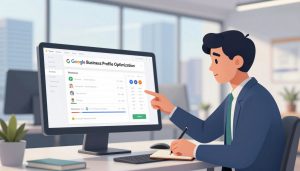
Imagine a customer standing just three blocks away, actively searching for your exact service. They are ready to spend money, yet they walk right past your shop and head straight to a competitor. This happens because your digital front door is locked, unlit, and invisible to the local search engines.
It is a frustrating reality for many owners who rely on foot traffic and local discovery. You are essentially playing a game of hide-and-seek where your potential clients are the ones losing out.
The Internet Business Provider bridges this gap by turning your online presence into a beacon. We ensure you are the first thing people see when they stop searching and start buying. Strategic management of your digital footprint is the key to moving from an invisible entity to a local authority.
By mastering Google Business Profile Optimization, you capture high-intent traffic that is already in your neighborhood. This guide provides the professional roadmap you need to dominate local results and grow your revenue.
Key Takeaways
- Local search visibility is essential for capturing nearby customers ready to purchase.
- An unmanaged digital presence leads to lost revenue and missed opportunities.
- Strategic management transforms your brand into a recognized local authority.
- High-intent traffic relies on accurate and updated location data.
- Effective techniques help you transition from invisible to the top of search results.
The Invisible Business Problem
If your business cannot be found on a map, it might as well not exist in the eyes of a modern local customer. Many entrepreneurs invest heavily in sleek, high-end websites, only to find that their phone remains silent and their store remains empty. This disconnect occurs because online visibility is no longer just about having a domain name; it is about being present where the search happens.
Why a Website Alone is Not Enough
A website acts as a digital brochure, but it is a passive asset. It waits for someone to find it through a specific search query, which is often difficult in a crowded market. Without a robust local seo strategy, your website remains buried on page ten of search results, effectively hidden from your target audience.
Customers today rarely browse through multiple pages of search results. They want immediate answers, and they want them from businesses that are physically close to their current location. Relying solely on a website ignores the reality that search engines now prioritize map-based results for local intent.
The Reality of Google Maps Dominance
The shift toward mobile-first searching has made google maps ranking the most critical factor for local businesses. When a user searches for a service, the map pack appears at the very top of the screen, pushing traditional website links further down. If you are not in that top three, you are losing potential leads to competitors who have prioritized google maps optimization.
Understanding this shift is essential for any business owner who wants to remain competitive. By focusing on your map presence, you ensure that your business is the first thing a potential customer sees when they are ready to make a purchase.
| Feature | Website Only | Local SEO Presence |
|---|---|---|
| Primary Goal | Brand Information | Customer Acquisition |
| Search Placement | Organic Listings | Map Pack Visibility |
| User Intent | Researching | Ready to Buy |
| Competitive Edge | Low | High |
Mastering Google Business Profile Optimization
Mastering your digital presence starts with a clear understanding of how search engines evaluate local businesses. A professional approach to business profile management ensures that your company remains visible to potential customers in your immediate area. By implementing a structured framework for Google Business Profile Optimization, you can effectively signal your relevance to search engines.
Understanding the Google Local Algorithm
The local search ecosystem relies on complex signals to determine which businesses appear at the top of the results. To improve your google maps ranking, you must recognize that the algorithm prioritizes proximity, relevance, and prominence. It constantly verifies your business data to ensure that users receive accurate information when they search for services nearby.
Many business owners still refer to the platform as Google My Business, but the core principles of visibility remain the same. Successful gmb optimization requires consistent updates and a proactive approach to managing your digital footprint. When you align your profile with these algorithmic requirements, you increase the likelihood of appearing in the coveted local pack.
Setting Up Your Profile for Maximum Visibility
Building a strong foundation begins with the core pillars of local search. You must ensure that your Name, Address, and Phone number (NAP) are perfectly consistent across the web. High-quality imagery and precise category selection further enhance your profile, making it more attractive to both users and search algorithms.
The following table outlines the primary factors that influence your local search performance and how to prioritize them for better results.
| Optimization Factor | Impact Level | Primary Goal |
|---|---|---|
| NAP Consistency | Critical | Trust and Verification |
| Category Selection | High | Relevance Targeting |
| Visual Content | Medium | User Engagement |
| Review Volume | High | Social Proof |
By focusing on these elements, you establish a reliable google maps optimization strategy that yields long-term benefits. Consistent attention to these details helps your business stand out in a crowded digital marketplace. Remember that a well-maintained profile is a living asset that requires regular monitoring to maintain its competitive edge.
The Foundation of NAP Consistency
Your business identity relies on a simple yet powerful concept known as nap consistency. When search engines crawl the web, they look for uniform data to verify that your company is legitimate and active. Providing identical information across every platform builds the trust necessary to climb the ranks.
“Data accuracy is the silent engine behind every successful local marketing campaign,” notes a leading digital strategist. Without this alignment, you risk confusing both the algorithm and your potential customers.
Defining Name, Address, and Phone Number Accuracy
At its core, NAP refers to your business Name, Address, and Phone number. These three elements must appear exactly the same on your website, your Google Business Profile, and every third-party directory. Even minor discrepancies, such as using “St.” versus “Street” or including a suite number in one place but not another, can trigger errors.
Search engines treat these variations as potential red flags. When your data is fragmented, the system struggles to associate different mentions with a single entity. Maintaining nap consistency ensures that every citation reinforces your authority rather than diluting it.
The Impact of Citations on Local Search Rankings
Citations are online mentions of your business that include your NAP details. These references act as digital votes of confidence that directly influence your local search ranking. When reputable directories like Yelp, Yellow Pages, or industry-specific sites list your information correctly, your credibility grows.
The following table illustrates how data quality affects your visibility in local search results:
| Data Status | Search Engine Trust | Ranking Potential |
|---|---|---|
| Fully Consistent | High | Top Tier |
| Minor Variations | Moderate | Fluctuating |
| Inconsistent/Wrong | Low | Poor/Invisible |
Auditing Your Existing Online Presence
To improve your local search ranking, you must first identify where your information currently lives. Start by performing a manual search for your business name across major search engines and mapping platforms. Document every instance where your address or phone number appears incorrectly.
Once you have a list of errors, prioritize updating the most authoritative sources first. Consistent nap consistency across high-traffic platforms will yield the fastest improvements in your local search results. Regular audits are essential to ensure that new directory listings do not introduce outdated or conflicting information over time.
Visual Storytelling Through High-Quality Imagery
High-quality imagery acts as a silent salesperson, driving engagement and building trust before a customer even visits your site. When users browse local listings, they rely on visual cues to determine the quality and reliability of a business. Investing in professional photography is a proven way to increase online presence and capture the attention of potential clients.
Why Photos Influence Click-Through Rates
Visual content serves as a powerful conversion tool that directly impacts how users interact with your profile. Profiles featuring clear, professional images consistently see higher engagement compared to those with low-quality or missing photos. This visual appeal is essential for improving your online visibility in a crowded digital marketplace.
When a customer sees a vibrant, well-lit photo of your storefront or products, they feel more confident in their decision to reach out. This immediate connection helps bridge the gap between a searcher and a loyal customer. By prioritizing high-quality visuals, you effectively increase online presence and differentiate your brand from competitors.
Best Practices for Business Photography
To build a compelling brand narrative, focus on capturing authentic moments that showcase your unique value proposition. Use natural lighting whenever possible to ensure your images look professional and inviting. Consistency in your visual style helps potential customers recognize your brand across different platforms.
Consider including a mix of interior shots, team photos, and high-resolution images of your core services. This variety provides a comprehensive look at what your business offers. Remember that first impressions are lasting, so ensure every image reflects the high standards of your company.
Optimizing Image Metadata for SEO
Beyond the visual appeal, the technical side of search engine optimization plays a vital role in how your images are indexed. Before uploading files, rename them with descriptive, keyword-rich titles rather than generic camera codes. This simple step helps search engines understand the context of your content.
Additionally, ensure your image files are compressed to maintain fast loading speeds without sacrificing quality. Proper search engine optimization of your metadata ensures that your visual assets contribute to your overall ranking success. By following these technical guidelines, you create a stronger foundation for your digital growth.
Strategic Category Selection for Local Search
Your business category selection acts as the digital compass for your local search results. When you align your profile with the correct industry labels, you provide Google with the necessary context to display your business to the right audience. This process is a fundamental pillar of effective gmb optimization, ensuring your efforts in maintaining NAP consistency and high-quality imagery are not wasted.
Choosing the Right Primary Category
The primary category is the most influential factor in determining which search queries trigger your profile. You must select the label that most accurately describes your core service offering. For example, a restaurant should choose “Italian Restaurant” rather than a generic “Restaurant” tag to capture high-intent traffic.
Selecting the most precise primary category helps you rank for the specific services that drive your revenue. Precision is key here, as it directly impacts your visibility in the local pack. Avoid choosing multiple primary categories, as this can dilute your relevance and confuse the search algorithm.
The Role of Secondary Categories in Niche Targeting
While the primary category defines your main business, secondary categories allow you to expand your reach into niche markets. These additional tags help you capture highly relevant local search results that you might otherwise miss. By layering these categories, you signal to Google that your business offers a broader range of specialized services.
Think of secondary categories as a way to capture long-tail search intent. If you run a plumbing business, you might use your primary category for general plumbing while adding secondary tags for “Water Heater Repair” or “Drain Cleaning.” This strategic layering ensures that your business appears whenever a customer searches for specific solutions within your industry.
Leveraging Social Proof to Build Instant Trust
In the modern digital marketplace, customer trust and reviews serve as the primary currency for local businesses. Potential clients frequently rely on the shared experiences of others to gauge your credibility before making a purchase decision. By prioritizing transparency and authentic engagement, you can turn your online profile into a powerful asset that drives growth.

Ethical Strategies for Generating Customer Reviews
Generating feedback requires a delicate balance between proactive outreach and platform compliance. You must never offer incentives, discounts, or gifts in exchange for positive ratings, as this violates most review platform policies and damages your professional integrity.
Instead, focus on creating a seamless experience that encourages genuine feedback. Consider these ethical approaches to boost your customer trust and reviews:
- Timing is everything: Ask for a review immediately after a successful service delivery or a positive interaction.
- Simplify the process: Provide a direct link to your Google Business Profile to remove friction for the customer.
- Personalize the request: Send a sincere, individual follow-up email or text message thanking the client for their business.
How to Respond to Positive and Negative Feedback
Engagement is a two-way street that signals to both Google and your customers that you are an active, attentive business owner. Responding to reviews shows that you value the time your clients take to share their thoughts.
| Review Type | Response Goal | Key Action |
|---|---|---|
| Positive | Gratitude | Thank them by name and mention specific services. |
| Negative | Resolution | Acknowledge the issue and offer a private follow-up. |
| Neutral | Engagement | Invite them to share how you can improve. |
Turning Negative Experiences into Brand Loyalty
A negative review is not necessarily a failure; it is an opportunity to demonstrate your commitment to excellence. When you address a complaint with empathy and professionalism, you often convert a frustrated individual into a loyal advocate.
Always remain calm and avoid becoming defensive in your public response. By taking the conversation offline to resolve the issue, you show future prospects that you prioritize customer trust and reviews above all else. This level of accountability solidifies your reputation as a business that truly cares about its community.
The Synergy Between Local SEO and Website Traffic
Your Google Business Profile is more than just a map pin; it is the engine room for your entire digital presence. When you align your local seo strategy with your broader website goals, you create a powerful feedback loop. This connection ensures that every visitor finding you on a map is seamlessly guided to your primary digital storefront.
Connecting Your Profile to Your Digital Ecosystem
To maximize your reach, you must treat your profile as an extension of your website. Ensure that the URL linked in your profile points to a landing page that mirrors the messaging found on your Google listing. Consistency is key to building trust with both users and search engines.
You should also utilize UTM parameters on your website links. This allows you to track exactly how many visitors arrive at your site via your local listing. By monitoring this data, you can refine your local seo efforts to focus on the content that converts best.
How Local Rankings Influence Organic Search Performance
A high local search ranking does more than just put you on the map; it signals authority to search engines. When users frequently click through from your profile to your website, they provide positive engagement signals. These signals tell Google that your business is a relevant and trusted source, which boosts your overall search engine optimization efforts.
This relationship creates a cycle where your local presence feeds your organic authority. As your website gains more traffic from local searchers, your domain authority grows, further improving your visibility in broader search results. Investing in a robust local seo strategy is therefore essential for long-term growth.
| Feature | Local SEO Impact | Organic SEO Impact |
|---|---|---|
| NAP Consistency | High | Medium |
| Backlink Profile | Medium | High |
| User Engagement | High | High |
| Content Relevance | Medium | High |
Ultimately, the goal of search engine optimization is to create a unified brand experience. By linking your local search ranking to your website performance, you ensure that your business remains competitive. A well-maintained local seo profile is the foundation of this digital success.
Turning Searchers into Leads with Google Posts
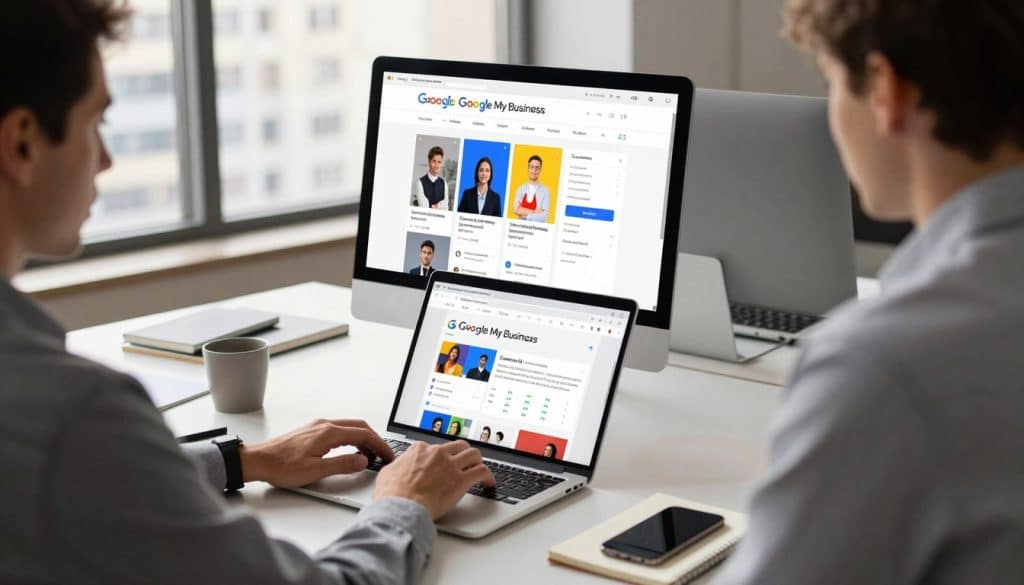
Your google my business profile is more than just a static directory listing; it is a dynamic storefront waiting to be activated. By utilizing built-in features, you can effectively increase online presence while capturing the attention of local customers at the exact moment they search for your services.
Types of Google Posts and Their Purposes
Google provides several post formats designed to meet specific business goals. You can use Update posts to share general company news or highlight new service offerings. Offer posts are perfect for showcasing limited-time discounts, which creates a sense of urgency for potential leads.
Additionally, Event posts allow you to promote workshops, webinars, or grand openings directly on the search results page. Each post type serves as a unique touchpoint that keeps your audience informed and engaged with your brand.
Crafting Compelling Calls to Action
A post is only as effective as the action it inspires. To turn searchers into leads, you must include a clear, compelling call to action (CTA) that tells the user exactly what to do next. Whether you want them to “Call Now,” “Book Online,” or “Learn More,” your CTA should be direct and easy to follow.
Ensure that your landing page matches the promise made in your post. When a user clicks your CTA, they should be directed to a page that facilitates an immediate conversion, such as a contact form or a booking calendar.
Maintaining a Consistent Posting Schedule
Consistency is the secret to long-term success in local search. A regular posting schedule signals to both Google and your customers that your business is active and reliable. Frequent updates help you maintain visibility and continue to increase online presence over time.
Try to publish at least one new post every week to keep your profile fresh. By staying top-of-mind, you transform your google my business listing into a powerful, high-converting asset that works for you around the clock.
Utilizing Messaging Features for Real-Time Engagement
Modern consumers demand instant gratification, making real-time communication a cornerstone of your digital strategy. When a potential client finds your business on a search engine, they often have immediate questions that require quick answers. By enabling direct messaging, you significantly improve customer engagement and shorten the sales cycle for local prospects.
Setting Up Google Business Messaging
Activating this feature is a straightforward process that connects your profile directly to your mobile device. Follow these steps to ensure you never miss a potential lead:
- Log in to your Google Business Profile dashboard and select the “Messages” tab.
- Click the “Turn on messaging” button to activate the feature for your listing.
- Install the Google Maps app on your smartphone to receive real-time notifications.
- Configure your automated welcome message to greet users instantly when they initiate a chat.
Best Practices for Professional Communication
Once you have enabled messaging, your response quality becomes the primary driver of customer engagement. Speed is essential, but professionalism remains the key to building trust with new leads. Always aim to provide clear, concise, and helpful information that addresses the user’s specific inquiry.
“The speed of your response is often the deciding factor in whether a searcher chooses your business or moves on to a competitor.”
To maximize your conversion rates, keep these professional communication tips in mind:
- Maintain a helpful tone: Even if you cannot fulfill a request immediately, acknowledge the inquiry and provide a timeline for a follow-up.
- Use clear calls to action: Guide the conversation toward a booking, a phone call, or a visit to your website.
- Monitor your response time: Google tracks how quickly you reply, which can influence your local search visibility over time.
By consistently providing high-quality interactions, you turn casual searchers into loyal clients. Prioritizing customer engagement through these tools ensures your business remains the top choice in your local market.
Monitoring Performance and Analytics
Understanding how customers interact with your business profile is the key to unlocking growth. By analyzing the data provided by Google, you gain a clear picture of how your brand appears in local search results. This data-driven approach is essential for effective business profile management and long-term success.

Interpreting Insights from the Google Dashboard
The Google dashboard offers a wealth of information regarding user activity. You can track specific search queries that lead people to your listing, which helps identify what your audience is looking for. Furthermore, monitoring clicks to your website and requests for directions provides actionable intelligence on how searchers intend to interact with your business.
These metrics serve as a report card for your local SEO efforts. When you see a high volume of direction requests, it indicates that your profile is successfully driving physical foot traffic. Conversely, a spike in website clicks suggests that your profile content is compelling enough to encourage further research.
Adjusting Your Strategy Based on Searcher Behavior
Once you have gathered this data, you must use it to refine your tactics. If certain search queries are driving high traffic, consider updating your profile descriptions or posts to better align with those specific terms. This iterative process ensures that your customer engagement remains high and relevant to current market trends.
Regularly reviewing these insights allows you to pivot quickly when searcher behavior changes. By staying proactive, you maintain a competitive edge in your local market. The following table outlines how to interpret common metrics to improve your overall performance.
| Metric | What It Indicates | Strategic Action |
|---|---|---|
| Search Queries | User intent and keyword relevance | Update profile content to match terms |
| Direction Requests | High purchase intent for physical visits | Ensure address and hours are accurate |
| Website Clicks | Interest in services or products | Optimize landing pages for conversion |
| Phone Calls | Urgent need for direct communication | Improve response time and staff training |
Consistent monitoring is the foundation of sustainable growth. By leveraging these insights, you ensure that your customer engagement strategies are always backed by real-world performance data.
Conclusion
Dominating the digital landscape requires a dedicated commitment to Google Business Profile Optimization. Your ability to attract nearby clients depends on how well you manage your online identity.
Maintaining strict nap consistency across all platforms ensures that search engines trust your business data. This accuracy prevents confusion and helps potential clients find your physical location without frustration.
Building genuine customer trust and reviews serves as the engine for your long-term growth. When you engage with your audience, you transform passive searchers into loyal patrons who advocate for your brand.
Effective local seo remains an ongoing process that rewards attention to detail and consistent updates. Small adjustments to your strategy lead to significant improvements in your search visibility over time.
Stop letting your competitors capture the attention of your most valuable local leads. Start refining your profile today to ensure your business stands out in every search result.