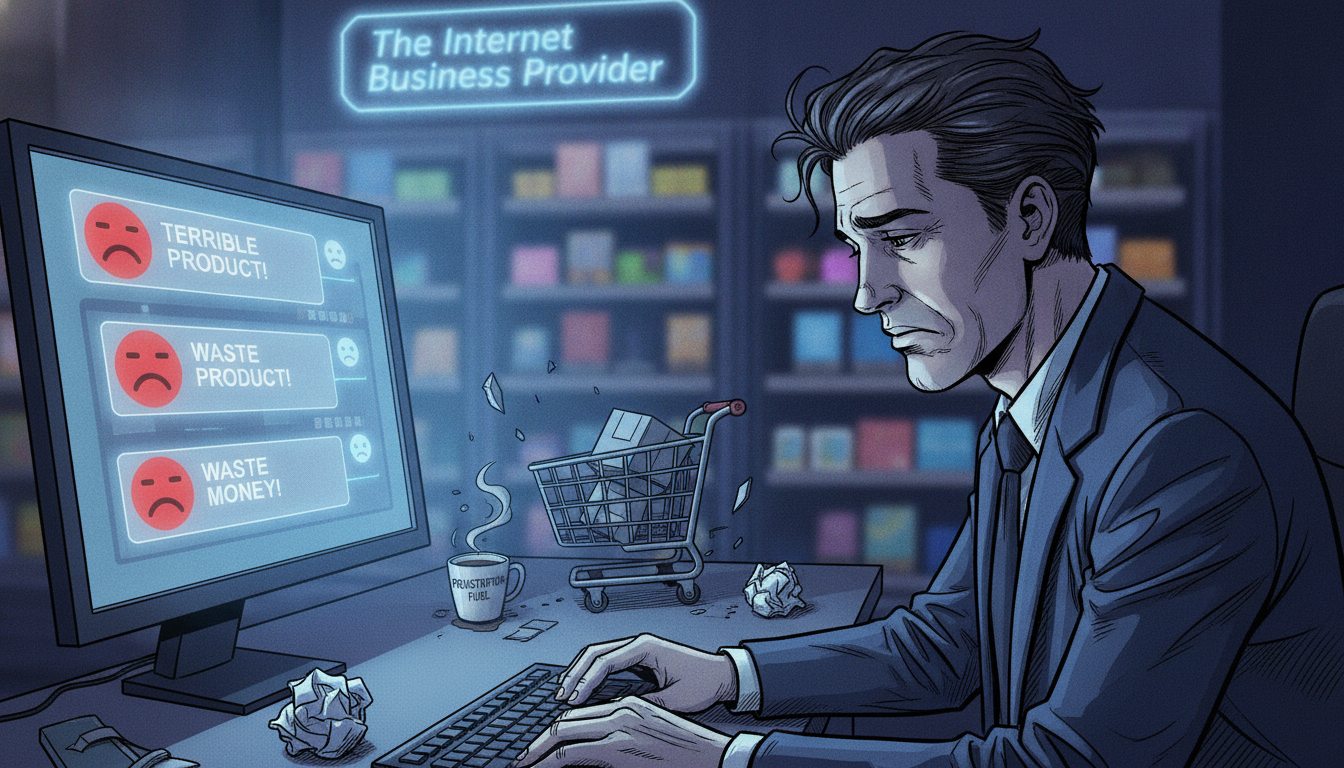
Imagine this: a shopper adds items to their shopping cart, excited to make a purchase. They reach the checkout, ready to buy. But just before clicking “Purchase,” they pause to check reviews. What do they find? A few unaddressed complaints about shipping delays and product quality. In a moment, their excitement fades, and they close the tab. Your hard-earned revenue just vanished.
This scenario is more common than you might think. Many businesses focus on improving shipping costs or streamlining the checkout process. However, they often overlook a powerful trigger for lost sales: negative reviews. With an average online shopping cart abandonment rate of 70.22%, understanding every factor, including user-generated content, is crucial for protecting your sales.
This article will serve as a comprehensive guide, exploring the psychology behind why bad reviews drive customers away. We will delve into the data surrounding this issue and provide actionable strategies to mitigate its impact. By the end, you will have a clear roadmap to prevent revenue from slipping away due to unchecked negative feedback.
Key Takeaways
- Negative feedback can significantly impact customer trust and purchase decisions.
- Understanding the psychology behind cart abandonment is essential for recovery.
- Addressing bad reviews can help improve conversion rates.
- Transparency and trust signals are key strategies to regain customer confidence.
- Effective recovery emails can help recover lost sales from abandoned carts.
Understanding How Bad Reviews Cause Cart Abandonment
Consider a situation where a shopper is eager to buy but suddenly has doubts. The moment a customer transitions from their shopping cart to the checkout, trust becomes paramount. If they encounter unresolved complaints in user feedback, their excitement can quickly turn to hesitation.
Today’s consumers are trained to seek social proof before finalizing a purchase. In fact, up to 70% of shoppers actively look for user reviews when they are uncertain. A single negative comment can serve as a powerful warning signal, overshadowing even the best marketing efforts.
Modern shopping behavior often involves adding items to a cart, then pausing to read reviews. If shoppers find complaints about product quality, shipping delays, or inadequate customer service, they are likely to abandon their purchase. This is not a gradual process; it’s a split-second decision driven by the brain’s risk-aversion mechanisms.
Consider this: 19% of US online shoppers have abandoned a cart specifically because they didn’t trust the site with their credit card information. Bad feedback directly contributes to this trust deficit, creating a barrier that can be hard to overcome.
In the world of eCommerce, where choices abound, customers have little tolerance for uncertainty. If your reviews raise doubts, they will simply search for a competitor with better feedback. Negative comments do not just highlight product flaws; they can signal deeper issues like unresponsive customer service or misleading product descriptions.
Understanding this dynamic is the first step toward addressing it. The next sections will delve deeper into the psychology, data, and specific mechanisms that drive these behaviors. Remember, cart abandonment is not solely about high shipping fees or complicated checkout processes. Often, it’s a sudden crisis of online buyer trust triggered by negative social proof.
Businesses that proactively manage their review profiles and address negative feedback can significantly reduce their cart abandonment rates. This approach not only recovers lost revenue but also enhances overall customer trust and loyalty.
The High Cost of the “Review Check” at Checkout
In the world of eCommerce, the checkout process is often a battleground for customer trust. Shoppers frequently reach this stage filled with excitement, but their enthusiasm can quickly turn to doubt. This shift often occurs when they pause to check reviews, a moment that can significantly impact their decision to finalize a purchase.
The Psychology
Many assume that cart abandonment is solely about high shipping fees or slow loading times. However, a sudden crisis of trust, often triggered by a last-minute review check, is a primary driver of this behavior. This phenomenon can be explained through the concept of loss aversion. Here, the fear of making a poor purchase decision outweighs the potential benefits of the product.
As a shopper adds items to their cart, they initially feel excitement. This feeling is quickly followed by a need for validation through reviews. If they encounter a critical comment, this leads to an immediate shift from desire to doubt, halting the checkout process. This mental sequence is particularly pronounced on mobile devices, where shoppers are 1.2 times more likely to use guest checkout. They may also be more susceptible to quick trust judgments based on review snippets.
The Data
The psychological impact of negative feedback is not just anecdotal; it is measurable and significant. Up to 70% of shoppers actively seek out user reviews when they are uncertain about a purchase. This means the majority of potential customers conduct a “review check” before completing their order.
When these shoppers encounter unresolved negative feedback, the perceived risk of proceeding with the purchase becomes too high. Consequently, they abandon their cart, often never to return. The average cart abandonment rate stands at 70.22%. While 43% of abandonments occur because browsers are “just browsing” or not ready to buy, the remaining 57% represent addressable issues, including trust deficits exacerbated by negative feedback.
Additionally, 19% of shoppers abandon their carts because they do not trust the site with their credit card information. Bad feedback directly worsens this concern, painting a picture of an unreliable or dishonest business. Thus, the “review check” at checkout becomes a critical moment of truth. Businesses that fail to manage their online reputation are silently losing a significant portion of their potential sales at this crucial point in the shopping journey.
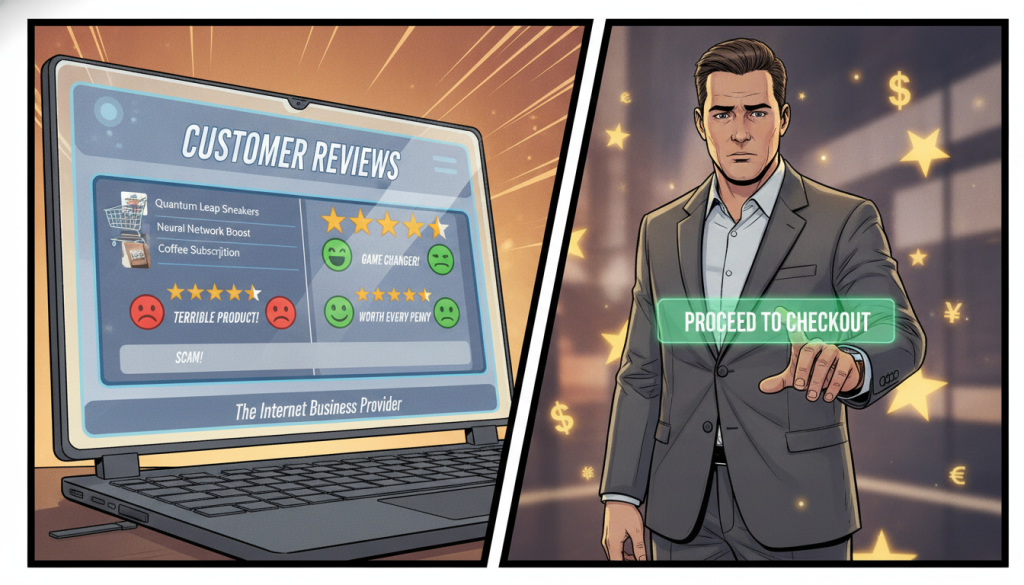
3 Ways Bad Reviews Actively Drive Shoppers Away
In the digital marketplace, the influence of reviews can transform a simple purchase into a daunting decision. Negative feedback doesn’t just sit passively on product pages; it actively works against your sales by triggering three specific fear responses in potential customers.
The “Hidden Flaw” Fear
Modern shoppers are often skeptical of marketing copy. They assume product descriptions are overly polished or even deceptive. To combat this, they turn to reviews seeking the “real story” about a product’s weaknesses.
A single review mentioning a durability issue, sizing discrepancy, or misleading photo can plant a seed of doubt. This doubt grows as the shopper imagines dealing with the same hidden flaw. Consequently, they may abandon their cart rather than risk disappointment. This fear is particularly potent for higher-priced items, where the stakes of discovering a hidden flaw after purchase feel too great to ignore.
Fear of Poor Customer Service
Reviews criticizing customer service can be more damaging than those about product defects. They signal that the company may not support the buyer if something goes wrong. For instance, a review stating, “Customer service completely ignored me,” conveys a powerful message.
This statement tells potential buyers they will be on their own if the item arrives damaged, is lost in shipping, or doesn’t meet expectations. Data shows that 15% of shoppers abandon carts due to unsatisfactory return policies. Bad feedback about customer service amplifies this concern by providing concrete evidence of a company’s unwillingness to resolve issues.
Competitor Comparison
In today’s shopping environment, a customer who reads a negative review may quickly copy your product title, paste it into Google, and find a competitor offering a similar product with better reviews. The barrier to switching is virtually zero in eCommerce.
A single bad experience highlighted online can redirect a customer who was moments away from completing a purchase on your site to a competitor’s checkout page. This behavior illustrates how crucial it is to manage your online reputation.
These three mechanisms—hidden flaw fear, customer service fear, and competitor comparison—work together to create a powerful deterrent. They drive shoppers away and directly increase your cart abandonment rate.
| Fear Response | Description | Impact on Cart Abandonment |
|---|---|---|
| Hidden Flaw Fear | Shoppers doubt product quality based on negative reviews. | Increases likelihood of cart abandonment, especially for high-priced items. |
| Fear of Poor Customer Service | Negative feedback signals lack of support for buyers. | Contributes to abandonment due to concerns over return policies. |
| Competitor Comparison | Shoppers easily find alternatives with better reviews. | Leads to lost sales as customers switch to competitors. |
Buyer Psychology Behind Cart Abandonment
The reasons behind cart abandonment are often more psychological than technical. Understanding these mental barriers is crucial for online retailers. Shoppers face various internal conflicts that can lead them to abandon their carts unexpectedly.
One key concept is trust heuristics. These are mental shortcuts that help shoppers quickly assess whether a website and its products are reliable. When negative feedback appears, it disrupts these heuristics, causing doubt. This disruption can lead to hesitation and, ultimately, cart abandonment.
Social proof also plays a significant role. People often look to others’ experiences to guide their decisions. If potential buyers encounter a lack of positive feedback or see negative comments, they may feel a void of validation. This void can make completing a purchase feel risky, leading to increased abandonment rates.
Another important factor is risk perception. In online shopping, customers cannot physically inspect items. This uncertainty makes them sensitive to any information suggesting potential loss or disappointment. Bad feedback amplifies these fears, causing shoppers to rethink their purchases.
Decision fatigue is another psychological phenomenon affecting shopping behavior. When faced with too many choices or conflicting information, shoppers can become mentally exhausted. As a result, they may default to the safest option: abandoning their cart and postponing the decision.
Data reveals that 43% of shoppers abandon carts because they are just browsing. However, among those with genuine purchase intent, trust and risk perception are the primary barriers that negative feedback exploits. Additionally, 39% abandon due to high extra costs, which can be exacerbated by doubts raised by negative reviews.
The fear of poor customer service, as discussed previously, taps into the need for post-purchase reassurance. Without this assurance, customers may conclude that the safest choice is not to buy at all. The “review check” at checkout becomes a psychological ritual where shoppers seek permission to proceed. A negative review can deny that permission, triggering immediate abandonment.
In conclusion, businesses must address both practical checkout issues and the psychological trust barriers created by negative feedback. Doing so is essential for meaningfully reducing cart abandonment rates and recovering lost sales.
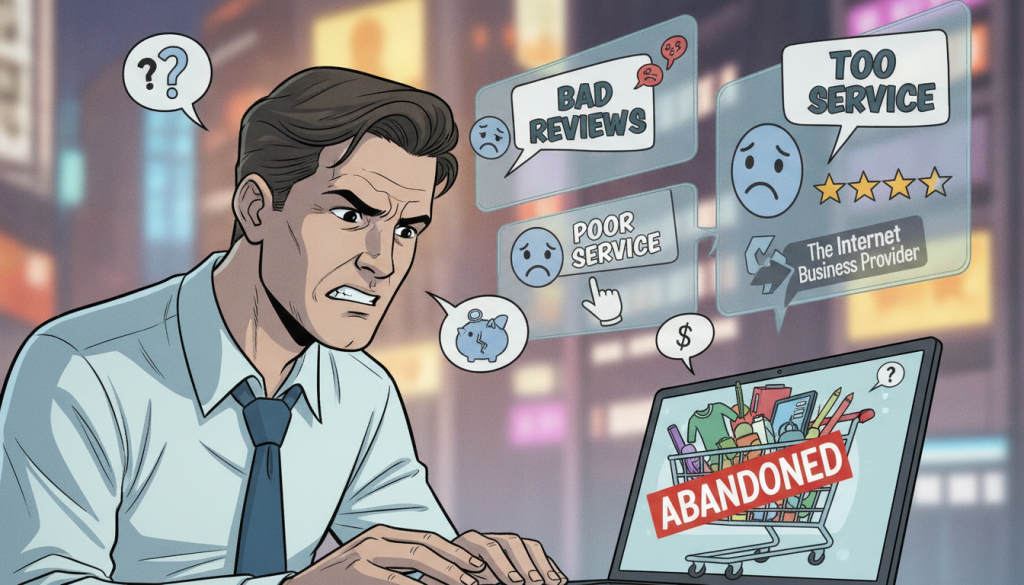
Common Checkout Issues Contributing to Cart Abandonment
In the competitive landscape of online shopping, checkout issues can significantly hinder a customer’s decision to complete their purchase. While negative feedback can be a powerful trust-destroyer, it rarely works in isolation. Instead, it compounds with common checkout issues, creating a perfect storm that drives abandonment rates sky-high.
Unexpected costs are a significant concern. In fact, 39% of shoppers abandon their carts due to high shipping fees, taxes, or handling charges. When a customer has already read a negative review, these extra costs can feel like the final insult, pushing them away from completing their order.
A lengthy or complicated checkout process is another major factor. Approximately 18% of shoppers cite this as a reason for leaving their carts behind. When combined with hesitation induced by negative feedback, every additional step in the process gives customers more time to dwell on their doubts and ultimately leave.
Mandatory account creation also drives away 19% of shoppers. This friction point feels especially intrusive to customers who are already uncertain about their purchase due to negative feedback. They may be unwilling to invest the additional effort required to create an account.
Limited payment options can also deter customers. About 10% of shoppers abandon their carts because they do not see their preferred payment method. A customer already wary from negative feedback may interpret this lack of options as another sign that the site is not trustworthy or customer-focused.
Security concerns are paramount as well. Approximately 19% of shoppers abandon their carts because they do not trust the site with their credit card information. Bad feedback mentioning billing issues or unauthorized charges can validate and amplify these fears.
Website performance issues, including slow loading times and crashes, contribute to 15% of abandonment cases. Additionally, unclear return policies can drive away another 15% of shoppers. These layers of friction make it easier for hesitant customers to justify leaving their carts behind.
Moreover, 14% of shoppers abandon their carts because they couldn’t see or calculate the total order cost upfront. This lack of transparency is especially damaging when negative feedback has already eroded trust in the brand’s honesty.
It’s worth noting that the average US checkout flow contains 23.48 form elements, nearly double the ideal of 12-14. This unnecessary complexity gives doubt-prone shoppers too many opportunities to reconsider and abandon their shopping carts.
In conclusion, addressing these common checkout issues is essential. However, it must be done in tandem with review management. A streamlined checkout process cannot compensate for the trust deficit created by unresolved negative feedback.
Strategies to Mitigate How Bad Reviews Cause Cart Abandonment
In the competitive world of online shopping, addressing customer concerns is vital for success. Implementing effective strategies can significantly reduce the trust issues caused by negative feedback while also enhancing the checkout experience. Below are actionable steps that can help businesses tackle these challenges.
Improve Transparency and Address Negative Feedback Proactively
The most effective way to neutralize negative feedback is to respond publicly and professionally. This demonstrates to potential customers that your company listens and resolves issues, countering fears of poor customer service. Implement a system to monitor reviews across all platforms and respond within 24-48 hours. This approach turns negative feedback into an opportunity to showcase excellent customer service.
Additionally, including detailed product information, high-quality images, and accurate sizing charts can preemptively address the “hidden flaw” fear. This reduces the likelihood that shoppers will seek out negative reviews to find the “real story.”
Streamline and Simplify the Checkout Process
Data shows that the average checkout flow contains 23.48 form elements, but it can be reduced to 12-14. Every unnecessary field increases the chance that a hesitant shopper will abandon their cart. Implementing a progress indicator, enabling autofill, and reducing the number of steps to complete a purchase can enhance the user experience. Remember, 18% of shoppers abandon due to a lengthy or complicated checkout process.
Offer Guest Checkout and Diverse Payment Options
It’s crucial to note that 19% of shoppers abandon their carts because they are forced to create an account. Offering a guest checkout option removes this friction point, especially for mobile shoppers who are 1.2 times more likely to choose guest checkout. Expanding payment options to include digital wallets, buy now pay later services, and multiple credit card types addresses the 10% of shoppers who abandon due to limited payment methods.
Display Trust Signals Like Security Badges and Verified Reviews
Prominently displaying third-party security certifications, SSL badges, and verified review badges near the checkout button can counter the 19% of shoppers who abandon due to credit card trust concerns. Additionally, featuring a curated selection of positive, verified reviews directly on the checkout page provides last-minute social proof that can counteract any negative feedback the shopper may have seen earlier in their journey.
Utilize Checkout Recovery Techniques, Including Follow-up Emails
Statistics reveal that 63% of abandoned merchandise is potentially recoverable. Checkout recovery emails achieve a 46% open rate, with 13% clicking through and 35% of those making a purchase. Craft recovery emails that include a discount or incentive. Emails with coupons generate a 48% increase in revenue per email. Furthermore, 91% of consumers say free shipping would make them repeat customers.
Consider using exit-intent popups to capture email addresses before the shopper leaves. This allows for follow-up sequences that can address concerns raised by negative feedback and bring customers back to complete their purchases.
By implementing these strategies holistically, businesses can achieve a 35.26% average conversion rate increase through better checkout design. This approach helps recover a share of the $260 billion in lost orders that are recoverable annually.
| Strategy | Description | Expected Impact |
|---|---|---|
| Improve Transparency | Respond to reviews and provide detailed product information. | Builds trust and reduces negative perceptions. |
| Simplify Checkout | Reduce form elements and streamline the process. | Decreases abandonment rates during checkout. |
| Guest Checkout | Allow purchases without account creation. | Increases completion rates, especially on mobile. |
| Trust Signals | Display security badges and positive reviews. | Enhances trust during the final purchase stage. |
| Checkout Recovery | Send follow-up emails with incentives. | Recovers lost sales and increases customer retention. |
Conclusion
In the fast-paced realm of online shopping, every decision matters, especially at checkout. Negative feedback is a significant yet often overlooked factor in cart abandonment. Understanding the psychology of trust is essential for online purchases.
With an average cart abandonment rate of 70.22%, businesses must address every potential trigger. The “review check” at checkout is crucial, as up to 70% of shoppers seek validation before completing their purchases. Unresolved negative feedback can undo all marketing efforts.
The good news is that 63% of abandoned merchandise is potentially recoverable. By implementing proactive review management and optimizing the checkout process, businesses can reclaim lost sales. It’s time to audit your review profiles and checkout flows.
In an increasingly competitive landscape, those who understand the psychology of trust will thrive. Focus on building a seamless experience from reviews to checkout to support confident purchasing decisions.