
Every e-commerce business owner knows the struggle. You invest time and money driving traffic to your site, only to see nearly 70% of customers leave their shopping carts without completing a purchase. This alarming statistic reveals a significant revenue leak for online stores.
While many factors contribute to this issue, such as unexpected shipping costs and complicated checkout processes, one critical aspect often goes unnoticed: negative feedback from customers. This type of social proof can trigger hesitation at the final decision-making moment, leading to lost sales.
At IBP (The Internet Business Provider), we specialize in helping businesses secure their online presence. By focusing on the impact of customer feedback, we can help you transform potential doubts into confidence, ultimately improving your conversion rates.
In this article, we will explore the psychology behind cart abandonment, share actionable strategies, and provide insights into how to effectively manage online feedback to enhance your checkout experience.
Key Takeaways
- Nearly 70% of customers abandon their carts before completing a purchase.
- Negative feedback can erode buyer confidence, leading to lost sales.
- Understanding the reasons behind cart abandonment is crucial for recovery.
- Effective review management can enhance the checkout process.
- Transforming doubt into trust is essential for improving conversion rates.
Understanding Shopping Cart Abandonment and Its Impact on Revenue
For many e-commerce operators, the journey from interest to purchase is fraught with obstacles. One major hurdle is shopping cart abandonment. This term refers to when customers add items to their online shopping cart but leave the website without completing the purchase. Essentially, it represents potential revenue left on the table.
The cart abandonment rate is a crucial metric for e-commerce businesses. It is calculated using the formula:
| Formula | Description |
|---|---|
| Cart Abandonment Rate = (1 – (Completed Purchases / Initiated Checkouts)) * 100 | This formula shows the percentage of customers who abandon their carts. |
Currently, the average cart abandonment rate hovers around 70%. This statistic indicates that a significant majority of potential sales are never realized. As a result, businesses lose billions of dollars in potential sales every year.
High abandonment rates directly impact conversion rates. When customers leave without completing their purchases, it diminishes the return on investment from marketing efforts. Additionally, this loss translates into increased customer acquisition costs, forcing businesses to spend more on advertising just to maintain revenue levels.
Repeated abandonment signals dissatisfaction or friction in the buying process. This friction can damage customer lifetime value and long-term brand loyalty. Moreover, around 26% of customers who abandon their carts end up purchasing from a competitor. This statistic represents not just a lost sale but a potential permanent loss of market share.
Understanding shopping cart abandonment is the essential first step toward diagnosing and fixing the underlying issues that prevent customers from completing their purchases. By addressing these challenges, e-commerce businesses can improve their conversion rates and ultimately enhance their revenue.
Why Bad Reviews Matter: The Hidden Culprit Behind Cart Abandonment
In the world of e-commerce, customer trust is paramount. Bad feedback acts as a form of negative social proof that can significantly undermine the purchase decision. It undermines all the positive marketing efforts that initially attracted customers to the cart.
Social proof plays a crucial role in e-commerce. Shoppers often look to the experiences of others to validate their purchasing decisions. When they encounter negative feedback, it can trigger a cascade of doubt. This doubt may lead even the most interested customers to abandon their carts at the final moment.
Negative feedback introduces uncertainty about several factors. These include product quality, shipping reliability, and customer service responsiveness. Each of these elements is essential for building overall brand trustworthiness.
While many businesses focus on technical checkout issues, the psychological impact of poor ratings can be equally devastating. Modern shoppers are conditioned to check reviews before completing a purchase. Encountering negative feedback at this critical moment often leads to immediate cart abandonment.
Moreover, bad reviews do not just affect the specific product in question. They cast a shadow over the entire brand. This can make customers question whether any purchase from the site is a safe bet.
Interestingly, the absence of reviews can also be damaging. Customers may interpret a lack of feedback as a red flag, suggesting an untested or potentially unreliable product or seller.
The Psychology Behind Reviews and Purchase Decisions
The way customers perceive feedback can make or break their decision to buy. Understanding this psychological principle is essential for e-commerce businesses aiming to enhance their conversion rates.
Social proof plays a pivotal role in online shopping. Shoppers often look to the behavior and opinions of others to guide their choices. This is especially true in uncertain situations like making a purchase online. When potential buyers see customer feedback, it serves as a form of validation or deterrent.
The Role of Social Proof in Ecommerce
Customer reviews function as a crucial form of social proof. They can either validate or invalidate a buyer’s intention to complete a purchase. When shoppers encounter positive feedback, it boosts their confidence in the brand and product. Conversely, negative feedback can trigger doubts, leading to hesitation at the checkout stage.
How Customers Use Reviews as Final Risk Assessment at Checkout
During the checkout process, customers often conduct a “final risk assessment.” They look for signals that confirm they are making a safe investment. Research by The Good shows that incorporating social proof can increase conversion rates by up to 380%. However, negative feedback can lead to loss aversion, where the fear of making a poor purchase outweighs the anticipated satisfaction of receiving the product.
Customers interpret the presence of negative feedback as a signal of transparency. However, this only holds true when balanced with predominantly positive feedback. Isolated negative reviews can create disproportionate doubt. Timing also matters; when customers see negative feedback right before clicking “complete purchase,” it has a maximum psychological impact.
Reviews addressing product quality, shipping times, and customer service are particularly influential. These factors directly address the uncertainties inherent in online shopping. Even customers who don’t actively read reviews may be swayed by aggregate star ratings displayed prominently during the checkout process.
| Psychological Factor | Impact on Purchase Decision |
|---|---|
| Social Proof | Validates purchase intention |
| Negative Feedback | Triggers doubt and hesitation |
| Final Risk Assessment | Confirms safety of investment |
| Timing of Reviews | Maximizes psychological impact |
| Product Quality Feedback | Directly addresses buyer concerns |
Data Insights: Cart Abandonment Rates and the Impact of Bad Reviews
Understanding the dynamics of cart abandonment is essential for e-commerce success. Research from the Baymard Institute reveals that the average cart abandonment rate stands at a staggering 70.19%. This figure is derived from an analysis of 49 studies, highlighting a significant issue for online retailers.
The financial implications are equally concerning. Cart abandonment costs brands approximately $18 billion annually worldwide. However, the potential for recovery is substantial, with opportunities to recapture up to $260 billion in lost revenue.
Several factors contribute to why customers abandon their carts. Notably, 48% cite unexpected extra costs, while 26% were compelled to create an account. Additionally, 25% of customers express concerns about trusting the site with their financial information.
Mobile shopping presents its own challenges, with abandonment rates soaring to around 85.65%. This statistic underscores the necessity for businesses to optimize their mobile shopping experiences to mitigate lost sales.
Industry examples further illustrate these trends. For instance, luxury retailer Harrods successfully reduced their cart abandonment rate by 8% and achieved a 50% reduction in rage clicks. This was accomplished by analyzing user behavior and optimizing their checkout process.
Negative feedback plays a critical role in the decision-making process. Customers encountering poor ratings are significantly less likely to feel confident completing their purchase. This contributes to the 25% of abandonments related to trust issues.
The compounding effect of negative feedback on conversion rates is notable. Each negative review can disproportionately impact sales, spreading doubt across various product categories. Addressing this issue becomes a high-ROI priority for e-commerce businesses, as even minor improvements in abandonment rates can lead to substantial revenue recovery.
| Statistic | Impact |
|---|---|
| Average Cart Abandonment Rate | 70.19% |
| Annual Cost of Cart Abandonment | $18 billion |
| Potential Revenue Recovery | $260 billion |
| Mobile Abandonment Rate | 85.65% |
| Reduction in Abandonment by Harrods | 8% |
Other Common Causes of Cart Abandonment to Consider
Many online retailers face a common challenge when it comes to finalizing sales. While negative feedback is a significant factor, there are other well-documented reasons that can lead to lost revenue. Understanding these causes is essential for creating a smoother shopping experience.
Unexpected Shipping Costs and Fees
Unexpected shipping costs are the leading reason for cart abandonment. According to the Baymard Institute, 48% of shoppers cite extra costs that were too high as their primary reason for leaving without completing their purchase. Customers have been conditioned by major retailers to expect free or low-cost shipping. Thus, any surprise fees at checkout can feel like a betrayal, driving them to competitors.
Complex or Lengthy Checkout Processes
Another major issue is the complexity of the checkout process. A staggering 26% of abandoned carts occur because customers are forced to create an account or deal with lengthy forms. Shoppers want a quick and easy way to complete their purchases. Long checkout processes frustrate them and lead to increased abandonment rates.
Technical Issues and Poor User Experience
Technical issues can also derail the checkout experience. About 17% of cart abandonments happen due to website errors, crashes, slow loading times, and unresponsive buttons. These technical glitches erode trust and can push customers away. A seamless user experience is vital for keeping shoppers engaged until they finalize their purchases.
To combat these challenges, businesses should prioritize transparent pricing. Disclosing shipping costs early on product pages can help manage customer expectations. Additionally, offering guest checkout options can eliminate the barrier of mandatory account creation, allowing customers to complete their purchases quickly and conveniently.
These common causes of cart abandonment compound with the impact of negative feedback, creating a perfect storm of friction that makes customers far more likely to abandon their carts.
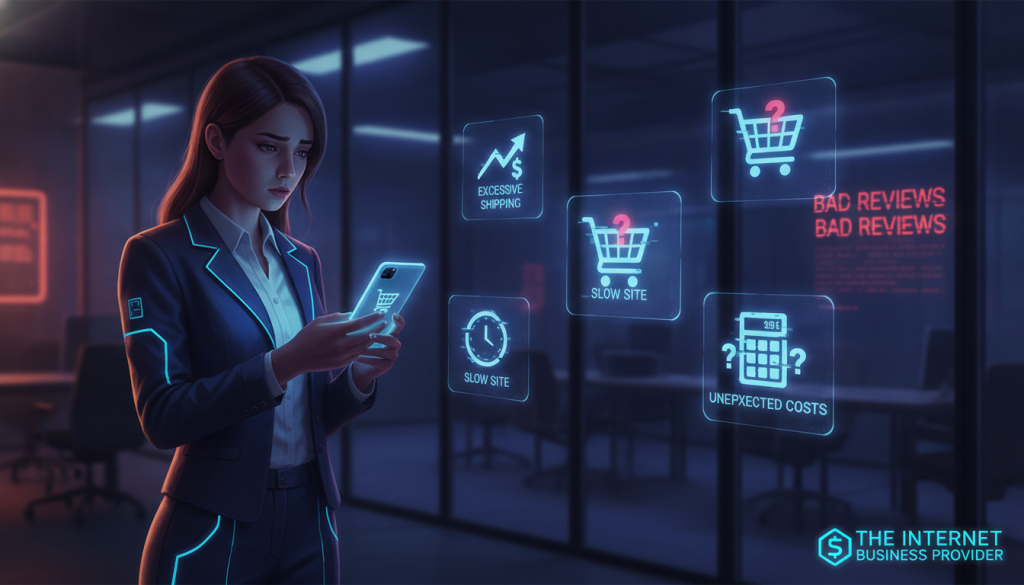
How Bad Reviews Specifically Cause Cart Abandonment
In e-commerce, the impact of customer feedback can be the deciding factor in closing a sale. When shoppers encounter negative feedback, it can directly erode their trust in both the specific product and the overall brand. This loss of confidence makes them question whether their purchase will meet expectations.
Negative feedback about product durability, accuracy of descriptions, or functionality creates concrete doubts that are difficult for customers to ignore. At the checkout stage, these doubts amplify, particularly when customers are already experiencing pre-purchase anxiety.
Loss of Trust in Brand and Product Quality
Trust is essential in the online shopping experience. When customers see negative feedback, it signals potential issues with product quality. This can lead to hesitation, as they weigh the risks of making a purchase. A single negative review can disproportionately influence a customer’s decision, especially when they are close to completing their transaction.
Additionally, bad reviews regarding customer service, shipping delays, or return difficulties can heighten the perceived risk of completing the purchase. Customers may feel that they are opening themselves up to future headaches, making them more likely to abandon their carts.
The Amplification of Doubts at the Decision Stage
During the checkout process, customers often conduct a “final risk assessment.” They scan for any red flags before committing their payment information. Bad reviews are particularly damaging when they appear on the product page right before the checkout process. These reviews are fresh in the customer’s mind during this critical decision moment.
Moreover, negative feedback about issues like product quality or sizing can trigger comparison shopping behavior. This leads customers to leave the site to research alternatives, often resulting in them never returning.
The revenue impact of negative feedback is significant. If negative reviews increase your cart abandonment rate by even a few percentage points, the lost sales can compound rapidly across your entire product catalog. Understanding these dynamics is crucial for e-commerce businesses aiming to enhance their conversion rates and recover lost revenue.
| Specific Mechanism | Impact on Cart Abandonment |
|---|---|
| Loss of Trust | Directly affects purchase confidence |
| Amplified Doubts | Heightens pre-purchase anxiety |
| Checkout Hesitation | Acts as a final risk assessment |
| Negative Feedback Timing | Maximizes impact during checkout |
| Comparison Shopping | Leads to potential loss of customers |
Identifying Negative Social Proof on Your Ecommerce Site
Identifying what drives customer decisions is crucial for e-commerce success. One of the most significant influences is the presence of negative feedback. Understanding how to monitor this feedback can help businesses mitigate its impact on sales.
To start, it’s essential to monitor customer feedback and ratings across all product pages. This includes tracking both the content of the reviews and the aggregate star ratings visible to shoppers. By doing so, businesses can gain valuable insights into customer perceptions.
Monitoring Customer Reviews and Ratings
Using analytics tools can reveal correlations between products with negative feedback and higher-than-average cart abandonment rates. This analysis can highlight patterns that indicate review-driven drop-off. It is vital to keep an eye on how feedback influences the purchasing process.
Spotting Patterns in Cart Abandonment Related to Reviews
Session replay tools are invaluable for observing how users interact with review sections before abandoning their carts. This direct observational evidence can pinpoint where negative feedback affects customer confidence. Implementing exit-intent surveys on checkout pages can also provide insights. These surveys can ask departing customers specific questions about what prevented them from completing their purchase.
Additionally, heatmaps can reveal whether customers scroll to read reviews before making purchase decisions. Understanding the placement of negative feedback can help businesses optimize their site layout. Monitoring not just product page reviews but also third-party review platforms is equally important. Customers often cross-reference these sources before making a purchase.
By spotting patterns, such as specific products with declining conversion rates that correspond to recent negative feedback, businesses can identify direct causal relationships. Recognizing these dynamics is an ongoing process that requires regular attention. New reviews appear continuously, and they can shift customer perceptions rapidly.
Strategies to Manage and Mitigate the Impact of Bad Reviews
Navigating the landscape of customer feedback is essential for e-commerce success. Implementing effective strategies can significantly reduce the impact of negative opinions on your sales. At IBP, we help businesses optimize their digital infrastructure and online footprint for maximum conversion. Here is a breakdown of how negative feedback actively drives cart abandonment—and how you can secure your checkout funnel against lost revenue.
Active review management serves as the first line of defense. Responding professionally and promptly to negative feedback shows potential customers that the brand cares about resolving issues. Acknowledging the customer’s experience and offering specific solutions can turn a negative situation into a positive one. When appropriate, taking the conversation offline demonstrates genuine commitment to customer satisfaction.
Active Review Management and Response
Best practices for responding to negative feedback include:
- Acknowledging the customer’s experience.
- Offering specific solutions to their concerns.
- Taking the conversation offline when necessary.
Encouraging positive reviews and user-generated content (UGC) is another effective strategy. Satisfied customers can be prompted to share their experiences through post-purchase email sequences. Making the review process simple and rewarding can increase the likelihood of receiving positive feedback.
Encouraging Positive Reviews and UGC
Timing is crucial when soliciting reviews. Businesses should reach out shortly after product delivery, as customer satisfaction is typically highest at this moment. This ensures that the experience is fresh in the customer’s mind, leading to more authentic feedback.
Transparent and authentic communication is a core principle in managing customer feedback. Customers respect brands that openly address criticism rather than hiding or deleting negative opinions. A healthy mix of positive and constructive reviews can actually build more trust than a perfect five-star rating. Consumers are naturally skeptical of products with only glowing reviews.
Transparent and Authentic Communication
User-generated content, such as customer photos and videos, provides authentic social proof. This can counterbalance the impact of any negative text reviews. Managing reviews is not about eliminating all negative feedback but about demonstrating responsiveness. Use criticism as an opportunity to improve products and services.
Optimizing the Checkout Experience to Reduce Cart Abandonment
In e-commerce, optimizing the checkout experience is crucial for maximizing sales. While unexpected shipping costs and complex checkout processes are well-known culprits, another major revenue leak often goes unmonitored: negative social proof. At IBP, we help businesses optimize their digital infrastructure and online footprint for maximum conversion.
Research from the Baymard Institute shows that 48% of abandoned carts are due to extra costs being too high. Additionally, 26% of customers abandon their carts because they are forced to create an account. Finally, 17% cite errors and crashes as reasons for leaving the checkout process. Addressing these issues can significantly enhance the customer experience.
One effective way to reduce cart abandonment is by simplifying the checkout process. By offering guest checkout options and minimizing the number of steps required, businesses can directly address the concerns of customers who dislike forced account creation.
Simplifying Checkout with Guest Options and Few Steps
Streamlining the checkout process can involve using autofill for form fields and limiting required information to essential details. Additionally, enabling express payment options like Apple Pay and Google Pay can further enhance convenience for shoppers.
Providing Clear Shipping Costs and Fees Early
Providing clear shipping costs and all fees early in the shopping process is critical. Ideally, this information should be displayed on product pages to prevent the sticker shock that leads to 48% of cart abandonments. For example, Liberty London uses a banner to reassure international customers that duties are included in the price, effectively eliminating a common source of checkout hesitation.
Building Trust Signals in the Checkout Flow
Integrating trust signals directly into the checkout flow can also help alleviate customer concerns. This includes displaying SSL certificate badges, accepted payment method icons, and money-back guarantee seals. Additionally, linking to clear return policies can enhance buyer confidence.
Another effective strategy is to display product thumbnails and brief descriptions within the cart itself. This serves as visual confirmation that reduces second-guessing and reinforces the purchase decision. Implementing a progress indicator during multi-step checkouts allows customers to see how many steps remain, reducing the perception of a lengthy or complex process.
Finally, optimizing the checkout experience should be an ongoing process. Utilizing analytics, session replays, and customer feedback can help businesses continuously identify and remove friction points. By taking these steps, e-commerce businesses can significantly improve their conversion rates and minimize lost sales.

Leveraging Customer Feedback and Engagement to Improve Brand Perception
Engaging with customers effectively can significantly enhance their perception of your brand. By harnessing customer feedback, businesses can create a more positive shopping experience. This not only drives customer satisfaction but also encourages loyalty.
One powerful tool is the use of post-purchase surveys. These surveys provide valuable insights into the customer experience. They help businesses understand what drives satisfaction and what may lead to hesitation or returns. By asking targeted questions, companies can pinpoint specific areas for improvement.
Using Post-Purchase Surveys and Exit-Intent Feedback
Exit-intent surveys can be strategically implemented when customers are about to leave the checkout page. These surveys ask direct questions about what prevented them from completing their purchase. For example, questions like “What stopped you from completing your purchase?” can yield actionable insights.
Follow-up emails sent within hours of cart abandonment serve dual purposes. They can recover lost sales through incentives while gathering feedback through brief surveys. Offering discounts in these emails can entice customers to return and complete their purchases.
Incorporating Feedback to Enhance Product and Service Quality
Analyzing feedback systematically is crucial. It helps identify recurring themes, such as concerns about product quality, shipping times, or pricing. These themes often reflect in negative feedback and can guide improvements.
Incorporating customer feedback into product development creates a virtuous cycle. Better products generate better reviews, which in turn reduce cart abandonment. This proactive approach not only enhances the customer experience but also drives sales and revenue.
Customer service interactions can also serve as a valuable feedback channel. Training agents to document common concerns helps identify issues that may be driving negative perceptions. By addressing these concerns, businesses can enhance their brand image.
Finally, transparently communicating changes made based on customer feedback demonstrates responsiveness. This builds long-term trust and loyalty with customers. By prioritizing improvements based on feedback data, businesses can focus on the issues that matter most to their customers.
Using Analytics and Tools to Monitor Reviews and Cart Behavior
Effective use of analytics can provide insights into customer behavior and cart activity. Understanding how customers interact with your site is essential for reducing lost sales and improving overall performance.
One powerful method for observing user interactions is through session replay tools. These tools allow businesses to watch specific sessions and see where users drop off during the checkout process. This provides direct evidence of friction points that may lead to cart abandonment.
Employing Session Replay and Heatmaps to Understand User Behavior
Session replay tools, like Contentsquare, help businesses analyze customer behavior by filtering sessions based on key actions, such as abandoning carts at checkout. This insight can guide improvements in the user experience.
Heatmaps are another valuable resource. They reveal whether customers engage with reviews, which elements they click on, and where they lose interest. This data helps optimize the placement of trust signals and social proof, ultimately enhancing the shopping experience.
Tracking Metrics Related to Reviews and Abandonment Rates
Businesses should track key metrics to understand cart abandonment better. This includes monitoring abandonment rates segmented by product, as well as the correlation between review scores and conversion rates.
Setting up tracking that connects review sentiment data with cart behavior allows businesses to quantify the direct impact of negative feedback on abandonment rates. This data-driven approach is essential for making informed decisions.
Utilizing Cart Recovery and Retargeting Techniques
Cart recovery techniques are crucial for recapturing potential buyers. Automated email sequences can remind customers of items left behind and offer incentives, such as discounts or free shipping, to encourage them to complete their purchases.
For example, accessories retailer Chunks effectively uses cart recovery emails that highlight their brand personality while making it easy for customers to return and finalize their purchases. This personalized approach can significantly enhance conversion rates.
Retargeting strategies also play a vital role. Showing ads for abandoned products to customers as they browse other sites keeps the brand top-of-mind and provides additional touchpoints to overcome hesitation.
In summary, the combination of analytics, session observation, and recovery tactics creates a comprehensive system for understanding and actively reducing cart abandonment driven by negative feedback. At IBP, we help businesses optimize their digital infrastructure and online footprint for maximum conversion.
| Technique | Description |
|---|---|
| Session Replay Tools | Observe user interactions and identify friction points in the checkout process. |
| Heatmaps | Reveal customer engagement with reviews and site elements. |
| Tracking Metrics | Monitor abandonment rates and correlate with review scores. |
| Cart Recovery Emails | Automated reminders with incentives to encourage purchases. |
| Retargeting Ads | Show ads for abandoned products to keep the brand in view. |
Conclusion
In e-commerce, the challenge of maintaining customer trust is ever-present. Negative feedback can silently erode the confidence shoppers need to finalize their purchases. While shipping costs and checkout complexity are known issues, negative social proof can undermine even the best online experiences.
To address this, businesses should focus on active review management and transparent communication. Optimizing the checkout process and leveraging analytics are also key strategies. Remember, managing feedback is not about eliminating all negative opinions but about showing a commitment to customer satisfaction.
As cart abandonment remains a high-priority issue, even small improvements can lead to significant revenue recovery. We encourage businesses to audit their review profiles and implement monitoring tools. At IBP, we are here to help optimize your digital presence, ensuring your checkout funnel is secure against lost revenue.
Building a trustworthy brand is an ongoing journey. With a solid strategy, you can encourage customers to complete their purchases without hesitation.