
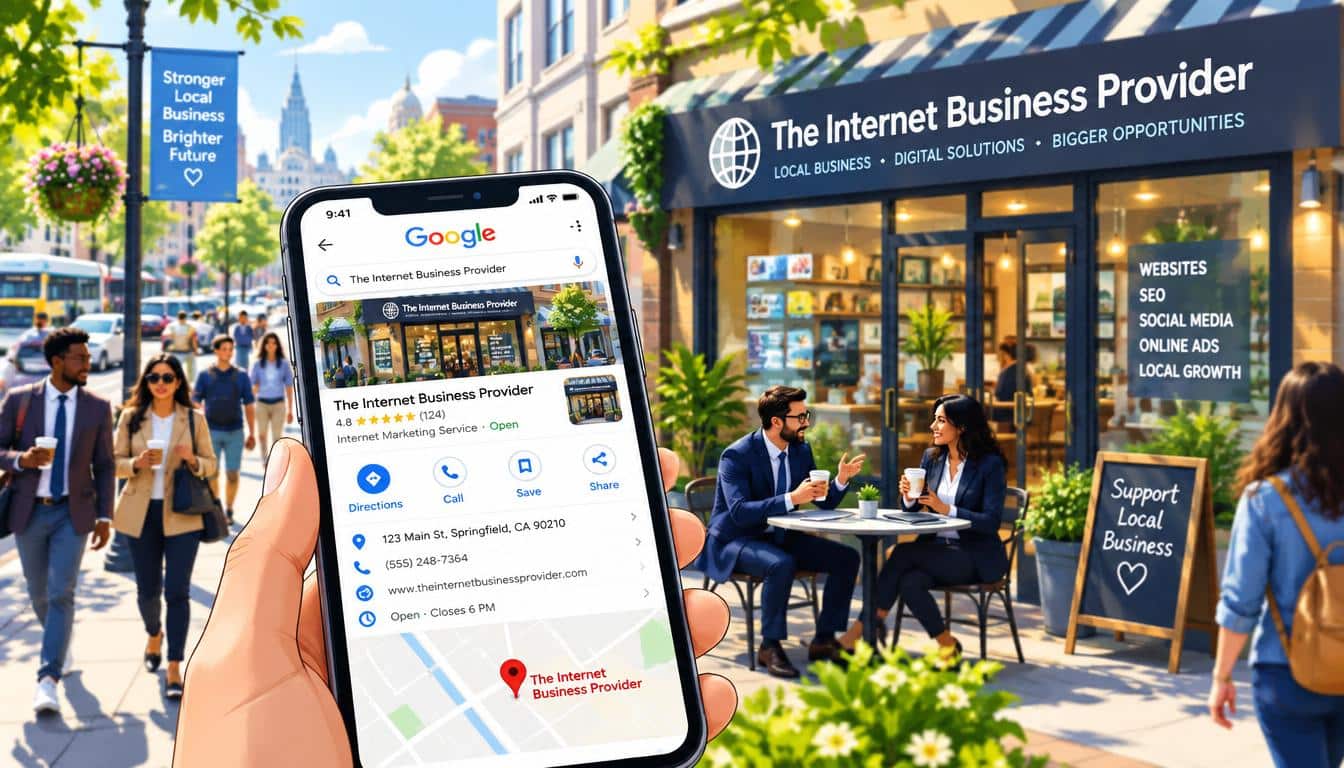
Customers nearby are searching for exactly what your business offers, yet they find competitors first. It can feel like a frustrating game of hide-and-seek. Having a website is only the beginning; people also need clear ways to find and trust you.
Local SEO helps a local business appear when people use Google Search, Maps, or location-based searches. A complete Google Business Profile works alongside your site. It gives people key information—such as services, hours, photos, and reviews—so they can decide whether to call or visit. Google may show nearby options in the local pack and on Maps.
Accurate details can also help discovery tools like ChatGPT and Perplexity share useful business information. IBP helps businesses verify a profile, choose categories, create location pages, and track calls and direction requests. This work can build customer confidence and lead to meaningful enquiries. It takes ongoing care and time; no partner can promise a set position or instant results.
Key Takeaways
- A website alone may not help nearby customers find you.
- Keep profile details accurate and complete.
- Use helpful pages to explain services and locations.
- Track calls and direction requests to gauge interest.
- Steady work can improve discovery, but rankings are not guaranteed.
What Local SEO Means for Nearby Businesses
This work helps a business appear in unpaid listings when people seek nearby services. A searcher may type a town name, or simply look for a service without adding “near me.” Clear details can help customers compare options and decide where to go.
Where Businesses Appear on Google
Google can show nearby options in the local pack, on Google Maps, and in localized organic search results. These listings may include hours, contact information, and reviews. A Google Business Profile can help keep those details clear and useful.
How Searches Connect Customers With Services
Location can shape results for queries such as “hair salon.” Someone seeking plumbers, dentists, or coffee shops may see options near their area. Service-specific keywords and helpful website content connect a business with people seeking what it offers. Clear pages may also help search engines, ChatGPT, and Perplexity identify nearby options.
| Search example | Useful detail | Likely customer need |
|---|---|---|
| Plumber in Denver | Service and location | Find repair help nearby |
| Hair salon | Current map location | Compare nearby salons |
How Google Evaluates Local Search Results
Google weighs relevance, distance, and prominence when it shows nearby businesses in Maps and the local pack. These signals affect visibility, but no tactic can guarantee a ranking.
Relevance to the Search
Relevance measures how well a business’s services and details match a person’s query. For example, a pizzeria may fit a restaurant search. Clear profile data, useful content, and focused keywords help search engines understand that match.
Distance From the Customer
Distance reflects how near a business is to the searcher’s likely location. Nearby competitors may appear in a different order as someone moves across an area. A strong map presence in one spot may not carry over to every neighborhood.
Prominence and Reputation
Prominence reflects how well-known and trusted a business seems. A 4.7-star pizzeria rating from 994 reviews can signal customer confidence, though reviews alone do not decide placement. SOCi’s 2026 Local Visibility Index analyzed about 350,000 locations across 2,751 multi-location brands.
Together, these factors inform local SEO. Organic page ranking also depends on page relevance, quality, usability, and helpful links. No single factor guarantees results.
Why Local SEO Matters to Business Outcomes
Visibility matters most when it leads to action. Google reports that 30% of mobile searches relate to location. For a local business, that creates a chance to reach people who may need its services nearby.
A clear profile can help people in the area find useful details in the local pack and search results. Google reports that 78% of people who search for something nearby on a phone visit a business within a day. It also reports that 28% of nearby searches lead to a purchase.
These figures show why Local SEO should focus on qualified interest, not views alone. Helpful content, accurate contact details, and genuine reviews can support the next step.
- Relevant website visits from people seeking your services
- Enquiries, phone calls, store visits, and direction requests
- Clear signs of interest that help assess results
The right audience matters more than broad reach. Strong links and a better ranking may improve discovery, but value depends on attracting customers your business can serve. Track actions and lead quality to see whether visibility brings meaningful opportunities.
Claim and Verify Your Google Business Profile
Before you polish your online presence, make sure Google can confirm that your operation qualifies. Eligible businesses must meet customers in person during their stated hours.
Confirm Your Business Is Eligible
A storefront or service-area company that meets the rules can claim a free Google Business Profile. After verification, its listing may appear in Google Search, Maps, and the local pack. Follow Google’s steps, and provide any requested proof.
Complete the profile with your real business name, address when customers visit you, phone number, website, hours, service area, and services. Keep each detail accurate. This information helps customers decide whether to call, visit, or compare options.
A complete profile can support customer action. Google says customers are 70% more likely to visit a business with a complete profile and 50% more likely to consider buying. BrightLocal’s 2021 survey found that 36% of surveyed SEO professionals viewed it as the top map-pack ranking factor. These findings offer context, not a promise of results.
| Profile step | What to provide | Why it matters |
|---|---|---|
| Check eligibility | In-person customer contact during stated hours | Confirms the business meets Google’s rules |
| Claim and verify | Complete Google’s verification process | Connects you to profile management tools |
| Fill in details | Accurate contact, hours, address, and services | Gives customers useful, current information |
Choose Accurate Business Categories
Categories tell search engines what a company offers. For a local business, the right choice can strengthen relevance for nearby customers. It also helps the business profile describe the services people can actually request.
Choose one primary category that best matches the main offering. Add secondary categories only for real specialties or additional services. Google’s Business Profile guidance recommends specific categories, not broad labels that could mislead customers.
- Match each category to a service customers can get at your location or in your service area.
- Use focused keywords in your site content, but do not treat categories as a list of keywords.
- Review choices when the business changes its services in a meaningful way.
Accurate categories can help Google understand the business and connect it with relevant search queries. This supports local SEO, but does not guarantee placement in the pack or specific results. Think of categories as one useful SEO signal, not a shortcut to visibility.
| Category choice | Use it when | Example |
|---|---|---|
| Primary | It describes the main offer | Bakery for a bakery |
| Secondary | It reflects a genuine extra service | Cafe for a bakery with seating |
Keep Contact Details, Hours, and Services Current
Accurate details help customers decide whether to call, visit, or book. In the Google Business Profile, check the business name, phone number, address, regular hours, and holiday hours. Google recommends setting holiday hours so searchers can plan a visit with confidence.
Use an eligible street address for a storefront. If staff travel to customers or deliver orders, set a service area instead. Keep the business profile aligned with what people can actually book, buy, or request. This helps Google understand the offer and gives searchers useful information across listings and your website.
- Outdated hours can send people to a closed door.
- An incorrect phone number can block a timely call.
- Unclear service details can frustrate customers and weaken trust.
Review this data regularly and whenever hours, contact details, services, or location change. Current information supports local SEO and may help your business earn relevant search visibility. It cannot guarantee results, but it removes avoidable gaps. For a local business, this simple check is a practical part of good SEO.
Use Photos to Help Customers Evaluate Your Business
Before customers call or visit, photos can show what to expect at your location. Google recommends adding images to a Google Business Profile. Moz’s local profile guidance suggests clear views of storefronts, interiors, products, services, and teams.
Choose recent shots that match the experience people will find. A storefront example should show the real entrance, while service images should reflect work your team offers. Avoid visuals that look outdated or mislead potential visitors.
- Show a clean view of your storefront and interior.
- Feature current products, services, and team members.
- Update photos when your space or offerings change.
A routine photo review keeps your profile useful and adds relevant content to your business profile. Clear images can help people assess a location from search results, including the map and pack. They support practical decisions, but do not guarantee higher placement.
Make photo updates part of ongoing local SEO care. Treat them as one helpful tool, not a promise of results. Strong visuals can build confidence, while SEO outcomes depend on many factors.
Build Trust With Genuine Customer Reviews
Genuine reviews help prospective customers judge a business’s reputation. They also give search systems credible feedback about real customer experiences. As part of local SEO, they can support trust in your Google Business Profile, though they do not guarantee a place in the pack.

For example, a pizzeria with a 4.7/5 rating from 994 reviews gives people useful information as they compare listings. The feedback can help someone decide whether to call or visit.
Invite Honest Feedback and Respond Professionally
After a real customer interaction, make a polite, neutral request for an honest review. A restaurant might place review cards on tables to make sharing feedback easy. Never ask only for positive reviews.
Google prohibits offering or accepting money in exchange for reviews. Reply to both positive and negative feedback with care. A calm, helpful response shows customers that the business values their input and takes time to address concerns. This practice supports a trustworthy profile and strengthens your wider local SEO efforts.
Connect Your Business Profile With Useful Website Content
Your Google Business Profile offers a quick overview, while your website can answer deeper questions. Helpful content can explain services, pricing, and how a customer can get started.
Keep website pages aligned with the services and contact information on your profile. When details match, customers can move from search results to your site without confusion. Use local keywords only where they naturally describe your services, location, and what people need. Repeating phrases can make content harder to read.
“A useful page answers what a short profile cannot.”
Measure how people find and use your website. Google Search Console is a free tool that tracks search performance and shows which pages receive visibility. Google also reports impressions for AI features, including AI Overviews and AI Mode. Review this information to see what earns attention and where a page may need clearer details.
- Link related pages so visitors can find useful information.
- Use performance data to guide content updates, not guesswork.
Consistent details and helpful pages support local SEO. They can also strengthen the connection between your profile and your wider SEO efforts, though they cannot guarantee results.
Create Location-Specific Pages for Your Service Areas
Your website can do more than list services. It can guide people to details that fit the place where they need help.
Moz recommends unique, relevant pages for each physical location or meaningful service area. These pages should explain what the business truly offers there, not repeat generic copy with a city name swapped in.
Match Page Content to Local Customer Searches
Use wording that reflects how people search, such as “electrician in Manchester” or “bakery near Soho.” Match each page to the right service and location keywords. Then add links from related website pages when they help visitors find the right information.
Be clear about coverage. A service-area business should name only places it genuinely serves. Useful content helps customers understand whether the business can meet their needs before they make an inquiry. This supports local SEO and can make search results more helpful, though it does not guarantee rankings.
| Page type | What to include | Example |
|---|---|---|
| Physical location | Unique services and details for that address | Bakery near Soho |
| Service area | Real coverage and available services | Electrician in Manchester |
Keep Business Information Consistent Across the Web
Good local SEO starts with consistent business data. Match your business name, address, and phone number across your Google Business Profile, website, and trusted listings. These details form key citations and help show that your local business has a clear, credible presence.
Conflicting data across directories can confuse customers and search engines about the correct location. That may weaken trust in a listing, even when its reviews are strong. Keep business pages and links aligned so people can find the right information and reach you with ease.
SOCi’s 2026 Local Visibility Index analyzed about 350,000 locations across 2,751 multi-location brands. SOCi identified accurate information and a consistent presence across platforms as traits of businesses recommended by AI platforms. This study offers useful context, not a promise of results in search or the pack.
For steady local SEO, review citations on trusted platforms:
- Check listings on Yelp, Apple Maps, Bing Places, Facebook, Yellow Pages, and Tripadvisor.
- Use a simple tool to compare your name, address, and phone details. Update outdated citations and confirm each listing reflects your current information.
Fix Common Gaps That Undermine Local Visibility
Small data errors can turn a promising search into a missed visit. These gaps are often easy to fix, but they can leave customers unsure about where to go or what to expect.
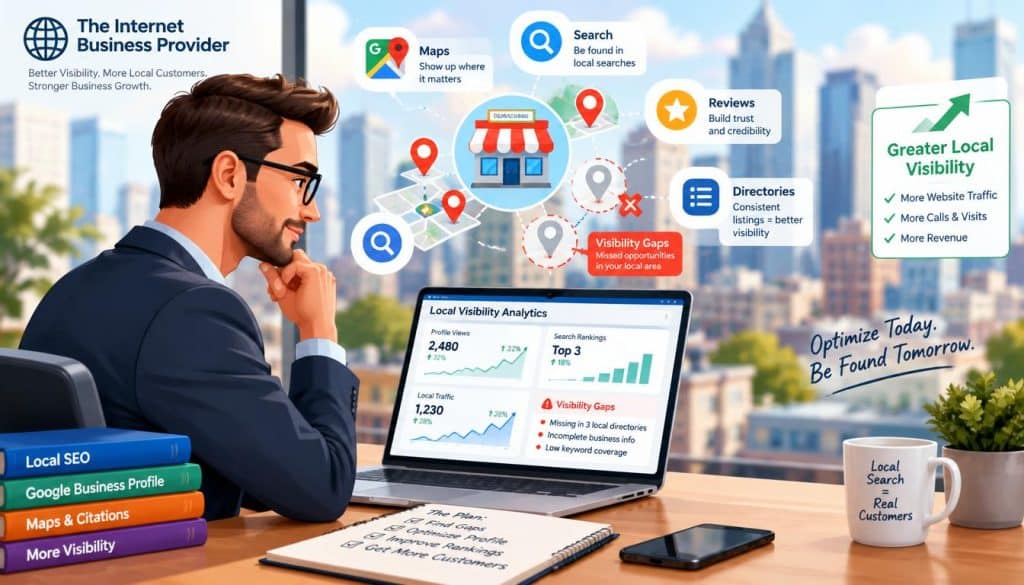
Outdated opening hours may send someone to a closed door. An incomplete Google Business Profile can also leave out services, contact details, hours, or a clear description of the location.
- Confirm your hours, including holiday schedules.
- Explain which services you offer and which areas you serve.
- Check that your business name, address, phone number, and website match across listings and citations.
Review the details customers use to decide whether to call or visit. Clear information can help people assess whether your service meets their needs. It also gives search engines consistent data to interpret.
For stronger local SEO, fix the issues that could affect customer choices first. Check directory listings, links, and key pages for conflicting details. These steps support sound SEO practice, but correcting a gap cannot guarantee a ranking change or specific results.
Track Visits, Enquiries, Calls, and Direction Requests
Good measurement connects online activity with real customer interest. Set clear goals before work begins; Moz suggests targets such as getting more phone calls. This keeps local SEO focused on outcomes that matter to the business.
Measure Lead Quality Alongside Website and Profile Actions
Track website visits and profile actions with calls, inquiries, and direction requests. Each may mark a different step toward a conversation. Review the quality of each lead, too: are people asking about services the business provides?
Google Search Console is a free tool for checking website search performance. It also reports impressions from AI Overviews and AI Mode, but impressions alone do not show lead value. Compare useful actions over time, rather than relying on ranking results alone. Use this data to refine pages, content, and keywords.
| Measure | What it can show | How to assess it |
|---|---|---|
| Profile actions | Calls or map requests | Check for relevant customer interest |
| Website activity | Visits from searches | Review Search Console trends |
| Lead quality | Service-related inquiries | Compare fit, not just volume |
Set Realistic Expectations for Local SEO Results
Visibility rarely changes overnight. Profiles, useful pages, reviews, and accurate business details need steady care to build trust and improve discovery.
Moz recommends setting measurable goals for the next 4–6 months when work begins with a new client. Use this as a planning window, not a promise. Search marketing takes time to mature, and results vary.
Rankings can shift with a customer’s location, search terms, and area. One ranking check cannot show the full picture. Track data over time and look for useful trends.
- Measure qualified calls and enquiries, not just search results.
- Review progress against agreed goals.
- Expect ongoing work, not instant first-place placement.
No ethical SEO partner can guarantee a position or instant visibility. Focus on steady gains that help businesses reach the right people. Use clear goals to guide the next steps.
| What to track | Why it helps | Planning note |
|---|---|---|
| Qualified calls | Shows genuine customer interest | Review trends over time |
| Useful content | Answers customer questions | Update as needs change |
| Profile details | Keeps business information clear | Check for accuracy often |
How IBP Brings Clarity to Local SEO Decisions
A useful plan starts with knowing which tasks support your business goals. The Internet Business Provider (IBP) helps businesses weigh local SEO options and choose practical next steps, without promising a fixed ranking.
IBP can connect an accurate Google Business Profile, customer reviews, useful location pages, and clear goals. The plan may also check your name, address, listings, citations, links, and map details. These steps help customers find reliable information and understand what your local business offers.
SOCi’s 2026 Local Visibility Index studied about 350,000 locations across 2,751 multi-location brands. It highlights accurate information, strong reviews, distinct local content, and presence across platforms as traits of businesses recommended by AI tools. This offers context, not a promise of results.
- Set transparent priorities for your area and service needs.
- Use data to track calls, visits, and other useful actions.
- Review search and local pack trends without treating one ranking as the whole picture.
Talk with IBP about your service area, current visibility, and goals. A clear review can show what to address first and which tools fit your needs.
| Focus | IBP can review | Business value |
|---|---|---|
| Profile | Accuracy and key details | Clear customer information |
| Content | Reviews and location pages | Relevant service details |
| Progress | Actions and search data | Informed next steps |
Conclusion
Local SEO helps nearby customers discover and assess your business through Google Search, Maps, and useful website pages. An accurate, verified profile, current hours, clear services, helpful photos, and genuine reviews can build confidence.
Relevance, distance, and prominence shape visibility, but no business can count on top rankings or instant results. Steady SEO work takes time. Track relevant visits, enquiries, calls, direction requests, and lead quality—not ranking reports alone.
Use relevant keywords only where they help people. Then review what brings qualified interest and where clearer information would help. Talk with The Internet Business Provider (IBP) about your visibility and business goals. A focused plan can guide the next steps.

