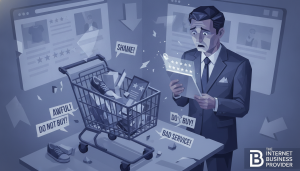
Imagine your business is an exclusive, high-end club. You do not let just anyone walk through the front door without a quick check. Yet, many owners leave their digital storefronts wide open, allowing a single bad experience to turn into a permanent 1-star scar on their public profile.
A negative review is often just a cry for help from a frustrated customer. What if your website had a digital bouncer that pulled unhappy guests aside for a private chat before they reached the megaphone of Google?
This is where reputation management ibp becomes your best asset. By using automated post-purchase emails or SMS, you can catch concerns early. This proactive approach acts as a local seo shield, ensuring that only satisfied customers share their stories publicly.
Implementing this system is the secret to building lasting brand credibility. It shifts your online reputation management (orm) from a reactive scramble into a smooth, automated process that keeps your rating high and your customers happy.
Key Takeaways
- Treat your digital presence like an exclusive club by filtering feedback privately.
- Use automated post-purchase messages to address issues before they go public.
- A private chat with unhappy customers prevents permanent 1-star damage.
- Proactive systems act as a shield for your local search rankings.
- Consistent, positive feedback loops build long-term trust with your audience.
The Evolution of Online Reputation Management
Online reputation management has evolved significantly over the years, adapting to the changing dynamics of consumer behavior and technology. In the early days of the internet, businesses primarily focused on establishing an online presence through websites and basic SEO strategies. However, as social media and review platforms gained prominence, the importance of managing online reputation became increasingly evident.
The rise of platforms like Yelp, Google Reviews, and Facebook Reviews has given consumers a powerful voice. Businesses soon realized that a single negative review could deter potential customers, while positive reviews could attract them. This shift necessitated the development of reputation management strategies that could mitigate the impact of negative feedback and amplify positive reviews.
One of the key reputation management strategies involves actively monitoring online reviews and ratings. This includes responding promptly to customer feedback, both positive and negative, to show that a business values its customers’ opinions. Reputation monitoring services have become indispensable tools for businesses, enabling them to track their online presence across multiple platforms and address issues before they escalate.
- Proactive monitoring of online reviews
- Prompt response to customer feedback
- Implementation of strategies to encourage positive reviews
As online reputation management continues to evolve, businesses are leveraging advanced technologies like AI and machine learning to analyze customer sentiment and predict potential reputation risks. This proactive approach allows companies to stay ahead of the curve and maintain a positive online image.
“The way to get started is to quit talking and begin doing.” – Walt Disney
In the context of online reputation management, this quote emphasizes the importance of taking proactive steps to manage and improve one’s online presence. By doing so, businesses can build trust with their customers and establish a strong foundation for long-term success.
Understanding the Mechanics of Reputation Management IBP
Understanding the mechanics of Reputation Management IBP is crucial for businesses aiming to protect and enhance their online reputation. Reputation Management IBP is a sophisticated system that integrates various tools and strategies to manage online presence effectively.
At its core, Reputation Management IBP relies on internal resolution systems to address customer grievances before they escalate into public reviews. This proactive approach ensures that issues are resolved promptly, reducing the likelihood of negative feedback being shared publicly.
Customer sentiment analysis is another critical component of Reputation Management IBP. By analyzing customer feedback, businesses can identify areas for improvement and make data-driven decisions to enhance their products and services.
The key benefits of Reputation Management IBP include:
- Early detection and resolution of customer complaints
- Improved customer satisfaction through prompt issue resolution
- Enhanced online reputation through reduced negative reviews
- Data-driven insights to inform business decisions
By leveraging these capabilities, businesses can maintain a positive online reputation and foster a loyal customer base. Effective Reputation Management IBP requires a deep understanding of customer needs and preferences, as well as the ability to respond promptly to their concerns.
The Intercept Strategy: Capturing Feedback at the Source
The Intercept Strategy is a game-changer in managing online reputation by capturing customer feedback at its source. This proactive approach involves automating post-purchase communication to solicit customer feedback privately, thereby reducing the likelihood of negative public reviews.
Automating Post-Purchase Communication
Automating post-purchase communication is a critical component of the Intercept Strategy. By sending timely emails or SMS, businesses can encourage customers to share their experiences. This not only shows that the business values customer feedback but also allows for immediate intervention if there’s a negative experience.
Key benefits of automating post-purchase communication include:
- Timely capture of customer feedback
- Reduced likelihood of negative reviews on public platforms
- Opportunity for immediate resolution of grievances
As noted by a reputation management expert, “Capturing feedback at the source is crucial. It allows businesses to address issues before they escalate into public complaints.”
“The best way to manage your online reputation is to manage your customer’s experience.”
The Logic of Private Rating Channels
The logic behind using private rating channels is straightforward: if a customer provides a 4 or 5-star rating, they are prompted to leave a review on Google. Conversely, if the rating is 1-3 stars, a “Resolution Ticket” is immediately opened to address the customer’s concerns privately.
| Customer Rating | System Response |
|---|---|
| 4-5 Stars | Prompt to leave a review on Google |
| 1-3 Stars | Open a “Resolution Ticket” for private resolution |
This approach not only helps in mitigating negative reviews but also enhances customer satisfaction by showing that the business is proactive and cares about their feedback.
By implementing the Intercept Strategy, businesses can create a positive feedback loop that fosters growth and improves customer sentiment analysis.
Filtering the Noise: How to Separate Grievances from Growth
The key to successful brand reputation management lies in distinguishing between grievances that can be resolved internally and those that contribute to online growth. This distinction is crucial for businesses aiming to maintain a positive online presence while leveraging customer feedback for improvement.
As companies navigate the complex landscape of online reviews, they must implement strategies that effectively filter out irrelevant feedback and focus on constructive criticism. This involves understanding the nuances of customer sentiment and developing protocols that address different types of feedback appropriately.
The 4-5 Star Google Redirect Protocol
One effective strategy is the 4-5 Star Google Redirect Protocol, which involves redirecting customers who are likely to leave positive reviews directly to Google Reviews. This approach not only enhances the visibility of positive feedback but also streamlines the review process for satisfied customers.
By automating the redirection of 4-5 star reviewers, businesses can increase their overall review velocity and improve their online reputation. As noted by industry experts, “A steady stream of positive reviews is essential for building trust with potential customers and improving local SEO rankings.”
Managing 1-3 Star Feedback with Resolution Tickets
Conversely, managing feedback from customers who have had a less satisfactory experience requires a different approach. Implementing a resolution ticket system for 1-3 star feedback allows businesses to address grievances privately and efficiently.
This proactive approach to negative review mitigation not only resolves customer complaints but also demonstrates a commitment to customer satisfaction. By engaging with customers through resolution tickets, businesses can often turn negative experiences into positive outcomes, thereby enhancing their reputation and fostering customer loyalty.
Effective reputation repair services involve more than just responding to negative reviews; they require a systematic approach to addressing customer grievances and leveraging feedback for operational improvement.
Why Google Loves Happy Only Traffic
Google favors businesses with high-velocity, high-rating review profiles, a concept often referred to as “Happy Only” traffic. This preference is rooted in the algorithm’s design to prioritize businesses that consistently deliver high-quality services, as indicated by a steady stream of positive reviews.
A local seo shield is crucial for businesses aiming to protect and enhance their online presence. By focusing on generating “Happy Only” traffic, companies can significantly improve their visibility in search results.
The Impact of Review Velocity on Local SEO
Review velocity refers to the rate at which a business receives reviews. A high review velocity, particularly with positive reviews, signals to Google that a business is consistently providing excellent service. This can significantly boost a business’s online brand reputation management efforts.
Businesses with high-velocity, high-rating review profiles are more likely to be favored by Google’s algorithm. This is because such profiles indicate a consistent level of quality and customer satisfaction.
Maintaining a Pristine Public Sentiment Profile
To maintain a pristine public sentiment profile, businesses must focus on delivering exceptional customer experiences. This involves not just providing excellent products or services but also ensuring that customer feedback is handled efficiently and effectively.
Effective reputation management for businesses involves strategies that encourage satisfied customers to share their positive experiences while addressing any negative feedback promptly and professionally.
By maintaining a pristine public sentiment profile, businesses can enhance their local SEO efforts and improve their overall online reputation.
Leveraging Customer Sentiment Analysis for Operational Excellence
By leveraging customer sentiment analysis, businesses can uncover valuable insights that drive operational improvements. This analytical approach enables companies to gauge customer feelings and opinions about their products or services, ultimately informing strategic decisions.
Customer sentiment analysis is more than just monitoring customer feedback; it’s about understanding the underlying emotions and concerns that drive customer behavior. By doing so, businesses can identify areas for improvement and make data-driven decisions to enhance their operations.
Identifying Recurring Pain Points Before They Trend
One of the key benefits of customer sentiment analysis is its ability to help businesses identify recurring pain points before they escalate into public issues. For instance, a company might discover that multiple customers are complaining about slow shipping or rude staff members. By addressing these issues proactively, businesses can prevent negative trends from emerging.
- Monitor customer feedback across various channels
- Analyze sentiment to identify patterns and trends
- Address recurring issues before they become public
Turning Data into Actionable Business Intelligence
The data collected from customer sentiment analysis can be transformed into actionable business intelligence. This involves not just collecting feedback but also analyzing it to understand the root causes of customer dissatisfaction.
For example, a business might use sentiment analysis to discover that a particular product feature is consistently being criticized. This insight can then be used to improve the product or provide additional training to customer support staff.

By turning customer sentiment data into actionable insights, businesses can drive operational excellence and stay ahead of the competition. This proactive approach to reputation management not only enhances customer satisfaction but also contributes to long-term business success.
Turning Critics into Fans Through Private Resolution
The key to maintaining a positive online reputation lies in turning critics into fans through private resolution. This approach not only enhances brand credibility but also fosters a loyal customer base. By effectively managing customer feedback, businesses can significantly reduce the risk of negative reviews.
The Psychology of Being Heard
When customers feel heard, they are more likely to become loyal advocates for a brand. Internal resolution systems play a crucial role in this process by providing a platform for customers to voice their concerns privately. This not only resolves issues promptly but also makes customers feel valued and understood.
The psychological impact of being heard cannot be overstated. It transforms a potentially negative experience into a positive one, often resulting in customers becoming more loyal than they would have been otherwise.
Preventing Public Outbursts with Rapid Response
Reputation protection services often emphasize the importance of rapid response in managing customer complaints. By addressing issues quickly and privately, businesses can prevent negative feedback from being shared publicly. This proactive approach is essential in maintaining a positive online presence.
A rapid response to customer grievances demonstrates a commitment to customer satisfaction and brand credibility. It’s about showing customers that their feedback is taken seriously and that their concerns are being addressed.
In conclusion, turning critics into fans through private resolution is a powerful strategy for enhancing brand reputation. By leveraging internal resolution systems and prioritizing rapid response, businesses can protect their online image and foster a loyal customer base.
Building Brand Credibility in a Digital-First World
In today’s digital landscape, establishing a credible brand is crucial for businesses to thrive. With consumers increasingly relying on online reviews and social media to inform their purchasing decisions, a strong online reputation is no longer a luxury, but a necessity.
The Long-Term Value of Proactive Reputation Protection
Proactive brand reputation management involves more than just responding to customer complaints; it’s about creating a robust online presence that fosters trust and loyalty. By leveraging online brand reputation management strategies, businesses can mitigate potential risks and capitalize on opportunities.
A key aspect of this is implementing a reputation management for businesses system that monitors and addresses customer feedback in real-time. This not only helps to resolve issues promptly but also demonstrates a commitment to customer satisfaction.

Balancing Transparency with Brand Image
While transparency is essential for building trust, it’s equally important to maintain a consistent brand image. Businesses must strike a balance between being open and honest with their customers, while also protecting their brand’s reputation.
| Strategy | Description | Benefit |
|---|---|---|
| Real-time Feedback Monitoring | Continuous monitoring of customer feedback across platforms | Prompt issue resolution and improved customer satisfaction |
| Transparent Communication | Open and honest communication with customers | Builds trust and credibility |
| Consistent Brand Messaging | Uniform messaging across all marketing channels | Reinforces brand identity and values |
Common Pitfalls in Automated Feedback Loops
While automated feedback loops can streamline the process of collecting customer feedback, they also come with potential pitfalls that businesses must navigate to maintain a healthy online reputation.
Automated feedback loops are integral to reputation management IBP, allowing companies to gather insights from customers efficiently. However, if not implemented carefully, these systems can lead to issues such as review gating and diminished authenticity in customer interactions.
Avoiding the Appearance of Review Gating
Review gating refers to the practice of selectively soliciting feedback from customers in a way that skews the reviews towards the positive. To avoid this, businesses should:
- Ensure that feedback requests are sent to all customers, not just those who are likely to leave positive reviews.
- Use neutral language in feedback requests to avoid influencing the customer’s response.
- Make sure that the feedback mechanism is easily accessible and not buried in a lengthy process.
By taking these steps, companies can maintain transparency and avoid the appearance of manipulating customer reviews, which is crucial for professional reputation management.
Maintaining Authenticity in Automated Interactions
Automated interactions can sometimes come across as impersonal, potentially alienating customers. To maintain authenticity:
- Personalize automated messages by addressing customers by name and referencing their specific interactions with the business.
- Use a friendly and approachable tone in automated communications to mirror the brand’s voice.
- Ensure that automated systems are used as a precursor to human interaction, not a replacement for it.
By being aware of these common pitfalls and taking steps to mitigate them, businesses can effectively utilize automated feedback loops to enhance their reputation management IBP strategies and build stronger relationships with their customers.
Conclusion
Effective online reputation management is crucial for businesses to thrive in today’s digital landscape. By leveraging reputation management strategies, companies can protect their brand credibility and maintain a positive online presence.
Through the use of Reputation Management IBP, businesses can proactively manage their online reputation by capturing feedback at the source, filtering out noise, and turning critics into fans. This approach not only enhances online reputation management (ORM) but also contributes to long-term brand success.
By adopting the strategies outlined in this article, businesses can ensure they are well-equipped to handle the challenges of online reputation management, ultimately strengthening their brand credibility and fostering a loyal customer base.